‘Oil price cap’ to take effect on the 13th…gasoline at stations seen in the 1,900-won range
Summary
- The government said it will implement an oil products price cap from the 13th, managing the wholesale gasoline price to no more than the 1,830-won-per-liter range seen in the first week of March.
- It said refiners’ losses will be covered by public finances, while oil product exports by refiners will be limited to last year’s level.
- It also said some analysis suggests refiners’ profitability should not face major issues as international refining margins have widened from $6 to $33 per barrel.
Forecast Trend Report by Period


‘Price cap’ takes effect on the 13th
Wholesale gasoline in the 1,800-won range
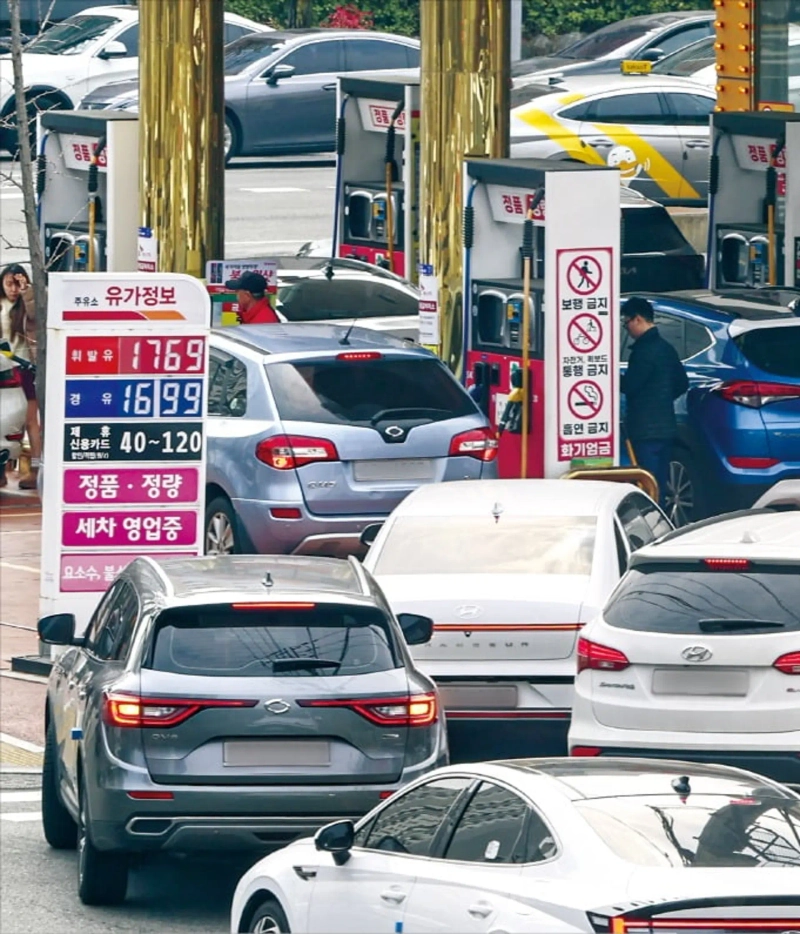
To curb the steep rise in retail prices for gasoline and diesel, the government has decided to limit increases in the wholesale prices refiners charge gas stations.
The Ministry of Trade, Industry and Energy said on the 12th that it will implement an “oil products price cap” starting at 00:00 on the 13th, placing a uniform ceiling on the supply prices to gas stations for regular gasoline, diesel and kerosene. The country’s four refiners will be prohibited from supplying petroleum products to gas stations and dealers at prices above the guidelines. The government plans to announce the cap every two weeks to reflect changes in international prices.
The first cap, effective from the 13th, was calculated by applying changes in international oil product prices (MOPS) and other factors to the average supply (wholesale) price for the fourth week of February. Going forward, the aim is to manage petroleum product prices at or below the wholesale level immediately after the outbreak of the U.S.-Iran war in the first week of March (around 1,830 won per liter for gasoline). Retail prices will vary by region, but are expected to settle in the 1,900-won-per-liter range.
Losses estimated by refiners will be compensated through public finances after verification. To prevent refiners from increasing export volumes—shipments that are not subject to price controls—the government also plans to restrict exports to no more than last year’s level.
Fast-tracked as oil prices surge
Refiner losses to be covered by public finances…oil product exports also capped at last year’s level
The government’s decision to introduce a “price cap” limiting hikes in prices for petroleum products such as gasoline—29 years after the liberalization of oil prices in 1997—is widely seen as a reluctant measure aimed at minimizing the hit to vulnerable groups from a spike in oil prices triggered by the Strait of Hormuz crisis. The intention is to ease pressure on household finances by correcting the pattern in which prices rise like a “rocket” during upswings but fall like a “feather” during downswings. However, since the plan compensates refiners for losses with public money, there are concerns that a prolonged situation could cause the fiscal burden to balloon.
A ‘uniform ceiling’ on refiners’ supply prices
The Ministry of Trade, Industry and Energy announced on the 12th that it will implement the price cap at 00:00 on the 13th, limiting refiners’ supply prices to gas stations for regular gasoline, diesel and kerosene. Under the system, a “uniform ceiling” is imposed on the supply prices that the four refiners had set autonomously. Refiners have previously discounted or charged more per liter depending on performance and competitive conditions at each dealership (company-run) or gas station (independently operated). Going forward, this effectively creates an absolute guideline of “do not charge above this price.”
The cap was calculated by taking the average refiner supply price from the fourth week of February—just before the oil price surge—then adding changes in international oil product prices (MOPS) and taxes. According to Opinet, the Korea National Oil Corporation’s oil price information system, as of late February the average refiner supply prices (after tax) were 1,616 won per liter for gasoline, 1,545 won for diesel and 1,061 won for kerosene.
The announcement cycle was set at two weeks. Yang Gi-wook, director general for Resource Security at the ministry, said, “We set the adjustment cycle at two weeks in consideration of the time lag for international oil prices to be reflected in domestic prices,” adding, “If adjusted weekly, the price-stabilization effect would weaken, while if the period is too long, the gap with international market prices could widen.” The government plans to manage prices so they do not rise above the first-week-of-March after-tax supply prices (gasoline in the 1,830-won range, diesel in the 1,930-won range).
After the price cap takes effect, the consumer prices actually charged at gas stations are expected to be around 1,800 to 1,900 won per liter for gasoline—about 50 to 100 won above wholesale. Just before the war, in the fourth week of February, the gap between wholesale (gas-station supply) and retail prices by product was 75 won for gasoline, 49 won for diesel and 251 won for kerosene.
‘Close monitoring’ of gas station retail prices
The government excluded gas station pump prices (retail) from direct regulation, judging that it would be difficult to apply a uniform price given differences in rents and business strategies by region. Instead, it plans to activate a monitoring system to prevent a chain reaction of price increases by gas stations. It will disclose the “top 30 gas stations by wholesale-retail price spread” and soon roll out a program to list “good gas stations” that offer low prices and good quality.
The government will compensate refiners for losses stemming from operating the price cap through public finances after ex post verification each quarter. If refiners prove their losses relative to their own costs, a Maximum Amount Settlement Committee comprised of experts will verify them.
It also decided to implement a measure limiting exports to the same level as in the same period of 2025, in anticipation that refiners could increase export volumes instead of supplying the domestic market. The government plans to keep the price cap in place until the Strait of Hormuz situation eases and oil prices stabilize.
The industry is pushing back against export controls. An industry official said, “Because last year’s export share was around 60%—lower than in a typical year—being told to match export volumes to last year’s level effectively means giving up profits.” However, others counter that refiners’ profitability is unlikely to face major issues as international refining margins have widened from about $6 per barrel in early February to roughly $33 recently.
The key question is whether the situation will be prolonged. Analysts say that if the blockade of the Strait of Hormuz drags on, refiners’ inventories will decline and the government’s fiscal burden will inevitably increase. Shin Hyun-don, a professor in the Department of Energy Resources Engineering at Inha University, said, “The government measures focus on price stabilization, but if international prices swing sharply over a two-week period, refiners’ losses could surge.”
Kim Dae-hoon/Kim Rian/Sung Sang-hoon, reporters daepun@hankyung.com

Korea Economic Daily
hankyung@bloomingbit.ioThe Korea Economic Daily Global is a digital media where latest news on Korean companies, industries, and financial markets.