PiCK
U.S.-China summit postponed…fresh clash feared over Iran solution and Section 301 trade law
Summary
- It said that President Donald Trump’s postponement of the U.S.-China summit could cool bilateral ties and that the war between the United States and Iran has emerged as a key variable.
- It noted forecasts that U.S.-China friction could intensify as the U.S. government, through a Section 301 trade-law investigation, takes issue with China’s oversupply.
- It reported concerns that if moving U.S. THAAD and Japan-based Marines to the Middle East creates a gap in deterrence against China in East Asia, China’s influence could grow in East Asia and the Middle East.
Forecast Trend Report by Period


Will the U.S.-China 'rapprochement mood' crack?
China: “No harm in postponing the summit”
Likely to expand influence in the Middle East and East Asia
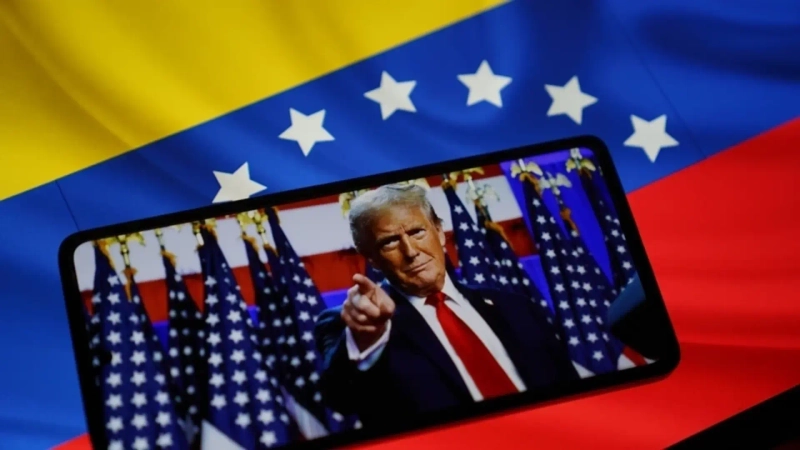
Analysts say President Donald Trump’s decision to postpone a U.S.-China summit could cool ties that had been moving into a conciliatory phase. The war between the United States and Iran has also emerged as a key variable in U.S.-China relations.
Trump’s move to delay talks with Chinese President Xi Jinping is seen as aimed at extracting as much Chinese cooperation as possible in the war with Iran. That is because the request to postpone the summit came immediately after a demand on the 14th to dispatch warships in response to the Strait of Hormuz blockade. With the war expected to last longer than anticipated, Trump may use the one-month delay to make additional requests of China.
However, China is unlikely to comply. In China, the view is gaining traction that, as Trump and the United States’ political room for maneuver is narrowing, there is little downside even if the summit is pushed back. According to diplomatic sources in Beijing on the 17th, the Chinese government had already begun preparing alternatives since last week, anticipating the possibility that the United States would seek a postponement. This was because U.S. working-level officials, who would need to coordinate pending issues ahead of Trump’s visit to China, were reluctant to engage in consultations.
So far, China has avoided direct involvement in the Iran war while maintaining a publicly critical stance toward the United States. The goal is to communicate with Iran and highlight its role as a mediator for Middle Eastern countries.
Contrary to Trump’s expectations, some forecast that U.S.-China relations could deteriorate over the next month. That is because the U.S. government has launched an investigation under Section 301 of the Trade Act, effectively taking aim at China by flagging oversupply as a problem. China is also unlikely to agree to dispatch warships. It was reported that sharp exchanges also took place over the Section 301 probe during high-level U.S.-China talks in Paris, France.
In China, there are expectations that Beijing will be on more advantageous footing at the late-April summit. The argument is that it would be beneficial to watch how the Iran war unfolds and use that to strengthen negotiating leverage with the United States. Of course, from China’s perspective, the U.S.-Iran war also poses the problem of losing diplomatic initiative in the Middle East. Its influence could diminish in China, a key ally and a core hub of the “Belt and Road” (linking China, Central Asia and Europe).
However, the analysis in China is that a decline in U.S. influence in East Asia would be favorable given factors such as relations with Taiwan. Kurt Campbell, former deputy secretary of state, warned that “the U.S. moving South Korea’s THAAD (Terminal High Altitude Area Defense) and Marines deployed in Japan to the Middle East will lead to a gap in deterrence against China,” adding that “at a time when the economy vis-à-vis China matters in East Asia, the U.S. could fall into a ‘Middle East quagmire’ and fail to play the necessary role.”
Beijing=Correspondent Kim Eun-jung kej@hankyung.com

Korea Economic Daily
hankyung@bloomingbit.ioThe Korea Economic Daily Global is a digital media where latest news on Korean companies, industries, and financial markets.