Summary
- Saudi authorities said they are internally assessing the possibility that international oil prices could break above $180 per barrel if the Middle East war drags on and supply disruptions from a clash with Iran persist.
- They noted that with a near-blockade situation in the Strait of Hormuz, attacks on energy facilities, and maritime logistics disruptions, millions of barrels have been removed from global crude supply, pushing Brent above $119 and Oman crude futures past $166, intensifying upward pressure on prices.
- With markets even discussing the possibility of $200 per barrel later this year if the oil-price uptrend continues, Aramco is set to adjust official selling prices (OSP) on the 2nd of next month; Saudi crude is trading around $125 in parts of Asia, and some project $140 if inventories are drawn down.
Forecast Trend Report by Period


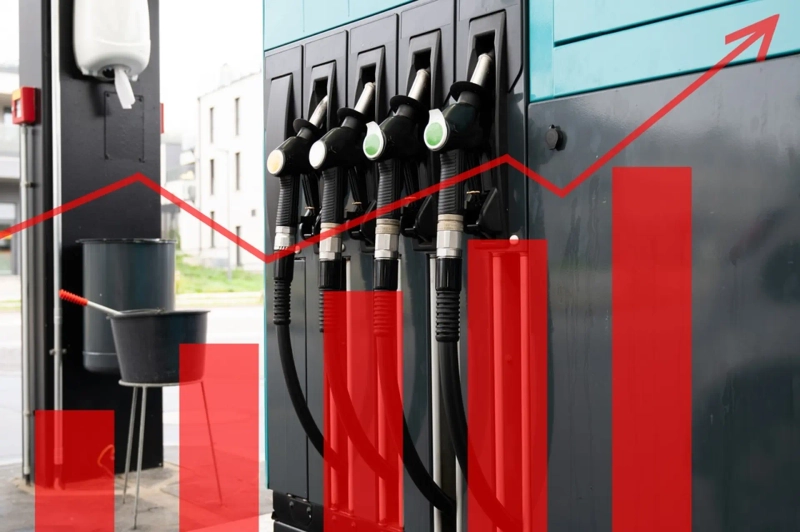
A projection has emerged that international crude prices could top $180 a barrel if the war in the Middle East becomes protracted.
According to The Wall Street Journal (WSJ) on the 19th (local time), the Saudi government and energy authorities are said to be internally assessing the possibility that oil prices could break through $180 if supply disruptions stemming from a clash with Iran persist through the end of April.
With supply anxiety widening due to ongoing attacks on energy facilities and disruptions to maritime logistics, upward pressure on prices is building rapidly. Brent, the global benchmark, recently rose intraday to $119, while Oman crude futures—reflecting the Middle East spot market—surged past $166.
In particular, concerns over supply disruptions are being amplified as the Strait of Hormuz—through which about 20% of the world’s crude shipments pass—has been pushed to a near-de facto blockade. Iran has heightened tensions by attacking energy facilities in the Gulf region, including in Qatar and Saudi Arabia, and continuing strikes on oil tankers.
Millions of barrels have already been knocked out of global supply due to the war, and prices are estimated to have climbed about 50% since the clashes in late February.
Saudi Arabia is not simply welcoming a sharp rise in prices. That is because an oil spike that feeds into a global slowdown or demand destruction could, over the longer term, increase market instability.
Umer Karim, a researcher at the King Faisal Center, said, "Saudi Arabia prefers a gradual rise and maintaining market share over a short-term spike," adding, "If prices rise too quickly, long-term demand could be damaged."
Markets are also suggesting that if the rally continues, the possibility of $200 a barrel later this year cannot be ruled out.
Saudi state oil company Aramco is reported to be comprehensively reviewing supply and demand conditions ahead of its announcement of official selling prices (OSP) on the 2nd of next month. In parts of Asia, Saudi crude is already trading around $125 a barrel, and some are also projecting that if inventories are depleted, prices could climb to around $140 in the short term.

Doohyun Hwang
cow5361@bloomingbit.ioKEEP CALM AND HODL🍀