"Two weeks is the line in the sand"—companies on edge as oil at $175 flashes a warning
Summary
- CEOs at major companies voiced concerns that if the Strait of Hormuz blockade lasts more than two weeks, international oil prices could spike to $175 per barrel.
- CFOs said they are reviewing the possibility of a surge in oil prices—and the resulting hit to consumer sentiment and slowdown in corporate demand—under three scenarios: late March, mid-April, and a prolonged blockade lasting through year-end.
- Experts warned that if the blockade drags on, a full-scale oil shortage and energy crisis could take hold in Asia, potentially triggering a sharp repricing phase in international oil prices.
Forecast Trend Report by Period


Top executives grow concerned about oil prices
If the Strait of Hormuz blockade lasts into next month
"A full-blown oil shortage in Asia"
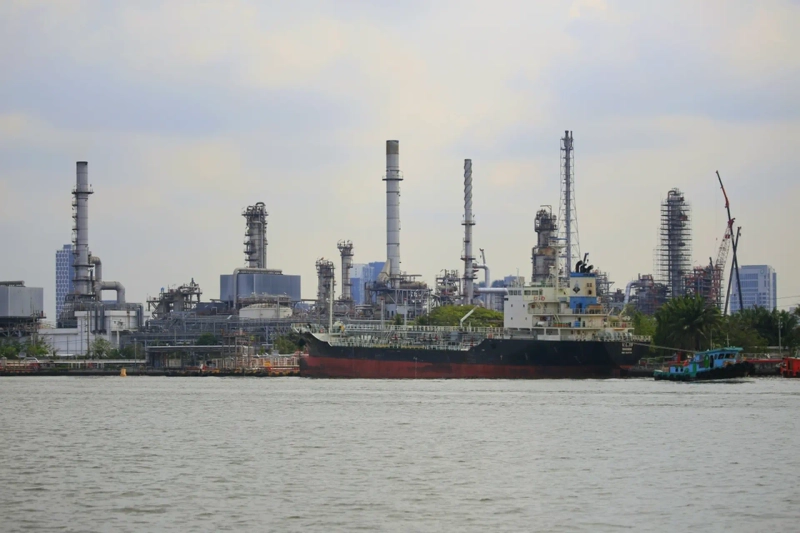
As the blockade of the Strait of Hormuz sends international oil prices sharply higher and deepens global supply-chain anxiety, a sense of crisis is also intensifying among senior executives at major companies. CEOs are viewing roughly two weeks as the "psychological line in the sand" for reopening the strait. Concerns are growing that if that threshold is crossed, oil could surge to $175 a barrel.
According to U.S. outlets including CNBC on the 22nd (local time), Scott Kirby, CEO of United Airlines, said, "Oil prices could rise to around $175 a barrel." He added that companies must also prepare for a high-price environment persisting into next year, with crude staying above $100.
The lack of any end in sight to the conflict is also adding to market unease. With it difficult to gauge when the U.S.-Iran confrontation might subside, financial markets have also been jolted. The Nasdaq has extended its decline for a fourth straight week, while gold and bonds—often seen as representative safe-haven assets—have also weakened.
U.S. President Donald Trump warned on the 21st, "If the strait is not opened within 48 hours, we will strike Iran’s power plants." In response, Iran raised tensions further, saying it would impose a full blockade of the strait if its power infrastructure is attacked.
Corporate finance chiefs are also watching closely. CFOs at major companies are said to be reviewing responses based on three scenarios: reopening by late March, reopening after mid-April, and a prolonged blockade extending to year-end. Energy companies as well as technology firms are concerned that a spike in oil prices could lead to weaker consumer sentiment and slower corporate demand.
Energy expert John Kilduff said, "If the strait is still not opened beyond next month, a full-blown oil shortage could emerge in Asia," adding, "India, Japan and South Korea are likely to move to cut industrial output or conserve electricity use."
He noted that while alternatives such as releasing strategic petroleum reserves or using Saudi Arabia’s pipelines are being discussed, they have limits when it comes to offsetting a supply gap of more than 10 million barrels a day.
The U.S. may face a limited short-term hit thanks to its relatively stable production base. However, warning bells are ringing that the energy crisis could intensify as the year-end approaches.
Kilduff said, "Within the U.S., supply disruptions could become visible first starting in California," adding, "Short-term measures such as gasoline tax holidays could instead spur demand and create side effects."
Some analyses have also pointed out that the reason international oil prices are moving within a certain range is that expectations remain that the situation will be resolved early.
Kilduff explained that this expectation is why West Texas Intermediate (WTI) is meeting resistance around $100 a barrel and Brent is also showing a relatively stable trend around $105–$110.
Even so, he warned that if the blockade continues for more than two additional weeks, oil prices could once again enter a phase of sharp repricing.
Kim Dae-young, Hankyung.com reporter kdy@hankyung.com

Korea Economic Daily
hankyung@bloomingbit.ioThe Korea Economic Daily Global is a digital media where latest news on Korean companies, industries, and financial markets.