U.S.-Iran ‘ultimatum’ rattles markets… KOSPI plunges over 6%, FX rate hits highest in 17 years
Summary
- The report said the KOSPI plunged 6.49% on the possibility of an escalation in the U.S.-Iran war, triggering a sell-sidecar.
- It said that while foreigners and institutions embarked on large-scale net selling in the main market, retail investors defended against further declines with the largest-ever one-day net buying.
- It said the won-dollar exchange rate hit 1,517.3 won—its highest since 2009, a 17-year high—heightening market uncertainty.
Forecast Trend Report by Period


KOSPI closes at 5,405.75
Trump threatens to “obliterate” power plants
Iran vows “even greater retaliation” in hardline response
KOSPI sell-sidecar triggered
FX rate highest since the financial crisis
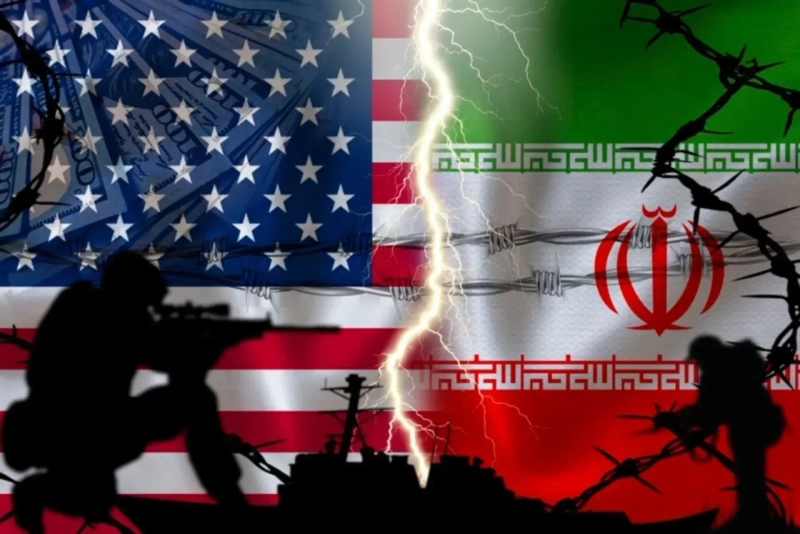
The KOSPI sank more than 6% on the 23rd on fears of an escalating conflict in the Middle East. As the index slid sharply, a sell-sidecar was triggered. The won-dollar exchange rate jumped more than 15 won.
The KOSPI closed at 5,405.75, down 375.45 points (6.49%) from the previous session. After opening down 3.48%, losses widened in early trading, triggering a sell-sidecar. It was the first such trigger in 10 sessions since the 9th. This marked the sixth sell-sidecar activation this year.
A sell-sidecar is a measure designed to cool overheated markets by temporarily halting program trading when futures and spot prices swing sharply. It is triggered when KOSPI 200 futures fall more than 5% from the previous session and the move persists for one minute.
The sharp decline was widely attributed to rising odds of an expanded U.S.-Iran war. As the exchange rate and interest rates surged, the broader market was exposed to heightened uncertainty.
Earlier, U.S. President Donald Trump posted on the social media platform Truth Social on the 21st (local time) an ‘ultimatum,’ saying that unless Iran fully opens the Strait of Hormuz within 48 hours “without any threat,” the U.S. would attack and “obliterate” Iran’s power plants, starting with the largest facilities.
Iran also signaled a hardline response. Ebrahim Zolfaghari, spokesperson for the Khatam al-Anbiya Central Headquarters that coordinates command of Iran’s armed forces, said that if the U.S. carries out its threat against Iran’s power plants, the Strait of Hormuz would be completely closed and would not reopen until the power plants are rebuilt.
In the main KOSPI market, foreign investors and institutions posted net sales of 4.0738 trillion won and 4.5987 trillion won, respectively. Retail investors cushioned further declines by buying a record one-day net total of 8.1288 trillion won.
Top market-cap names on the KOSPI broadly weakened. Samsung Electronics (-6.57%) and SK hynix (-7.35%) fell sharply, relinquishing the “200,000-won Samsung” (Samsung Electronics at 200,000 won) and “1,000,000-won hynix” (SK hynix at 1,000,000 won) milestones.
Samsung Electronics preferred (-5.96%), Hyundai Motor (-6.19%), LG Energy Solution (-5.19%), SK Square (-8.39%), Samsung Biologics (-4.87%), Hanwha Aerospace (-3.18%), Doosan Enerbility (-8.12%), Kia (-4.04%), and KB Financial Group (-6.38%) also declined. HYBE plunged 15.55% amid escalating Middle East tensions and profit-taking tied to BTS’ comeback.
The KOSDAQ also fell more than 5%. The KOSDAQ closed at 1,096.89, down 64.63 points (5.56%) from the previous session. In the KOSDAQ market, foreigners and institutions recorded net sales of 271.8 billion won and 237.9 billion won, while retail investors were net buyers by 524.9 billion won.
The won-dollar exchange rate surged. In the Seoul FX market, the won-dollar rate ended daytime trading at 1,517.3 won, up 16.7 won from the previous session. On a daytime close basis, it marked the highest level in 17 years since March 9, 2009 (1,549.0 won) during the global financial crisis. The move was attributed to stronger global demand for dollars amid intensifying conflict in the Middle East.
Noh Jeong-dong, Hankyung.com reporter dong2@hankyung.com

Korea Economic Daily
hankyung@bloomingbit.ioThe Korea Economic Daily Global is a digital media where latest news on Korean companies, industries, and financial markets.