Trump: "Reached agreement on key issues with Iran; postponing power-plant strikes for five days"…Iran: "There were no talks"
Summary
- President Trump said he held talks with Iran aimed at de-escalating hostilities in the Middle East and announced a five-day postponement of attacks on power plants and energy infrastructure.
- Trump said the two sides had "agreed on almost every issue" regarding Iran’s renunciation of nuclear weapons, adding that the U.S. would directly take custody of Iran’s stockpile of enriched uranium.
- With Iran’s blockade of the Strait of Hormuz driving a surge in international oil prices and increasing anxiety in global energy markets, the report said successful talks could ease tensions in the Middle East, while a breakdown could intensify military clashes.
Forecast Trend Report by Period


Trump: "Both the U.S. and Iran want a deal…high chance of reaching an agreement"
Iran’s demands for guarantees against renewed attacks and war reparations remain a key variable
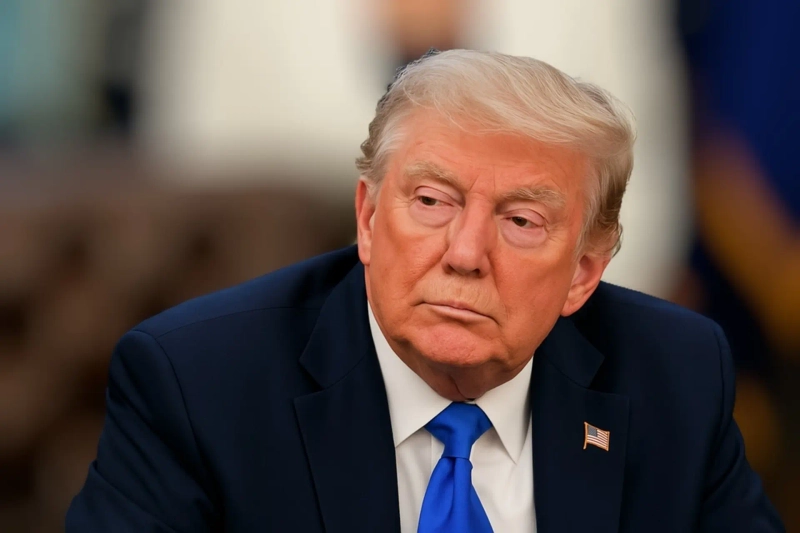
U.S. President Donald Trump said he held "productive" talks with Iran aimed at resolving the Middle East conflict, adding that he will postpone the previously threatened bombing of Iranian power plants for five days, he announced on the 23rd (local time). This marks, in effect, the first time the United States and Iran—locked in ongoing military tensions—have publicly acknowledged entering negotiations. Iran, however, which has demanded guarantees against renewed attacks and compensation, is denying that any talks took place.
In a post on his Truth Social platform, Trump said, "I am pleased to report that over the past two days the United States and Iran have held very useful and productive talks to fully and comprehensively de-escalate hostilities in the Middle East."
He added, "Accordingly, I instructed the Department of Defense to postpone for five days all military strikes on Iran’s power plants and energy infrastructure," and said, "Talks with Iran will continue this week, and whether to strike power plants and other targets will be determined by the outcome of the negotiations."
On the 21st, Trump had effectively issued an ultimatum, giving Iran a 48-hour deadline and warning he would devastate its power plants if it did not reopen the Strait of Hormuz. But on the day the deadline expired, he disclosed the start of talks and shifted to holding off on an attack.
Later, speaking to reporters at a Florida airport, Trump said, "Iran wants to make a deal, and we want a deal as well."
He said a U.S. delegation—including Middle East envoy Steve Witkoff and Jared Kushner—had successfully conducted negotiations with a top-tier Iranian figure through late the previous evening, adding that they had "agreed on almost every issue," including Iran’s "renunciation of nuclear weapons."
"They won’t have a nuclear weapon. That’s number one," Trump said. "They agreed to that." He added that if a final agreement is reached, the United States would directly take custody of Iran’s stockpile of enriched uranium.
Trump said the Iranian counterpart in the talks was not Ayatollah Mojtaba Khamenei, Iran’s supreme leader.
He also said the U.S. and Iranian delegations could hold face-to-face talks soon. In connection with this, U.S. online outlet Axios, citing an Israeli official, reported that Iran’s counterpart was Mohammad Bagher Ghalibaf, the speaker of parliament and a close associate of Mojtaba, the current supreme leader.
At an event in Tennessee titled the "Memphis Safety Task Force Roundtable," Trump also said, "I think there’s a very high chance we ultimately reach an agreement," adding, "That’s why we’re giving it five days, and then we’ll see what happens."
Describing Iran’s negotiating posture, he said, "We’ve been negotiating with Iran for a long time, and this time they mean business. And that’s only because our military did a great job," adding, "They want an agreement and we’re going to finish it."
Axios, citing sources, reported that U.S. Vice President JD Vance and Israeli Prime Minister Benjamin Netanyahu spoke by phone earlier in the day to discuss the start of negotiations with Iran and the terms of an agreement to end the war.
After the United States and Israel launched a military operation against Iran on the 28th of last month, the two sides have remained in military confrontation, with Iran responding by effectively blocking the Strait of Hormuz.
As Iran’s blockade of the Strait of Hormuz sent international oil prices sharply higher and amplified uncertainty in global energy markets and the world economy, tensions around the strait emerged as a key variable in the war.
Trump warned on the 21st that if Iran did not reopen the Strait of Hormuz within 48 hours, he would devastate its power plants. Iran also said it would respond with stronger retaliation, heightening fears of escalation.
Against that backdrop, the public disclosure of talks is also being read as a signal that bilateral relations could shift into a negotiating phase. If negotiations produce results, tensions in the Middle East could ease, but if talks collapse, the military confrontation could intensify again, observers said.
In particular, Iran’s reaction—and its follow-up steps—has come into focus, as Tehran has demanded, as conditions for ending the war, guarantees against renewed attacks and war reparations.
Iran, however, denied that any negotiations with the United States had taken place. Iran’s foreign ministry spokesperson was quoted by state-run IRNA as saying, "Over the past 24 days, as the imposed war has continued, there have been no negotiations or talks with the United States."
Ghalibaf, the speaker of Iran’s parliament who had been mentioned as a negotiator, also wrote on X that "there were no negotiations with the United States," dismissing the reports as "fake news."
Iranian media also assessed Trump’s remarks as "Trump’s retreat" and "Trump buying time."
Ko Jeong-sam, Hankyung.com reporter jsk@hankyung.com

Korea Economic Daily
hankyung@bloomingbit.ioThe Korea Economic Daily Global is a digital media where latest news on Korean companies, industries, and financial markets.