"Iran attack postponed" — on a single remark from Trump, the won-dollar rate plunges 30 won… into the 1,480s
Summary
- The won-dollar exchange rate fell by about 30 won in overnight trading after U.S. President Donald Trump said he would postpone attacks on Iranian power plants for five days.
- Markets said the move quickly revived risk-on sentiment, with assessments that short-term energy-related risks are easing somewhat.
- Standard Chartered said it has become less likely that the two sides will bomb each other’s infrastructure over the next few days, but it is difficult to say the worst-case scenario is over.
Forecast Trend Report by Period


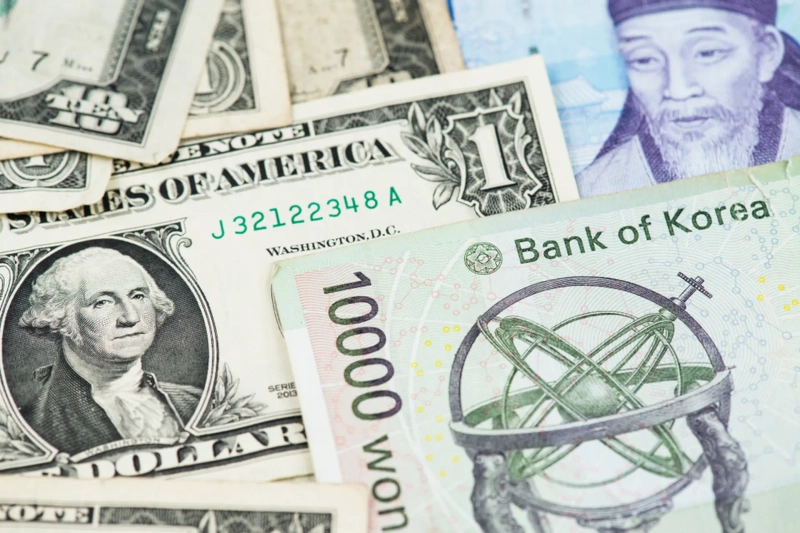
The won-dollar exchange rate plunged by about 30 won in overnight trading. Risk-on sentiment quickly revived after U.S. President Donald Trump said he would postpone attacks on Iranian power plants for five days.
At 2 a.m. on the 24th, the won-dollar rate ended trading at 1,486.70 won, down 13.9 won from the previous session. That marked a drop of 30.60 won versus the daytime close (1,517.3 won).
In a post on his Truth Social account, President Trump said the United States and Iran had held “very good and productive” talks over the past two days, adding: “On the condition that the ongoing meetings and discussions are successful, I instructed the Department of Defense to delay all military attacks on Iran’s power plants and energy infrastructure for five days.”
He later told reporters that “Iran wants to reach a deal, and we do as well,” saying a U.S. delegation including Middle East envoy Steve Witkoff and Jared Kushner had already held talks with a senior Iranian official ahead of negotiations.
However, the Iranian government denied there had been any dialogue or negotiations. According to Iran’s state-run IRNA news agency, an Iranian Foreign Ministry spokesperson said that in recent days allied countries had relayed messages from the U.S. side requesting talks to end the war, but Iran did not respond. The spokesperson stressed that Iran had not held any talks with the United States over the past 24 days.
Steven Englander, head of global G10 FX research and North America macro strategy at Standard Chartered, said, “Markets are viewing this situation as somewhat reducing short-term risks on the energy front,” adding, “because the likelihood that both sides will bomb each other’s infrastructure over the next few days has diminished.”
He added, “This doesn’t mean the worst-case scenario is over, but it does mean the likelihood of the worst case materializing over the next few days has decreased.”
Ko Jeong-sam, Hankyung.com reporter jsk@hankyung.com

Korea Economic Daily
hankyung@bloomingbit.ioThe Korea Economic Daily Global is a digital media where latest news on Korean companies, industries, and financial markets.