"U.S., Iran may hold first face-to-face talks this week since outbreak of war"
Summary
- The U.S. and Iran are reportedly seeking their first face-to-face ceasefire talks this week, mediated by Pakistan.
- Iran’s blockade of the Strait of Hormuz has sent international oil prices surging above $100 a barrel and rattled financial and capital markets.
- President Trump is reportedly exploring an exit strategy via ceasefire negotiations with Iran, mindful of the economic shock and surging prices.
Forecast Trend Report by Period


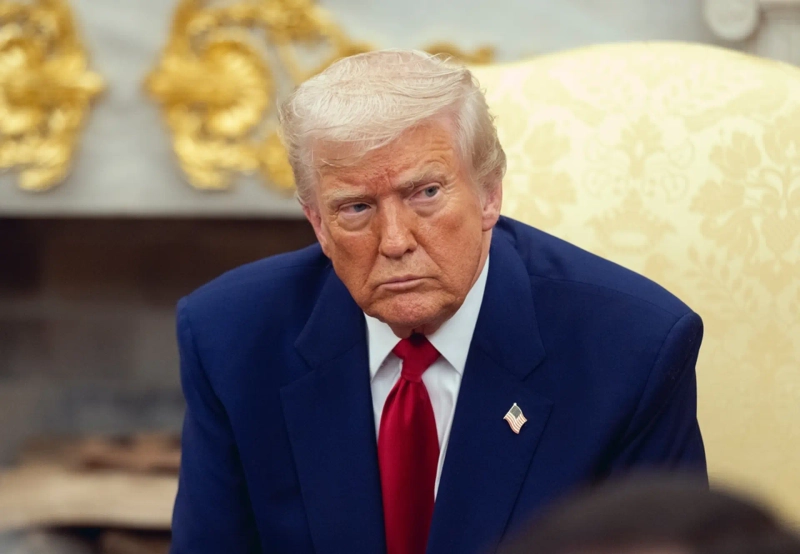
The United States and Iran are reportedly exploring their first direct, face-to-face talks this week to discuss an end to the war.
Reuters, citing a Pakistani government source on March 23 (local time), reported that as early as this week Vice President J.D. Vance, special envoy Steve Witkoff and President Donald Trump’s son-in-law Jared Kushner are expected to meet Iranian officials in Islamabad, Pakistan, for ceasefire negotiations. If realized, it would be the first in-person talks between the U.S. and Iran since hostilities began on Feb. 28.
The talks are said to be taking place with active mediation and facilitation by Pakistan, an Iranian-friendly country. Pakistan’s most powerful figure, Army Chief Gen. Asim Munir, spoke with President Trump by phone on March 22.
The push to explore direct dialogue comes as international concern peaks that war damage could become irreversible, with both sides threatening strikes on each other’s civilian power plants and energy facilities.
Earlier, on March 21, President Trump issued a 48-hour deadline to Iran, delivering an ultimatum that he would devastate power plants if it did not reopen the Strait of Hormuz. On March 23, however, he abruptly said he had held productive talks with Iran to resolve the war and announced a five-day postponement of the previously signaled power-plant attacks.
Trump later told reporters that a U.S. delegation including Witkoff had held negotiations with a top Iranian figure and added that talks with Iran would continue this week.
U.S. outlet Axios, citing an Israeli official, reported that the counterpart Trump referred to was Mohammad Bagher Ghalibaf, speaker of Iran’s parliament.
Apparently gauging domestic opinion, Ghalibaf himself stepped forward to deny the report, and Iranian authorities repeated hardline rhetoric that they would not yield to U.S. pressure.
Iran nevertheless acknowledged that at least indirect communication with the U.S. had taken place. Foreign Ministry spokesman Esmail Baghaei said Iran received, through friendly countries, a message conveying a U.S. request for negotiations to end the war, and responded appropriately in line with Iran’s principled position.
Israel’s reaction—another main party to the war—also suggests it is true that the U.S. and Iran have entered a phase of exploring dialogue. In a video message on March 23, Israeli Prime Minister Benjamin Netanyahu said he had spoken with President Trump by phone and discussed ways to convert the military gains achieved by the U.S.-Israel coalition into negotiations aimed at safeguarding Israel’s interests. The remarks are seen as reflecting caution that direct U.S.-Iran talks should not lead to an outcome unfavorable to Israel.
Given that Trump in the early stages of the war demanded Iran’s “unconditional surrender” and openly floated “regime change,” pushing ceasefire talks at this stage can be viewed as a significant retreat from those earlier objectives. Many analysts believe the shift stems from concern that the economic shock from a prolonged war could translate into political losses.
With Iran’s blockade of the Strait of Hormuz, international oil prices have surged to more than $100 a barrel, and financial and capital markets have been jolted, inflicting serious damage on the global economy.
In the U.S. as well, voter dissatisfaction is said to be crossing a threshold ahead of this year’s midterm elections amid surging prices, including gasoline.
Against this backdrop, there are signs Trump may seek an exit strategy: using claimed achievements—blocking Iran’s nuclear development, neutralizing external military threats such as ballistic missiles, and eliminating large parts of Iran’s leadership including Ayatollah Ali Khamenei—to issue a “self-declared victory,” create a rationale to stop the war, and effectively recognize an Ayatollah Mojtaba Khamenei-led system.
In fact, Trump referenced “15 items” regarding future dialogue with Iran, including giving up nuclear weapons, a complete halt to uranium enrichment and the removal of nuclear material abroad, reductions in ballistic missiles, and joint management of Hormuz.
In particular, Trump said regarding the Strait of Hormuz, “I and the Ayatollah (Iran’s supreme leader) can control it jointly,” a remark that suggests he could recognize Iran’s new “theocratic leadership” led by Mojtaba.
Still, concerns remain that if Iran—having effectively blocked the strait and even demanded war reparations—does not show greater flexibility than before on sensitive issues such as uranium enrichment, exporting nuclear material, and cutting ballistic missiles, the conflict could spread to ground warfare and intensify further.
Ko Jeong-sam, Hankyung.com reporter jsk@hankyung.com

Korea Economic Daily
hankyung@bloomingbit.ioThe Korea Economic Daily Global is a digital media where latest news on Korean companies, industries, and financial markets.