PiCK
Trump’s two-track tactic… calling for an ‘end to the war’ while ramping up troop deployments behind the scenes
Summary
- After President Trump’s remarks on talks with Iran, Iran’s denial prompted oil prices including Brent to rebound, the report said.
- The U.S. is increasing troop deployments to the Strait of Hormuz and is reviewing and proceeding with potential deployments of the 82nd Airborne Division and the 31st Marine Expeditionary Unit, it said.
- Analysts suggest Trump’s talks rhetoric could be a ‘smokescreen’ aimed at regime change and a ground operation, the report noted.
Forecast Trend Report by Period


Prelude to peace, or a smokescreen for airstrikes?
Five big questions over the ‘end-of-war’ talks
Ghalibaf, IRGC deny contacts with the U.S.
Possible face-to-face talks soon in Pakistan
Deadlock over regime change, uranium removal
Iran-side concessions—IAEA inspections—seen as key
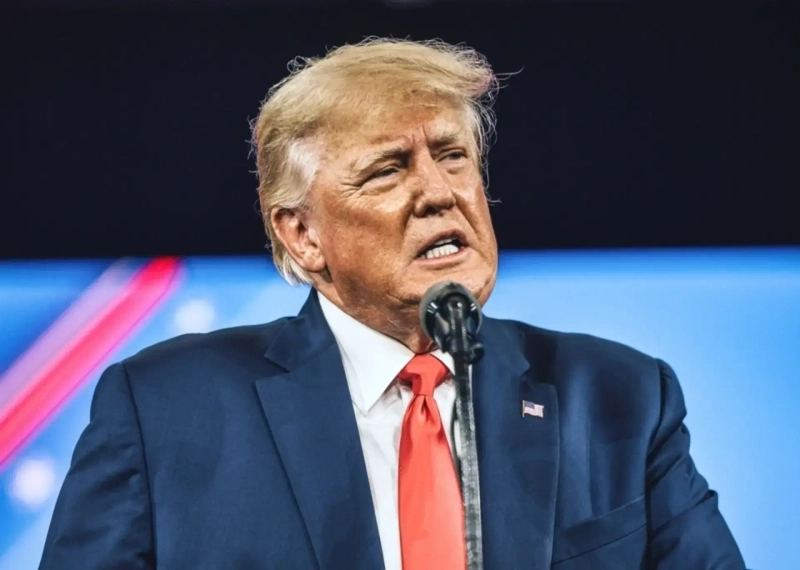
Markets that had welcomed U.S. President Donald Trump’s remark that the United States was having “productive talks with Iran” are now pulling back. After dropping more than $10 the previous day, oil prices including Brent rebounded by about $4 in futures trading on the 24th. The move comes as questions grow over whether Trump may have exaggerated the situation, with Iran denying that any dialogue with Washington is taking place. Meanwhile, the U.S. is increasing troop deployments to the Strait of Hormuz, raising doubts about how far any real de-escalation effort will go. Here are the key issues.
(1) Were there pre-talks?
On the 23rd (local time), at a Florida airport, Trump said a U.S. delegation—including Middle East envoy Steve Witkoff and his son-in-law Jared Kushner—had successfully conducted negotiations with a top Iranian figure through the previous evening. He said, “We’ve agreed on almost every issue with Iran, including giving up nuclear weapons,” adding that the U.S. would “go in directly and remove (Iran’s) enriched uranium.”
Iran, however, flatly denied that any negotiations were under way at all. Axios and others reported that Iranian Parliament Speaker Mohammad Bagher Ghalibaf was the negotiating channel, but Ghalibaf said it was “fake news used to manipulate financial and oil markets.”
Still, it is true that the two sides have communicated indirectly through mediation by major countries. Iran’s Foreign Ministry also acknowledged receiving U.S. messages via mediators. The Wall Street Journal (WSJ) reported that the foreign ministers of Saudi Arabia, Türkiye and Pakistan discussed a diplomatic solution to the Iran war on the 19th in Riyadh, Saudi Arabia, and that their involvement led Trump to change his stance from “bombing power plants in 48 hours.”
(2) What comes next in the process?
The U.S. is currently seeking to make contact with Iran’s Islamic Revolutionary Guard Corps (IRGC), which effectively holds real control in Iran. Speaker Ghalibaf—cited as a channel for talks—is a hardliner who built his career in the IRGC. Nicole Grajewski, a fellow with the Nuclear Policy Program at the Carnegie Endowment for International Peace, said, “Speaker Ghalibaf is one of the few senior officials who can persuade Iran’s leadership and hardliners to accept a deal.”
If talks proceed, the most likely format is for the two sides to engage in a third country via mediators—the same approach used when the U.S. was in talks with Iran up to just before the war. A Pakistani official told Reuters, “Vice President JD Vance and Kushner, among others, are expected to meet Iranian officials this week in Islamabad, Pakistan’s capital.”
(3) What are the conditions on both sides?
The key question is whether the two sides can reach an agreement through negotiations. The U.S. wants Iran to completely abandon nuclear weapons development and uranium enrichment, sign arms-reduction treaties with regional countries, and halt funding for regional proxy forces such as Hezbollah and the Houthi rebels.
Iran, for its part, is said to have already presented Washington with a fairly flexible informal proposal. It would suspend its ballistic missile program for five years and reduce uranium enrichment levels, while also accepting International Atomic Energy Agency (IAEA) inspections of remaining centrifuges and a halt to support for proxy forces.
Even so, major areas of deadlock remain. Trump said that the talks had been productive but added that “a very significant form of regime change” would take place “(in Iran).”
(4) What did Trump really mean?
Markets voiced doubts about Trump’s comments the day before because, since the outbreak of the war, he has swung between hawkish and dovish remarks. Some analysts describe this as “his signature negotiating strategy.” Trump took a similar approach to the Iran issue in the late 1980s, when he first pursued a presidential bid.
The Financial Times (FT) reported that even during the height of the Iran-Iraq War, Trump questioned why the U.S. was paying the cost of protecting the Strait of Hormuz. He argued the U.S. should seize Iran’s oilfields and either completely destroy or occupy Kharg Island. In other words, his objective—“the U.S. should control Iran’s regime and its oil”—has remained unchanged for 40 years. But as the battlefield situation has not unfolded as he wished, he is seen as alternating between strong threats and moderate offers of negotiation.
(5) Why declare talks while increasing U.S. deployments?
Some view Trump’s mention of negotiations as merely buying time ahead of a full-scale ground operation—a “smokescreen.” The New York Times (NYT) reported that the U.S. is reviewing a plan to deploy a combat brigade and parts of the command element of the 82nd Airborne Division. It is a brigade-sized force of about 3,000 troops that can be deployed anywhere in the world within 18 hours.
On the 28th, when the five-day negotiating window cited by Trump expires, about 2,500 troops from the 31st Marine Expeditionary Unit, which departed from Okinawa, Japan, will arrive at the Strait of Hormuz.
Washington=Lee Sang-eun, Correspondent/Choi Man-soo, Reporter selee@hankyung.com

Korea Economic Daily
hankyung@bloomingbit.ioThe Korea Economic Daily Global is a digital media where latest news on Korean companies, industries, and financial markets.