"Even if the war ends, a low-oil-price era will be hard to come by"—Stanford professor warns
Summary
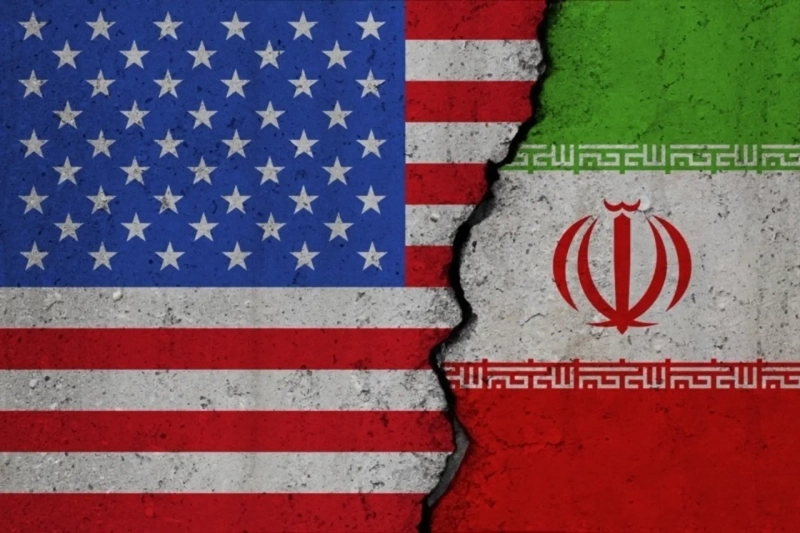
- Professor Anne Krueger said the Middle East war has driven oil prices sharply higher and that it would be difficult to expect a low-oil-price era even after the war ends.
- She voiced concern that a closure of the Strait of Hormuz would pose a grave threat to countries with high dependence on energy imports such as South Korea.
- She explained that rising war costs could worsen the U.S. fiscal deficit and inflation, and that U.S. monetary tightening could amplify instability in global financial markets.
Forecast Trend Report by Period


"The ripple effects of a Middle East war on the global economy would be far greater than those of the U.S. administration’s tariff policy. Even if the war ends, it is hard to be optimistic that oil prices will fall easily."
On the 25th, at a breakfast lecture hosted by the Korea Institute for International Economic Policy at the Lotte Hotel Seoul under the theme “Global geopolitical crises and the rising prominence of economic security issues,” Anne Krueger, Stanford’s Senior Fellow, said, ""At a time when the global economy is facing the most challenging and uncertain conditions since World War II due to the U.S.-China trade confrontation and the U.S. administration’s indiscriminate tariff policy, an unexpected Middle East war has erupted, worsening uncertainty to an unprecedented level," and made the remarks. Professor Krueger previously served as First Deputy Managing Director of the International Monetary Fund (IMF) and as the World Bank’s Chief Vice President.
She expressed concern that a spike in oil prices resulting from a closure of the Strait of Hormuz would deliver a major blow to the global economy. Professor Krueger warned that "it is a grave threat, especially for countries with a high dependence on energy imports such as South Korea." She added, "Even if the war ends, it is hard to be optimistic that a low-oil-price era will be sustained."
Professor Krueger projected that the war would shift the U.S. central bank (Fed)’s monetary policy stance toward raising the benchmark interest rate. She explained, "As war costs rise, the U.S. fiscal deficit will deepen and inflation will also increase," adding that "U.S. monetary tightening could amplify instability in global financial markets."
She stressed that, amid such geopolitical crises, mid-sized powers such as South Korea should reduce their dependence on the United States.
To that end, she suggested that countries excluding the United States could rally to build a “World Trade Organization (WTO) minus one” framework that upholds the principles of multilateralism.
She also argued that, in a situation where energy prices and the global trade environment are changing rapidly as they are now, South Korea should enhance economic flexibility—including in the labor market—to cope with uncertainty. She emphasized, "Labor market mobility should be increased, and retraining and job-transition programs for displaced workers should be strengthened."
Reporter Shim Sung-mi smshim@hankyung.com

Korea Economic Daily
hankyung@bloomingbit.ioThe Korea Economic Daily Global is a digital media where latest news on Korean companies, industries, and financial markets.