US: "Payments for Russian and Iranian crude can be made in rubles and yuan"... A lifeline for domestic refiners’ naphtha purchases
Summary
- The government said it received a response from the US that payments for Russian and Iranian crude can be made in non-dollar currencies such as the ruble, yuan and dirham, and that secondary sanctions will not be applied.
- The refining and petrochemical industries said allowing non-dollar settlement for Russian naphtha and the policy to exempt secondary sanctions would help improve domestic supply.
- The government said that while a potential Qatar LNG force majeure declaration would have limited impact on domestic supply, it is concerned that rising spot cargo prices in the global gas market could increase pressure to raise electricity and city gas rates.
Forecast Trend Report by Period


Director Yang Gi-wook: "Confirmed the US will not apply secondary sanctions"
No supply disruption despite Qatar LNG ‘force majeure’ declaration
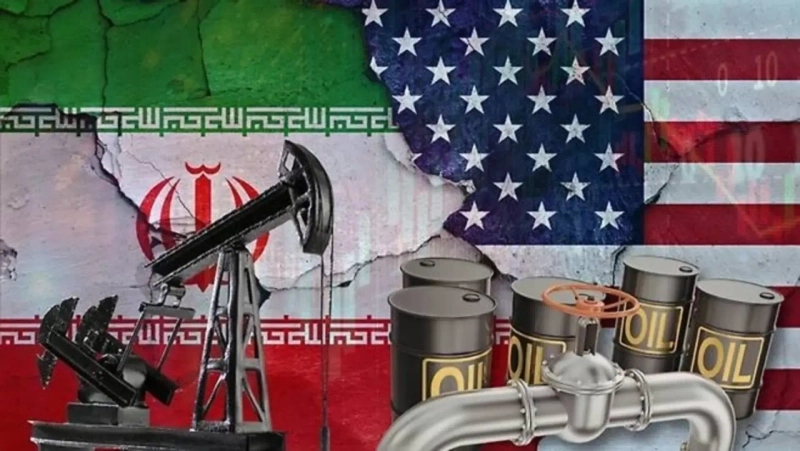
The South Korean government has received official confirmation from the United States that payments for Russian and Iranian crude oil can be made in non-dollar currencies such as the ruble, yuan and dirham (UAE). Companies are expected to move to secure supplies such as Russian naphtha. If imports become possible in practice, the supply situation is expected to ease somewhat.
Yang Gi-wook, director of the Office of Industrial Resources and Security, said on the 25th at a daily briefing on the Middle East situation at the Government Complex Sejong that “following consultations with the US Treasury Department, we received a response that under this temporary sanctions-relief measure, payments can be made in currencies other than the dollar, and that secondary sanctions will not be applied to Korean companies.”
The government is focusing more on the possibility of purchasing Russian naphtha than crude. The refining and petrochemical industries have welcomed the move to allow non-dollar settlement and exempt them from secondary sanctions. An industry official described the government’s stance as proactive, saying, “It’s like welcome rain in that the government has taken a forward-leaning approach to alternative imports,” adding, “Even a single cargo of Russian naphtha coming into the domestic industry would be a big help for supply.”
The refining industry has also been concerned about secondary sanctions from the European Union (EU). In the refining process, multiple crudes are blended, and if the final product—“petroleum products”—contains Russian crude, exports to the EU could be blocked. On this, Yang said, “If an unexpected variable arises, the government will step in directly to resolve it.” Domestic refining and petrochemical companies are reportedly moving to explore purchases of crude and naphtha via “shadow fleet” import channels from Russia and Iran.
Regarding reports in foreign media about the possibility that Qatar may declare force majeure on long-term (3–5-year) LNG contracts, Yang said, “We have not yet received any official notification from Qatar through KOGAS,” and assessed that even if it happens, the impact on domestic supply would be limited. The government said it has already excluded Qatari volumes from this year’s projected supply-demand outlook and secured alternative supplies.
Yang explained, “Of the 14 lines at Qatar’s LNG cooling facilities, two (about 20% of total capacity) have been damaged, and restoration is expected to take 3–5 years.”
He also said that even if Qatar declares force majeure, Qatar still needs to sell LNG, so contracts could be restored later through discussions.
The problem is not supply but rising prices. As the global gas market shifts from being ‘buyer-driven’ to ‘seller-driven,’ there are concerns over higher prices for spot (short-term) cargoes. This is expected to add upward pressure on electricity and city gas rates after this summer.
The government also said that with regard to the helium supply chain, which is highly dependent on the Middle East, semiconductor companies have secured sufficient inventories and there are alternative sources, so there is no major problem at this time. For small-volume users such as medical helium, it plans to continue monitoring with relevant ministries.
On reports that Iran demanded a transit fee of $2 million per vessel for passage through the Strait of Hormuz, Yang said, “There has been no official confirmation that they are asking for $2 million.” He added that if confirmed through official diplomatic channels, intergovernmental discussions could begin.
In response to criticism that 32% of the government’s strategic oil reserves (about 146 million barrels) are empty, Yang said, “Strategic reserves are the final safety net for the national economy, and are a mechanism to prepare for emergencies such as an actual supply halt rather than for managing market prices,” adding, “Releases and replenishment are matters to be decided very carefully.”
Reported by Kim Dae-hoon/Park Jong-gwan daepun@hankyung.com

Korea Economic Daily
hankyung@bloomingbit.ioThe Korea Economic Daily Global is a digital media where latest news on Korean companies, industries, and financial markets.