Trump-Iran ‘postwar talks’ gain traction, but final agreement likely to be arduous
Summary
- The United States and Iran have entered negotiations aimed at a ceasefire and an end to hostilities, but the article said sharply divergent demands could mean it takes considerable time to reach an agreement.
- It said the United States is demanding Iran’s uranium be shipped overseas, enrichment facilities be halted, and sanctions be maintained, while Iran is demanding the right to levy transit fees in the Strait of Hormuz, the closure of U.S. bases, and the lifting of sanctions.
- It said preparations for U.S. ground-force deployments and Gulf states such as Saudi Arabia calling for the war to continue are acting both as pressure cards in negotiations and as factors escalating tensions, leaving high uncertainty.
Forecast Trend Report by Period


Talks in Pakistan within 48 hours…tactical jostling over terms
U.S. readies ground forces…strategy to pressure negotiations
Up to 9,000 troops deployable within 2–3 days
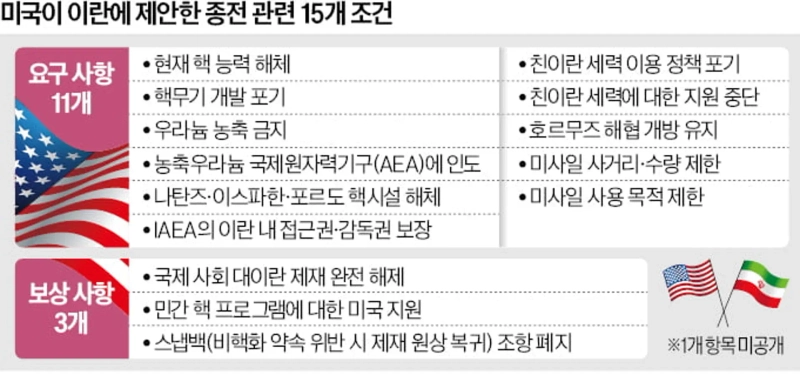
U.S. proposes ban on nuclear weapons and uranium enrichment
Iran demands guarantees against a renewed war, among other conditions
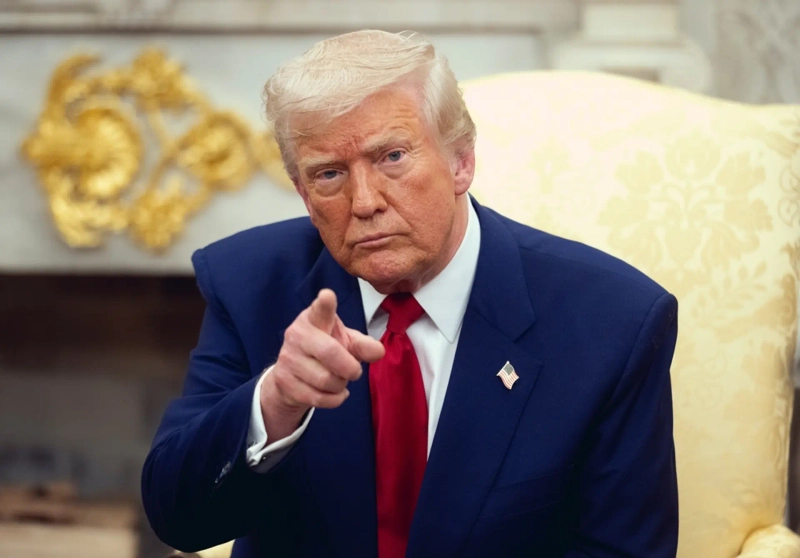
The war between the United States and Iran has fully entered a negotiation phase. While both sides are still in the early stages of exchanging demands, expectations are rising that—even if it takes time—a pathway to a ceasefire or an end to hostilities has been opened. There is also speculation that as early as the 26th, senior U.S. and Iranian officials could meet in Pakistan. Still, experts say the gap between the two sides is wide and reaching a deal could take considerable time.
U.S. and Iran swap ceasefire conditions
The Wall Street Journal (WSJ) reported on the 24th (local time) that mediators from Türkiye, Egypt and Pakistan are working to arrange talks between U.S. and Iranian officials within 48 hours. The United States has agreed to the meeting and is said to be awaiting Iran’s response.
The United States is reported to have delivered a list of demands consisting of 15 clauses to Iran. The New York Times (NYT) said Pakistan, which shares a border with Iran, served as the go-between. The proposal reportedly includes immediately shipping Iran’s uranium overseas and halting operations at all enrichment facilities within one month. The aim is to eliminate any future possibility of nuclear development—by disabling centrifuges and building nuclear-fuel storage facilities outside Iran to be placed under U.N. inspections. For Iran, these terms would be difficult to accept.
Iran, too, presented parameters for negotiations to the Donald Trump administration. Specifically, it demanded the closure of all U.S. bases in the Gulf, payment of compensation for damages, permission to levy transit fees in the Strait of Hormuz, guarantees against a renewed war, a halt to Israel’s attacks on Hezbollah, the lifting of all sanctions imposed on Iran, and acceptance of its missile program. A U.S. government official told the WSJ the demands were “absurd and unrealistic,” dismissing them outright.
A key sticking point is whether the United States will recognize Iran’s control over the Strait of Hormuz. Iran argues it should be able to charge passage fees like the Suez Canal. Unlike the man-made Suez Canal, however, the Strait is a naturally formed waterway, and charging transit fees would not be permitted under international law.
Saudi Arabia and others want the war to continue
Meanwhile, Gulf states including Saudi Arabia ramping up their appetite for war has emerged as a variable. The NYT reported that Saudi Crown Prince Mohammed bin Salman is urging President Trump to continue strikes on Iran.
Iran, the leading Shiite power, and Saudi Arabia, the leading Sunni power, have long vied for regional primacy in the Middle East. The United Arab Emirates (UAE)—which has been a focal point of Iran’s drone and missile attacks in this war—is also said to favor continuing attacks on Iran. These countries are hoping for regime change that would bring in a government in Iran they can control.
Fighting is continuing even as negotiations are discussed. Saudi Arabia and Kuwait said they are responding to Iranian missile and drone attacks through interceptions and other measures. Bahrain advised residents to evacuate to the nearest safe location.
Possibility of Trump’s deception
Some have voiced skepticism about the U.S. attempt at peace talks itself. There is speculation that Washington could lull Iran into complacency and then expand attacks, including an amphibious landing on coastal areas near the Strait of Hormuz. The very fact that the United States has re-presented the same 15-clause proposal it put forward during last year’s strikes on Iran, with little to no revision, could be seen as a signal that Washington is not expecting much in the way of negotiating gains.
The United States is moving a Marine Expeditionary Unit of about 5,000 toward Iran and is reviewing the dispatch of 3,000–4,000 airborne troops that could be deployed within 2–3 days. However, many analysts say these forces are insufficient to conduct a full-scale ground war and will instead be used as a card to maximize pressure on Iran during negotiations. Still, because this is bound to weigh negatively on Iran’s trust in the United States, the prevailing view is that it could take some time for talks to produce results.
Washington=Lee Sang-eun / New York=Park Shin-young, correspondents selee@hankyung.com

Korea Economic Daily
hankyung@bloomingbit.ioThe Korea Economic Daily Global is a digital media where latest news on Korean companies, industries, and financial markets.