Oil falls but the dollar rises…Will Samsung Electronics and SK hynix gain? [Today’s Market Preview]
Summary
- Korean stocks are expected to remain volatile due to external factors such as the war, oil prices, and the dollar.
- Analysts said supply shocks, inflation concerns, and an upward revision to rate expectations are key to investor sentiment.
- Analysts said investors should pay attention to stocks with solid earnings, sectors with favorable first-quarter earnings expectations, and maintaining a neutral-or-higher allocation to domestic equities.
Forecast Trend Report by Period


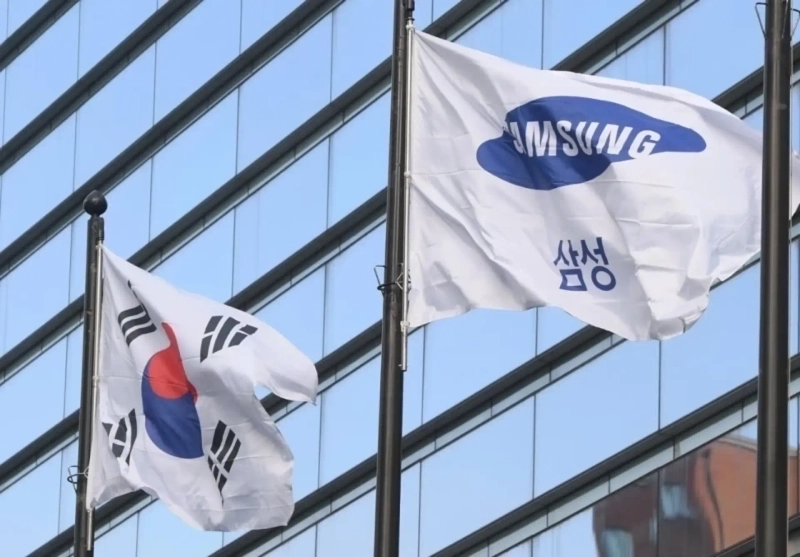
Korean stocks are expected to face volatility on the 26th as investors continue a tug-of-war over flows. While the U.S. has entered talks with Iran over a ceasefire proposal, uncertainty remains over the trajectory of the war and oil prices.
Heavy net selling by individuals and foreigners…Will today be different?
According to the Korea Exchange on the 26th, the KOSPI closed the previous day at 5,642.21, up 1.59% from the prior session. It surged to the 5,740 level early in the session, but later sharply pared gains as large-scale net selling by individuals and foreigners emerged.
On the day, individuals and foreigners each posted net sales of more than 1 trillion won. Individuals sold 1.4213 trillion won worth of KOSPI shares to lock in profits, while foreigners posted net sales of 1.1663 trillion won. Institutional investors net bought 2.2830 trillion won, cushioning the index from falling.
Aerospace and defense led the market higher. LIG Nex1 (+14.51%), Hanwha Vision (+11.69%) and Hanwha Aerospace (+4.87%) rose. The machinery sector (+4.92%) was also strong, supported by gains in Doosan Enerbility (+2.50%) and Hyosung Heavy Industries (+10.70%).
By contrast, the semiconductor sector’s rise was limited to 0.61%. Samsung Electronics (-0.37%) and SK hynix (+0.91%) were mixed, with gains shrinking substantially from the morning. News that SK hynix is pushing to list an American depositary receipt (ADR) appeared to lift sentiment somewhat, but momentum was limited.
The KOSDAQ closed up 3.40% at 1,159.55. In this market, foreigners bought shares while individuals and institutions sold. Foreigners posted net purchases of 373.4 billion won. Individuals and institutions posted net sales of 381.1 billion won and 12.4 billion won, respectively.
By sector, pharmaceuticals and biotech (+5.05%) contributed to the broader rally on the strength of Samchundang Pharm (+19.12%) and Kolon TissueGene (+10.0%). Semiconductors (+3.57%) also posted strong gains as ITM Semiconductor (+30.0%) and Enchem (+29.88%) surged. Secondary battery materials and equipment (+4.16%) rose led by EcoPro BM (+5.18%) and L&F (+16.24%).
U.S.-listed Korea ETFs, KOSPI200 night futures decline
U.S. stocks closed higher across all three major indexes the previous day. Expectations that the U.S. and Iran would move toward ceasefire negotiations boosted risk appetite across the market.
The Dow Jones Industrial Average rose 305.43 points (0.66%) to 46,429.49. The S&P 500 gained 35.53 points (0.54%) to 6,591.90, and the Nasdaq Composite climbed 167.93 points (0.77%) to 21,929.825.
By sector, only energy and real estate declined, while the rest advanced. Amazon.com rose 2.16% and Nvidia gained 1.99%. AMD and Intel each rose in the 7% range on reports of planned CPU price hikes. Microsoft was little changed.
On news that Alphabet showcased a memory-efficiency technology, Micron fell 3.4%, extending its decline to five straight sessions. SanDisk fell 3.50%. Meanwhile, the ADR of UK chip designer Arm Holdings surged 16.38% after unveiling its in-house chip, the AGI CPU.
U.S. low-cost carrier JetBlue jumped more than 13% on news it is exploring a potential merger with a rival.
International oil prices fell on expectations of easing Middle East tensions. WTI futures fell 2.2% to $90.3 a barrel. Brent, the global benchmark, also fell 2.2% to close at $102.22 a barrel.
In contrast, the FX market—unlike equities and bonds—reflected lingering war-related uncertainty. The dollar index rose 0.17% to 99.60.
Korea-focused ETFs listed in the U.S. were slightly weaker. iShares MSCI South Korea (EWY), the largest overseas-listed ETF investing in the U.S. market, fell 0.50%. Direxion Daily South Korea Bull 3X (KORU), known as a “triple-leveraged Korea ETF,” dropped 1.32%. KOSPI 200 night futures fell 1.20%.
"Volatility persists…Watch earnings names"
Analysts say uncertainty remains too high to confidently call a sustained uptrend in equities.
Kim Yu-mi, a researcher at Kiwoom Securities, said, “The dollar weakened at times on expectations of easing Middle East-driven geopolitical risk, but ended slightly higher after media reports said Iran is skeptical about the ceasefire proposal delivered by the U.S.”
Kim Hyun-ji, a researcher at DS Investment & Securities, said, “As news continues about ongoing clashes and additional troop deployments, the market mood reflects more skepticism about these issues than relief over the authorities’ willingness to cooperate,” adding, “Rising inflation concerns from a supply shock and the resulting upward revision in global rate expectations are also key to investor sentiment.”
Keith Buchanan, chief portfolio manager at Globalt Investment, said, “The market is desperately looking for a clear explanation of where the war is headed,” adding, “If the war becomes prolonged, the central bank (Fed)’s rate outlook will become the most vulnerable.”
In such an environment, experts advise focusing on stocks with solid earnings. Han Ji-young, a researcher at Kiwoom Securities, said, “Technically, this is a phase where directional bets are ambiguous, but fundamentally the medium-term uptrend outlook remains valid,” adding, “Even in phases where aftershocks from the war amplify volatility, it seems appropriate to keep domestic equity weighting at neutral or above.” She added, “With the full-fledged earnings season ahead from April, it is necessary to focus on sectors with favorable expectations for first-quarter results.”
Seo Jeong-hoon, a researcher at Samsung Securities, said, “President Trump announced that the U.S.-China summit, which had been delayed due to the Iran war, will be held for two days starting May 14,” adding, “At least before then, expectations may build that the Iran issue could be partially brought under control.”
By Sun Han-gyeol

Korea Economic Daily
hankyung@bloomingbit.ioThe Korea Economic Daily Global is a digital media where latest news on Korean companies, industries, and financial markets.