'KRW 3 billion' at a time…Iran pushes to levy transit fees for the Strait of Hormuz
Summary
- Iran said it is pushing a plan to collect transit fees from vessels in the Strait of Hormuz.
- If implemented, the per-transit fee would be about $2 million (KRW 3 billion), and Iran could generate around $6.4 billion in revenue, it said.
- Amid expected controversy under international law, Iran could argue the charge is payment for 'security services' rather than a simple transit fee.
Forecast Trend Report by Period


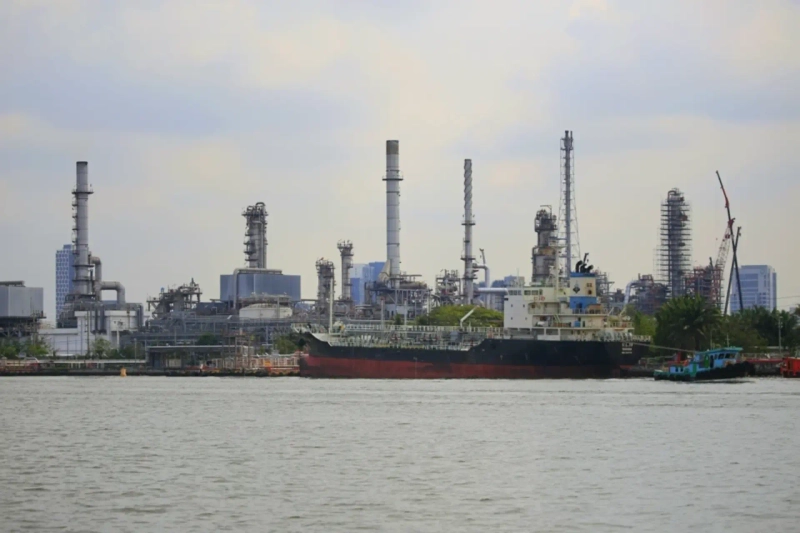
Iran is moving to collect transit fees from vessels in the Strait of Hormuz, which it has effectively been blockading, and has repeatedly underscored the plan through official interviews and other channels.
Esmaeil Baghaei, spokesperson for Iran’s Foreign Ministry, said in an interview with an Indian TV channel on the 24th that “a series of measures are being implemented for passage through the Strait of Hormuz due to the war conditions imposed on Iran,” adding that “other countries not involved in these acts of aggression can pass through the strait after necessary coordination with Iranian authorities to ensure safe and secure passage.”
Iran’s state media outlet Press TV also reported on the 25th, citing a senior government official, that Tehran is demanding monetary compensation to recognize its sovereignty over the strait and to offset war losses.
Earlier, Iran’s Foreign Ministry conveyed to the United Nations and member states of the International Maritime Organization (IMO) a policy of allowing the passage of “non-hostile” vessels.
This stance is interpreted as meaning Iran would allow passage in exchange for a certain fee for ships from countries such as China and India, excluding the United States, Israel and their allies.
In Iran’s parliament, a bill to levy transit fees for the Strait of Hormuz has already been prepared.
Lawmaker Saeed Rahmatzadeh argued that imposing such fees is a sovereign right, citing the cases of the Suez Canal and the Panama Canal.
If the bill is implemented, the per-transit fee for a vessel is said to be about $2 million (KRW 3 billion).
The number of ships currently stranded in the Gulf is estimated at around 3,200.
If transit fees are put into practice, calculations suggest Iran could earn roughly $6.4 billion in revenue.
However, controversy under international law is also expected. Under the UN Convention on the Law of the Sea, the right of passage for all vessels is guaranteed in international straits, and charging fees for mere passage is restricted.
Iran has signed the convention but has not ratified it.
For this reason, it has been suggested Iran may argue the charge is not a simple transit fee but payment for providing “security services.”
Shin Hyun-bo, Hankyung.com reporter greaterfool@hankyung.com

Korea Economic Daily
hankyung@bloomingbit.ioThe Korea Economic Daily Global is a digital media where latest news on Korean companies, industries, and financial markets.