"US Growth to Drop 0.3pp This Year Due to Iran War"…A Bold Forecast Emerges
Summary
- Nuveen’s Laura Cooper said the Iran war, $100 oil, and a 1 percentage point rise in inflation could drive a 0.3 percentage point drop in US growth and make rate cuts more likely to be delayed.
- Cooper said the US 10-year Treasury yield at 4.25%, a stronger dollar in the short term and weaker in the medium to long term, continued preference for US bonds and tech stocks, and investment opportunities in senior loans and CLOs are emerging.
- Cooper said expanded investment in renewable energy and infrastructure, GCC capital diversifying into global assets, differentiation in the private credit market, and the importance of ROI separating winners and losers among AI beneficiaries have become more important.
Forecast Trend Report by Period


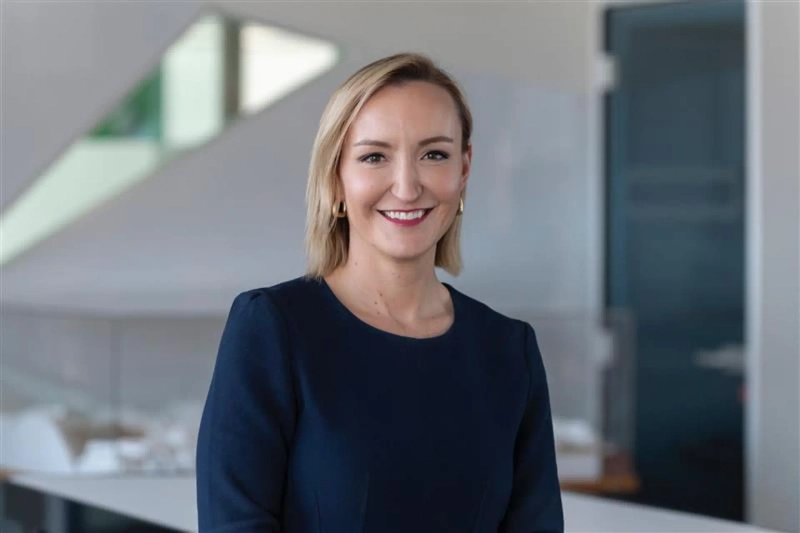
Laura Cooper, Global Investment Strategist at Nuveen, a global asset manager
"Stagflation if oil tops $144"
Expects 10-year yield at 4.25% by year-end
Investment flows still concentrated in US assets
US tech stocks have defensive risk characteristics
A forecast has emerged that US economic growth this year could fall by about 0.3% points due to the United States and Israel attacking Iran. Concerns were also raised that if global oil prices climb to $144—levels seen during Russia’s 2022 invasion of Ukraine—stagflation could become a possibility.
Laura Cooper, global investment strategist at Nuveen, a leading Wall Street asset manager, said as much in a Zoom interview with The Korea Economic Daily on the 25th (local time). Cooper is part of Hankyung’s Wall Street expert group.
If oil exceeds $100 a barrel, inflation rises by 1%p
Cooper said, "The risk of the US economy falling into recession is not high," adding, "because the US economy was still relatively resilient when it was hit by this geopolitical shock."
However, she expected that concerns about inflation driven by higher global oil prices would delay the timing of Federal Reserve rate cuts.
She said, "Inflation will slow in the second half, but it will still remain above the Fed’s 2% target," adding, "with the added geopolitical shock (the Iran war), if oil holds around $100 a barrel, it could lift inflation this year by about 1% point."
Cooper warned, "The biggest risk in the energy market is a situation where crude supply through the Strait of Hormuz continues to be constrained," adding, "global oil and gas prices could rise again to the 2022 peak level of $144 a barrel."
She said, "If global oil prices rise that far, demand destruction will eventually occur, and as a result stagflation is also possible."
If inflation rises, US long-term Treasury yields would inevitably face upward pressure. Cooper said, "At present (Nuveen) is investing mainly in shorter-maturity Treasuries," adding, "the US 10-year Treasury yield will trade around 4.25% by year-end." She expects the Fed to cut rates twice this year, but said the timing of those cuts is likely to be later than previously anticipated.
Iran war spurs renewable energy investment
Cooper assessed that the Iran war, like the war in Ukraine, has spurred expanded investment in renewable energy and infrastructure across countries worldwide. That is because Iran’s blocking of the Strait of Hormuz has strengthened the resolve to reduce dependence on Middle Eastern crude.
As for Middle East capital flows from Middle Eastern countries in connection with the Iran war, she said short- and long-term flows could diverge. She said, "In the short term, investors from Gulf Cooperation Council (GCC) countries may repatriate funds to use for infrastructure restoration and other needs." The GCC consists of Saudi Arabia, the United Arab Emirates (UAE), Qatar, Kuwait, Oman and Bahrain. Cooper added, "In the long term, as the risk premium on assets in these regions rises, diversification into global assets could expand."
Dollar: strong short term, weaker medium to long term
She forecast the dollar to be strong in the short term and weaker in the medium to long term. Cooper said, "In an environment of geopolitical uncertainty, safe-haven demand and interest-rate differentials will support the dollar in the short term," adding, "even if the Fed cuts rates, it is highly likely that the rate level will remain high relative to other major countries." However, she added, "as time passes and the trend toward asset diversification strengthens, the dollar’s weakening trend could reappear."
She noted that investors’ funds remain concentrated in US assets. She said, "In particular, inflows into bonds continue, and in the equity market, tech stocks are being favored again," adding, "these companies have solid profitability and financial structures, giving them relatively defensive characteristics in risk-off phases."
Opportunities in senior loans and CLOs
In the bond market, investment-grade corporate bonds are showing resilient momentum, and Cooper said investment opportunities are also emerging in senior loans and collateralized loan obligations (CLOs), where spreads have widened following recent selling. The idea is that as prices have fallen due to selling pressure, investors have an opportunity to purchase assets at higher yields. Senior loans refer to floating-rate corporate loans borrowed from banks and others that have higher repayment priority. CLOs are structured finance products that securitize bundles of such corporate loans.
On the private credit market, she pointed to growing vulnerabilities stemming from rapid growth, but assessed that for now the likelihood of it spreading into systemic risk is limited.
Cooper said, "Private credit has grown rapidly over the past few years, and structural vulnerabilities have also increased," but added, "so far, there are no signs that it is spreading across the broader financial system." She continued, "The key in the current market is 'differentiation,'" emphasizing, "they may look similar on the surface, but in reality the structure, strategy and lending terms are all different—so selecting both securities and managers has become more important than ever."
On artificial intelligence (AI) investment, she said, "AI beneficiaries are in fact showing resilient results and sound financial structures," adding, "they are using debt for large-scale capital expenditure, but most are underpinned by high profitability."
However, she projected that the market’s criteria for judgment will change going forward. Cooper said, "Going forward, as demands for return on investment (ROI) increase, the market will shift from a phase of broad 'AI beneficiaries' to one where 'winners and losers' are clearly separated."
New York=Park Shin-young, Correspondent nyusos@hankyung.com

Korea Economic Daily
hankyung@bloomingbit.ioThe Korea Economic Daily Global is a digital media where latest news on Korean companies, industries, and financial markets.