Trump hints at a ‘self-declared end to the war’…Will Iran entrench a Strait of Hormuz toll regime?
Summary
- Iran’s parliament said it will impose tolls on ships transiting the Strait of Hormuz and ban passage for U.S. and Israeli vessels.
- The IRGC opened a dedicated route and is reviewing charges of up to $2 million per vessel or $400,000 per ship, potentially generating up to $100 billion a year in revenue.
- Analysts said attacks on vessels from unfriendly countries and disruptions to navigation could heighten uncertainty for global logistics and the global economy.
Forecast Trend Report by Period


U.S. troop pullout signaled…Scenarios for passage through the Strait of Hormuz
Iranian parliament approves toll plan
IRGC opens a dedicated route
Considering charging $400,000 per vessel
Risk of disruption even after a formal reopening
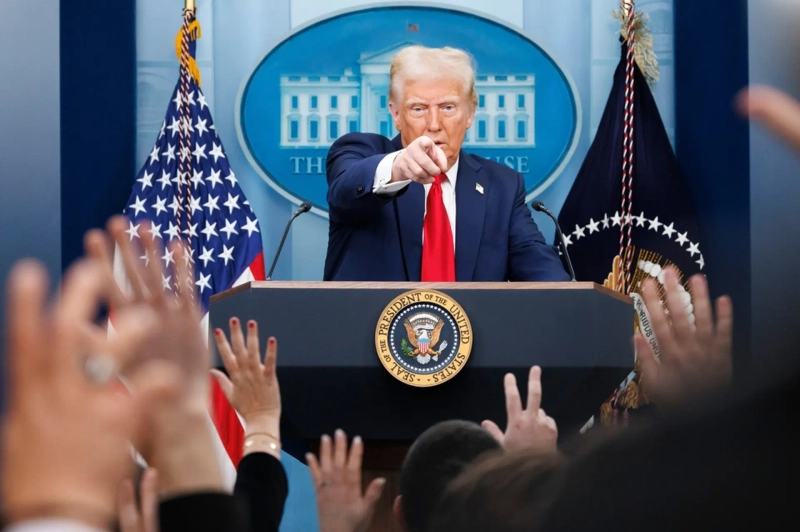
With U.S. President Donald Trump indicating he wants to end the war while leaving a blockade of the Strait of Hormuz unaddressed, a backlash is expected for Gulf states and countries that use the strait. Concerns are growing that the world could end up paying the price for Washington’s “self-declared end to the war,” as Iran has signaled it will levy tolls on ships transiting the Strait of Hormuz. Some argue that if the war ends with Iran maintaining control of the strait, it would amount to a “strategic defeat” for the U.S. and a “strategic victory” for Iran.
Iran to set up ‘toll gates’
The Iranian parliament’s National Security Committee on the 30th approved a plan to impose tolls on vessels passing through the Strait of Hormuz. The plan includes banning ships affiliated with the U.S. and Israel from transiting the strait and restricting access for countries that have joined economic sanctions against Iran. It also contains provisions for levying tolls on ships passing through the strait. Under the proposal, tolls would be collected in Iran’s currency (the rial), with the aim of reinforcing Iran’s sovereign role.
As a result, multiple outlooks are emerging regarding future passage through the Strait of Hormuz. If the U.S. withdraws unilaterally as President Trump has declared, the prevailing view is that Iran is likely to impose tolls as planned. The idea would be to allow China and some friendly nations’ vessels to transit freely while charging other countries’ ships and tightening control.
Iran’s Islamic Revolutionary Guard Corps (IRGC) has already treated such toll payments as a foregone conclusion and even opened a dedicated shipping route. According to shipping industry outlet Lloyd’s List, since the 13th of last month at least 25 vessels in the Gulf have transited the strait via a narrow channel between Qeshm Island and Larak Island instead of the established route. With Bandar Abbas—home to a major Iranian naval base—nearby, the area can function as a toll-gate where Iran can collect fees. Lloyd’s List reported, “Vessels are being required to submit documents, obtain a customs code, and transit a controlled single lane under IRGC escort.”
On the size of the tolls, Iran’s semi-official Tasnim News Agency reported that authorities are considering charging $2 million per vessel for “special security services,” as well as an option to charge $400,000 per vessel—similar to fees for the Suez and Panama canals. Iran is estimated to be able to generate up to $100 billion (about 150 trillion won) in annual revenue.

Strait instability may persist
Another possibility is that Iran bows to international pressure to reopen the strait, formally keeps it open, but intermittently disrupts passage through attacks on ships and drones. This would be a way to shake global logistics by forcing higher risk and shipping delays on vessels from unfriendly countries. Because it increases uncertainty, it is a more pessimistic scenario than the first.
Reuters analyzed that “if the U.S. steps back, even lower-intensity provocations could still effectively threaten countries transiting the strait.”
There is also a scenario in which Iran fully closes the strait even at the cost of its own export losses, but it is viewed as unlikely given the heavy economic damage and the increased likelihood of multinational naval operations through international coordination. The U.S. think tank Center for Strategic and International Studies (CSIS) assessed it as “a scenario Iran could use when it has nothing left to lose.”
Iran’s attempt to collect tolls would violate international law. Article 19 of the UN Convention on the Law of the Sea stipulates that “innocent passage” must be allowed for peaceful, law-abiding vessels in a state’s territorial sea. In other words, fees should not be imposed on foreign vessels simply for passing through territorial waters. Unlike the man-made Suez and Panama canals, there is no precedent for charging tolls on a naturally formed body of water.
Dina Esfandiary, a Middle East analyst at Bloomberg Economics, said, “The lesson Iran learned from the war is that holding the global economy hostage is cheaper and easier than expected.”
Reporter Kim Dong-hyun 3code@hankyung.com

Korea Economic Daily
hankyung@bloomingbit.ioThe Korea Economic Daily Global is a digital media where latest news on Korean companies, industries, and financial markets.