Wall Street research firm: “The Strait of Hormuz isn’t fully blocked… ‘ghost ships’ are getting through”
Summary
- Citrini Research said the Strait of Hormuz is in a state of partial disruption, not a full blockade, and that vessels are still transiting the route.
- It said the situation is expected to drag on and embed a persistent risk premium in the crude oil market.
- Citrini said it favors longer-dated contracts such as WTI futures for December 2026 delivery over front-month contracts, putting more weight on a long-term investment strategy.
Forecast Trend Report by Period


Analyst dispatched in person to Oman’s Musandam Peninsula
Analyst: “Traffic through Hormuz has recently risen to about 15 vessels a day”
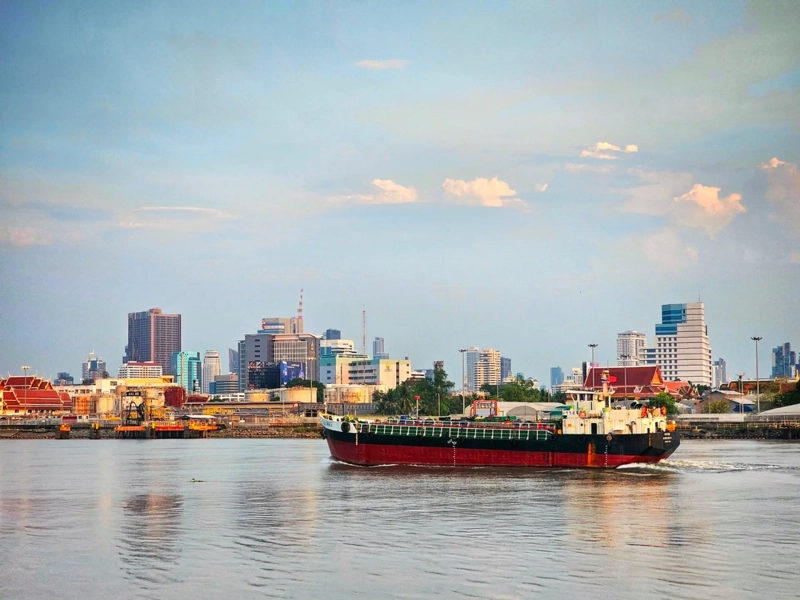
Citrini Research, an unconventional Wall Street research shop, released findings from an on-the-ground probe in which it dispatched an analyst to the Strait of Hormuz, casting doubt on the “full blockade” narrative that has spread across global markets. Citrini has recently drawn attention for scenario-style reports related to artificial intelligence (AI).
According to CNBC on the 6th (local time), Citrini said it sent an analyst to Oman’s Musandam Peninsula, where the analyst observed vessel movements in the Strait of Hormuz directly by boat. The fieldwork, conducted as tensions between Iran and the United States escalated, differs from conventional analysis that has relied on satellite imagery and official statements.
According to Citrini, the analyst, who requested anonymity, found that vessels are still transiting the strait and that traffic has recently increased to roughly 15 ships per day. While well below normal levels, this suggests the strait is not fully blocked but in a state of “partial disruption.”
The report said that “four to five oil tankers a day are passing through with their Automatic Identification System (AIS) switched off,” adding that “actual cargo volumes are higher than official data and the pace of increase has recently been accelerating, centered on the Qeshm Strait.”
AIS is a system that transmits a vessel’s position and route, and Citrini argued that many ships are sailing with it disabled, causing official statistics to undercount actual traffic.
The analyst also reported that interviews with fishermen, smugglers and local contacts indicated Iran is “selectively allowing” transits rather than imposing a blanket shutdown. Tankers must obtain prior approval when passing near Iranian territorial waters, which the firm said is closer to a selective blockade than a complete one.
Citrini stressed that “the current situation is difficult to explain with a simple dichotomy of ‘strait open = oil prices fall’ or ‘strait blocked = oil prices surge,’” underscoring a more complex market structure.
Still, the analysis is based on a single field survey and circumstantial testimony, limiting independent verification.
Even so, Citrini forecast that as the situation drags on, it will embed a persistent risk premium in the crude market. Accordingly, it expressed a preference for longer-dated contracts such as WTI futures for December 2026 delivery over front-month contracts. The firm said this implies a strategy weighted toward long-term investing, focusing less on immediate price action and more on the possibility of oil prices rising ahead.
New York=Correspondent Park Shin-young nyusos@hankyung.com

Korea Economic Daily
hankyung@bloomingbit.ioThe Korea Economic Daily Global is a digital media where latest news on Korean companies, industries, and financial markets.