South Korea’s Fuel Price Cap Kept Diesel Rise to 8% as Europe Jumped 32%
Summary
- The Middle East war and a blockade of the Strait of Hormuz pushed up prices, but South Korea’s automotive diesel and premium gasoline rose less sharply than in Europe.
- The government’s first oil price cap in 30 years helped contain the short-term rise in fuel prices, but concerns were raised that price controls alone would have limits if the crisis drags on.
- After the second oil price cap, nationwide fuel prices surged again, with Seoul gasoline prices topping 2,000 won, underscoring the side effects of price controls.
Forecast Trend Report by Period


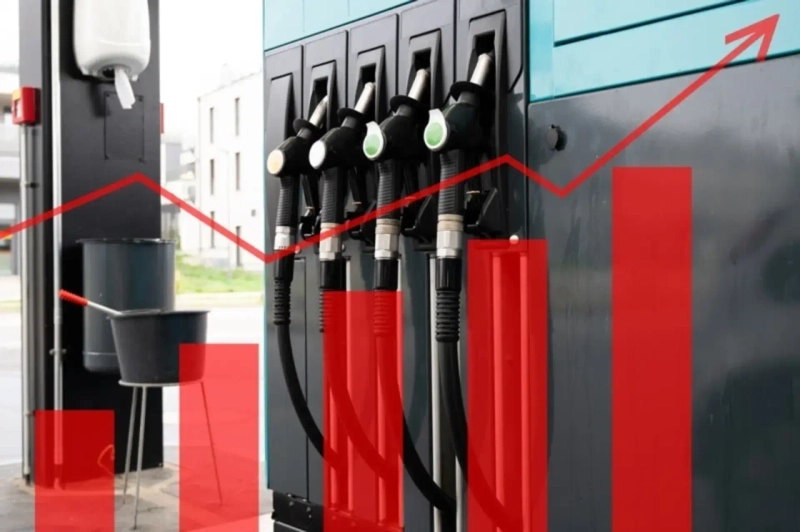
South Korea held the increase in automotive diesel prices to about 8% over the past month, while prices in Europe surged more than 30% in the aftermath of the Middle East war. The government revived a cap on oil prices for the first time in three decades to curb the rally, but concerns are mounting that price controls alone will have limited effect if a blockade of the Strait of Hormuz is prolonged.
According to Opinet, South Korea’s fuel price information system, and industry data, the average retail price of automotive diesel in 20 European OECD countries that publish weekly prices was 3,538.7 won ($2.56) per liter in the fourth week of last month. That was about double South Korea’s average of 1,815.8 won ($1.31).
In Europe, automotive diesel prices climbed to 3,538.7 won per liter in the fourth week of the month from 2,685.99 won in the first week, up 852.71 won, or 31.75%. In South Korea, diesel prices rose to 1,815.8 won from 1,680.4 won over the same period, an increase of 135.4 won, or 8.05%. By pace of increase, Europe was about four times steeper than South Korea.
By country, the Netherlands posted the highest diesel price at 4,278.1 won per liter, followed by Denmark at 4,118.3 won and Finland at 4,009.4 won. Even Slovakia, the cheapest, was at 2,718.9 won, while Hungary stood at 2,888.1 won, roughly 900 won to 1,000 won above South Korea.
Premium gasoline followed a similar trend. The average price in 19 European countries in the fourth week of the month was 3,225.67 won ($2.33) per liter, more than 1.5 times South Korea’s average of 2,112 won ($1.53). That was up 470.86 won, or 17.09%, from 2,754.81 won in the first week of the month.
In South Korea, premium gasoline rose to 2,112 won from 1,972.7 won during the same period, up 139.3 won, or 7.06%. Europe’s increase was nearly 2.5 times larger.
Government intervention is seen as a key reason South Korea’s price gains were relatively limited. The government introduced a maximum price system for oil on June 13, the first such move since oil prices were liberalized in 1997. In the third week of last month, one week after the system took effect, the nationwide average gasoline price at gas stations fell 72.3 won from the previous week to 1,829.3 won.
Japan had already adopted measures to restrain prices. Starting June 19, it provided refiners with a subsidy of 30.2 yen per liter of gasoline. As a result, average automotive diesel prices in the fourth week of the month stood at 1,558.7 won per liter, while premium gasoline was 1,769.10 won, both lower than in South Korea.
Europe is also taking action. The Czech Republic plans to cap gas station margins on July 8. Poland has moved to cut fuel tax rates.
The challenge is that such price-suppression measures may be difficult to sustain. Industry officials say they can soften a short-term shock, but a prolonged disruption would be hard to withstand with a price cap alone. There is also analysis that even if the Strait of Hormuz blockade is lifted, it could take at least three months for crude supply and plant operations to return to normal.
There are already signs of side effects from price controls. After the second round of the oil maximum price system, which allowed higher prices than the first, fuel prices across the country surged again. In Seoul, the average gasoline price on Tuesday topped 2,000 won for the first time in three years and eight months, since July 2022 during the early stage of the Russia-Ukraine war.
Kim Dae-young, Hankyung.com reporter kdy@hankyung.com

Korea Economic Daily
hankyung@bloomingbit.ioThe Korea Economic Daily Global is a digital media where latest news on Korean companies, industries, and financial markets.