PiCK
Iran Says Strait of Hormuz to Stay Open for Two Weeks, Talks With US to Start in Islamabad on July 10
Summary
- Iran and the US said they will begin talks in Islamabad, Pakistan, on July 10, with a two-week ceasefire and conditional permission for safe passage through the Strait of Hormuz.
- Iran said it presented a 10-point plan as the basis for negotiations, including continued control of the Strait of Hormuz, the lifting of all primary and secondary sanctions, and a full withdrawal of US combat forces from the region.
- Trump said he agreed to a two-week pause in bombing and attacks on condition that Iran accept the full opening of the Strait of Hormuz, helping ease market concerns.
Forecast Trend Report by Period


‘Our Hand Is on the Trigger’
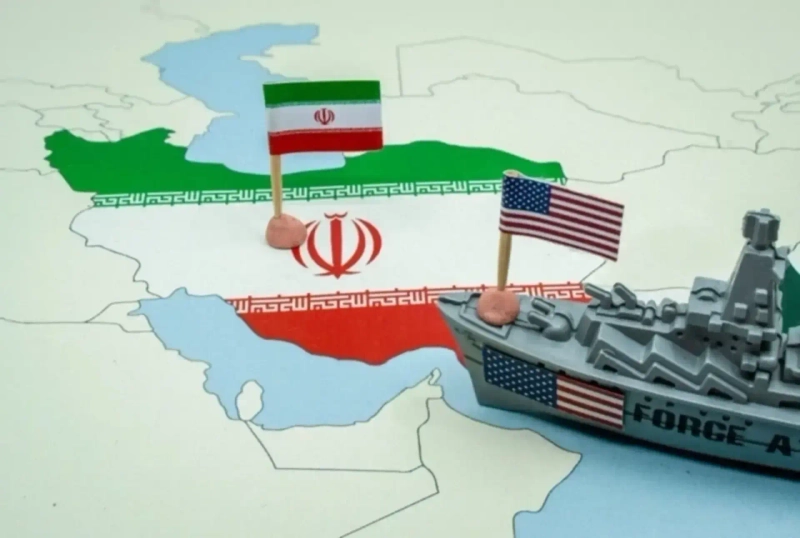
Iran’s Supreme National Security Council said in a statement that talks with the US will begin in Islamabad, Pakistan, on July 10. It added that the negotiations do not mean the war is over, underscoring Tehran’s hard-line stance.
The statement, carried by Iranian outlets including Mehr News, said Iran was informed through Pakistani Prime Minister Shehbaz Sharif that the US had accepted Tehran’s 10-point plan as the basis for negotiations. That is the same message President Donald Trump posted on Truth Social.
Iran Demands Continued Control of Strait of Hormuz, Pledges Two Weeks of Access
The statement said Iran’s main demands include a US guarantee of non-aggression, continued Iranian control of the Strait of Hormuz, recognition of its right to enrich uranium, the lifting of all primary and secondary sanctions, the full termination of resolutions by the United Nations Security Council and the board of governors of the International Atomic Energy Agency, compensation for damage inflicted on Iran, a full withdrawal of US combat forces from the region, and an end to fighting across all fronts, including Israeli airstrikes and the war involving Hezbollah in Lebanon.
On the talks set to start in Islamabad on July 10, Iran said they would begin amid “complete distrust” of the US and that Tehran would devote two weeks to the negotiations. The period could be extended by agreement between the two sides. The statement ended with a warning: “Our hand is on the trigger, and if the enemy makes even the slightest mistake, we will respond with full force.”
Iranian Foreign Minister Abbas Araghchi said in a statement that the country’s armed forces would halt defensive operations if attacks on Iran stop. He also said that during the two-week period, safe passage through the Strait of Hormuz would be possible, provided coordination with Iran’s military and technical restrictions are taken into account.
Trump Says He Agreed to Pause Attacks if Iran Opens Hormuz
Trump wrote on Truth Social at about 6:30 p.m. that, after speaking with Sharif and Field Marshal Asim Munir, they had asked him to hold back what he described as destructive military force set to be deployed against Iran that night. He said he agreed to pause bombing and attacks on Iran for two weeks on the condition that the Islamic Republic agree to the full, immediate and safe opening of the Strait of Hormuz. Al Jazeera, citing a US official, reported that the attacks had been halted immediately.
“This is a ceasefire for both sides,” Trump wrote. He said he made the decision because the US had already achieved and exceeded all military objectives and because there had been substantial progress toward a final agreement on lasting peace with Iran and peace in the Middle East.
Trump also said the US had received a 10-point proposal from Iran and viewed it as a workable basis for negotiations. Agreement had been reached on almost all of the major issues that had divided Washington and Tehran in the past, he said, and the two-week period would be used to complete and formalize a final deal.
He ended the post by saying it was an honor, as president of the United States and on behalf of Middle Eastern countries, to announce that a long-running problem was nearing resolution.
Foreign media later reported that Iran had accepted a two-week ceasefire proposal put forward by Pakistan. CNN, citing Iranian officials, reported that Tehran had accepted the plan and that Supreme Leader Mojtaba Khamenei had given final approval.
Earlier, Trump had threatened massive strikes on Iranian power plants and bridges if no agreement was reached by 8 p.m. on July 7, Korea time, or 9 a.m. on July 8. Earlier in the day, he wrote on Truth Social that “an entire civilization will disappear tonight and never return.”
Pakistan, which had taken on a mediating role, later urged all sides to observe a two-week ceasefire. Sharif wrote on X at about 3:17 p.m. that all parties to the conflict should halt fighting for two weeks to allow talks. White House Press Secretary Karoline Leavitt said Trump was reviewing the proposal, a comment that helped calm markets.
Lee Sang-eun, Washington correspondent

Korea Economic Daily
hankyung@bloomingbit.ioThe Korea Economic Daily Global is a digital media where latest news on Korean companies, industries, and financial markets.