Why Trump Approved an Iran War Plan Despite CIA Objections
Summary
- A report said the U.S.-Israeli attack on Iran stemmed from Netanyahu's secret White House visit and Trump's de facto approval.
- It said U.S. intelligence agencies called the Iran regime change plan "farcical" and warned of the risk of a Strait of Hormuz blockade and depletion of U.S. weapons stockpiles.
- It said intelligence on the Iranian supreme leader's outdoor meeting obtained by the U.S. and Israel moved up the war timetable, and that Trump approved Operation Epic Fury.
Forecast Trend Report by Period


U.S. and Israeli strikes on Iran grew out of a secret White House visit by Israeli Prime Minister Benjamin Netanyahu, the New York Times reported.
CIA Called Regime-Change Plan 'Farcical'
Intelligence on Supreme Leader's Outdoor Meeting Hastened War Timeline
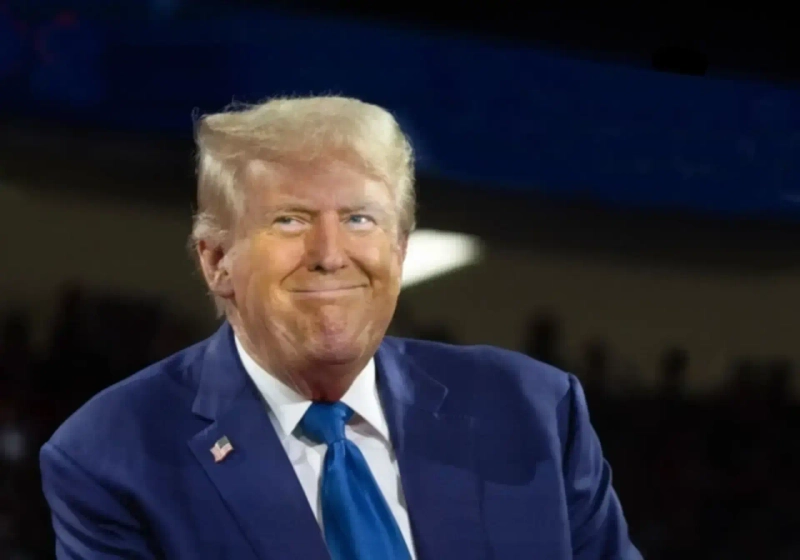
The New York Times reported on June 7 that Netanyahu briefed President Donald Trump in the White House Situation Room on Feb. 11 on a plan to attack Iran. Netanyahu argued that Iran's ballistic-missile system could be destroyed within weeks and that such an operation would prevent Tehran from closing the Strait of Hormuz. He also said the attack could reignite anti-government protests inside Iran and even lead to regime change. Trump replied after the briefing, "sounds good to me," and Netanyahu and his aides took that as de facto approval.
The Times said Trump was drawn to the plan in part because he wanted to become the first U.S. president to bring about regime change in Iran since the establishment of the country's theocratic system. It also cited Trump's belief that Iran had tried to assassinate him in retaliation for the January 2020 killing of General Qassem Soleimani.
U.S. intelligence agencies saw the plan differently. CIA Director John Ratcliffe called the idea of regime change in Iran "farcical." Secretary of State Marco Rubio agreed, calling it nonsense. Dan Caine, chairman of the Joint Chiefs of Staff, warned that an attack on Iran could further deplete already reduced U.S. weapons stockpiles and raise the risk of a closure of the Strait of Hormuz. The Times said Trump heard only what he wanted to hear.
What hastened the move toward war was intelligence obtained by the U.S. and Israel. In late February, the information indicated that Iran's supreme leader was planning a public ground-level meeting with senior officials. At another Situation Room meeting on Feb. 26, aides voiced support for moving ahead one after another.
Even Vice President JD Vance, who had been a hard-liner, stepped back. He said it was not a good idea but that he would support it if Trump wanted to proceed. After hearing his aides back the plan, Trump concluded, "I think we should do it." On Feb. 28, aboard Air Force One, he approved "Operation Epic Fury" and ordered that there be no cancellation.
Lee Jung-woo, Hankyung.com reporter krse9059@hankyung.com

Korea Economic Daily
hankyung@bloomingbit.ioThe Korea Economic Daily Global is a digital media where latest news on Korean companies, industries, and financial markets.