Iran Demands Stablecoins or Yuan, Not Dollars, for Hormuz Transit
Summary
- Iran’s Islamic Revolutionary Guard Corps said vessels transiting the Strait of Hormuz must pay a fee of $1 per barrel in stablecoins or yuan, and that it will not accept dollars.
- The article said USDT and USDC have become a way to transfer dollar value to Iran without going through SWIFT, making them a tool to bypass US global sanctions.
- It said the GENIUS Act has tied stablecoin reserves to US Treasuries, creating a digital petrodollar, but that this structure is also creating a dilemma by exposing cracks in dollar hegemony, as the Iran case shows.
Forecast Trend Report by Period


Kim Min-seung's ₿-cial
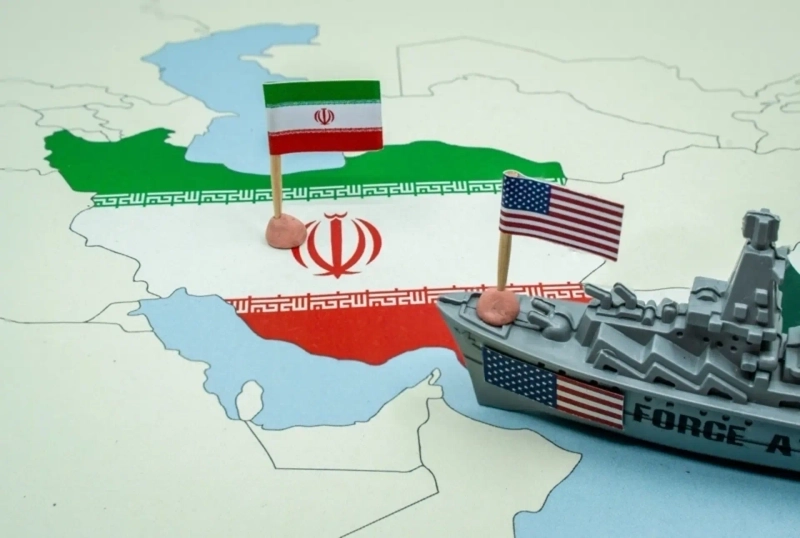
Hormuz’s Digital Shadow
On June 8, 1974, US Secretary of State Henry Kissinger shook hands in Washington with Saudi Crown Prince Fahd. The arrangement recycled oil-export revenue into dollars and then back into US Treasuries. It marked the start of the petrodollar system. The artery that carried those dollars around the world was the Strait of Hormuz. About one-fifth of global oil and LNG shipments pass through the narrow waterway. For half a century, Hormuz has been the heart of the petrodollar system.
By controlling Hormuz, Iran can hit a pressure point in the global economy without nuclear weapons. When the Trump administration launched Operation Epic Fury on Feb. 28, Tehran’s answer was predictable: threaten to shut the strait. Transit volumes plunged by more than 90%, while international crude prices climbed from about $63 a barrel before the war to above $100. Bloomberg reported that Dated Brent, the benchmark for physical crude cargoes, topped $141 on May 2, the highest since 2008. In South Korea, concern over naphtha supply disruptions triggered panic buying of volume-based trash bags. Sales at the country’s three largest convenience-store chains jumped 200% to 300% from a week earlier. In a country that produces no oil, a Hormuz blockade ended up sparking a trash-bag shortage.
Hormuz also became a powerful source of leverage over Trump. In a national address on May 1, he said the operation was “nearly complete” even as he threatened to “send Iran back to the Stone Age within two to three weeks.” The speech contained both a promise to leave and a threat to escalate. Markets reacted immediately. Oil rose more than 5% after the remarks, and Asian equities fell across the board. South Korea’s Kospi dropped 2.82%. The result was a stalemate: Washington could neither exit nor move forward decisively. On the morning of May 8, Trump declared a “two-week ceasefire” and the reopening of Hormuz in a social-media post. The war is still not over.
In the middle of that impasse, an unexpected means of payment emerged. Bloomberg reported that Iran’s Islamic Revolutionary Guard Corps, or IRGC, had announced transit fees for ships passing through the strait. The charge is $1 per barrel. A very large crude carrier, or VLCC, carrying 2 million barrels would owe $2 million. Payment is accepted in yuan or stablecoins. Dollars are not.
More precisely, it is not that Iran refuses dollars. It cannot receive them. US sanctions have effectively cut Iran off from the SWIFT payments network. Receiving dollars through the traditional banking system is effectively impossible. Stablecoins have changed that. USDT and USDC are digital assets pegged one-to-one to the US dollar. They do not require a bank account or move through SWIFT. Instead, they allow dollar value to be transferred to anyone on a blockchain.
Iran is now at war with the US. Yet it is collecting tolls in digital dollars pegged to the US currency, not through banks but over a blockchain. In the very strait that gave birth to the petrodollar system, the dollar’s digital shadow is now being used to bypass Washington’s global sanctions.
The irony extends to the US as well. Under the GENIUS Act, stablecoin issuers must hold reserves equal to their outstanding issuance in safe assets such as US Treasuries. Tether holds about $122 billion, or 83% of its reserves, in short-term US Treasuries. That exceeds the holdings of Germany or Israel as of the end of 2025. Stablecoins are effectively functioning like privately run dollar money-market funds. As issuance grows, so does structural demand for US government debt. The digital petrodollar envisioned by the US is drawing even users outside the dollar system into the framework of dollar reserve assets.
Yet Iran, while at war with the US, has turned that very mechanism into a strategic tool against Washington. A digital petrodollar designed to reinforce dollar dominance is instead exposing fractures in that dominance. Tether has already worked with law-enforcement agencies to freeze about $3.3 billion of USDT and block more than 7,000 wallets. The technology can be controlled. Even so, the US Treasury’s Office of Foreign Assets Control, or OFAC, has yet to present a specific response to stablecoin payments for Hormuz transit fees while the war continues. A harsh crackdown on Iran-linked wallets would damage stablecoins’ value proposition of openness. Leaving them alone would undermine the logic of dollar-power expansion embedded in the GENIUS Act. Either choice carries a cost.
Seen from farther away, that dilemma is only one scene in a much bigger shift. What Hormuz has revealed is not just an Iranian tactic. It is that a tool created by the old financial order to preserve itself is now reshaping that order. BlackRock Chairman Larry Fink wrote in this year’s annual letter to shareholders that tokenization is “changing the plumbing of the financial system.” The dollar remains the world’s strongest currency. But the pipes through which it flows are no longer limited to SWIFT and correspondent banks. Blockchain has laid a new set of rails, and those rails do not distinguish between allies and adversaries.
If Hormuz was the birthplace of the petrodollar 50 years ago, today’s Hormuz is where that system is evolving. The dollar is not dying. The way it moves is changing. And that change does not always unfold according to the designer’s plan.

About Kim Min-seung, head of research at Korbit...
Kim is a founding member and head of the research center at Korbit. He works to explain complex events and concepts in the blockchain and digital-asset ecosystem in accessible terms and to help people with different perspectives understand one another. His background includes blockchain project strategy and software development.

Korea Economic Daily
hankyung@bloomingbit.ioThe Korea Economic Daily Global is a digital media where latest news on Korean companies, industries, and financial markets.