Ceasefire Reached, but More Than 800 Ships Still Wait to Move Through Hormuz
Summary
- The report said more than 800 ships are waiting around the Strait of Hormuz and that the timing of a resumption remains unclear.
- Experts said shipping flows will take time to normalize and that activity will resume gradually.
- Possible transit fees and vessel controls by Iran have emerged as key variables in determining passage conditions.
Forecast Trend Report by Period


More than 800 vessels remain on standby in Gulf waters
Details on resuming transit are still unclear
Transit fees and ship controls also loom as possibilities
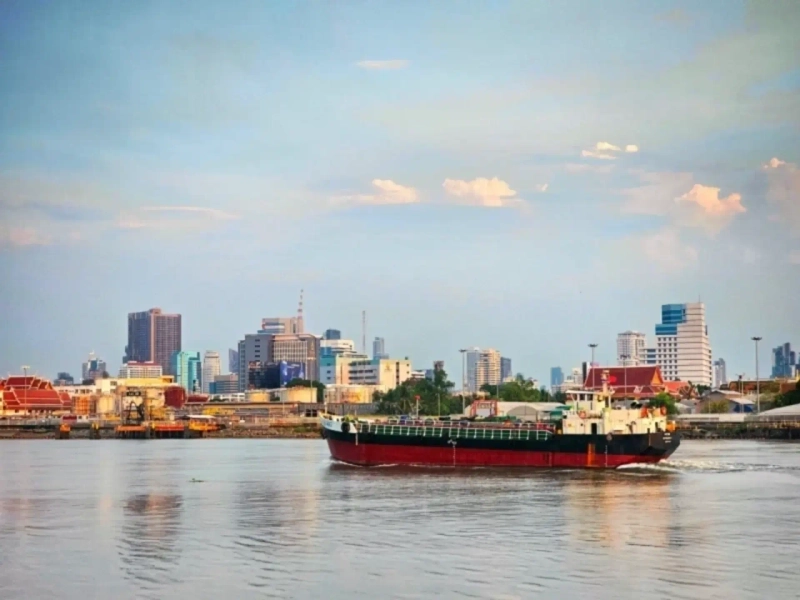
Shipowners are trying to determine when traffic through the Strait of Hormuz can resume after the U.S. and Iran agreed to a two-week ceasefire.
Bloomberg, citing ship-tracking firm Kpler, reported that more than 800 vessels remained in Gulf waters as of June 7. They included 97 crude oil and condensate tankers, 121 refined-product tankers, 208 petrochemical and biofuel carriers, 34 LPG carriers and 19 LNG carriers. More than 200 vessels were also waiting outside the strait.
Even with the ceasefire agreement, the timing of a reopening remains uncertain. President Donald Trump said the waterway would see a "complete, immediate and safe opening." Iranian Foreign Minister Abbas Araghchi said any resumption would require coordination with Iran's military and appropriate consideration of technical constraints.
Experts say shipping flows will take time to normalize. Lewis Hart, head of marine for Asia at Willis Towers Watson, said activity would resume gradually rather than all at once, even during the two-week period. Jennifer Parker, an adjunct professor at the Naval Studies Department of the University of New South Wales and a defense and security expert at the Australian Defence Force Academy, said global shipping flows cannot return to normal within 24 hours.
Another key question is whether Iran will impose transit charges, an idea it has raised before. Michael Pregent, a former U.S. intelligence adviser, said Iran could end up controlling which ships are allowed to pass, what fees are charged and whose transit is denied.
Lee Jung-woo, Hankyung.com reporter krse9059@hankyung.com

Korea Economic Daily
hankyung@bloomingbit.ioThe Korea Economic Daily Global is a digital media where latest news on Korean companies, industries, and financial markets.