Bitcoin Wobbles as Middle East Cease-Fire Falters; Ether Rebounds, XRP Recovers
Summary
- Bitcoin’s defense of the low-$70,000 range is the key test as uncertainty over the Middle East cease-fire, the US PCE price index and fading expectations for Fed rate cuts weigh on sentiment.
- Ethereum’s rebound in buying pressure, backed by rising net taker volume and futures open interest, leaves the $1,800-$2,000 support zone as the key level to watch.
- For XRP and Solana, ETF inflows and outflows, an upgrade delay and the adoption of a security framework are shaping the outlook, with institutional fund flows and investor sentiment set to determine direction.
Forecast Trend Report by Period


**
<Lee Soo-hyun’s Coin Radar> is a weekly column that tracks moves in the cryptocurrency market and explains the forces behind them. It goes beyond a simple price roundup to analyze global economic developments and investor positioning, offering insight into where the market may be headed.
Major Coins
1. Bitcoin (BTC)

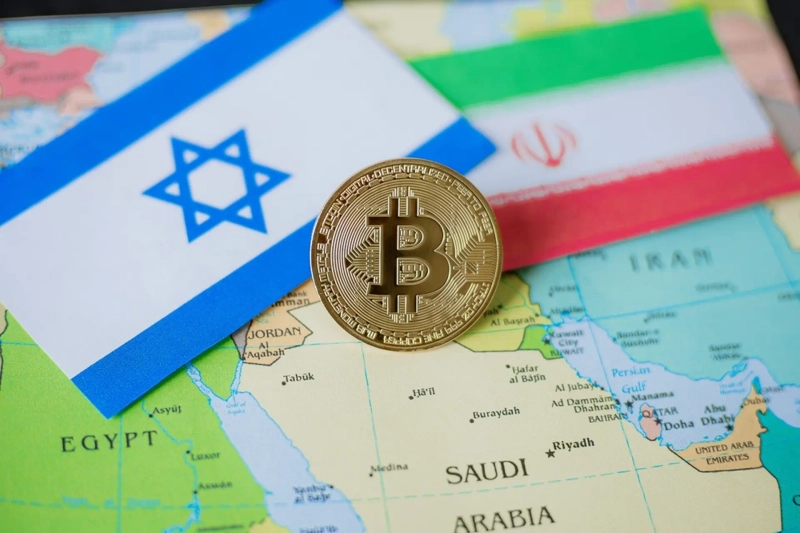
Bitcoin rebounded this week on news of a cease-fire agreement between the US and Iran, though trading remained volatile. After the truce was reported on March 8, the token briefly climbed above $72,000 before surrendering those gains in less than a day and falling back to the low-$70,000 range. Following another overnight rebound, it was trading around $71,000 as of March 10, Korea time, according to CoinMarketCap.
The market’s relief faded quickly as doubts emerged over whether the cease-fire would hold. Even after the March 8 announcement, Israel continued strikes targeting Hezbollah in Lebanon. That reinforced the view that the agreement was not a step toward a full end to the conflict but a temporary arrangement to keep negotiations going. US stocks opened lower in New York that day, and crypto markets moved in tandem.
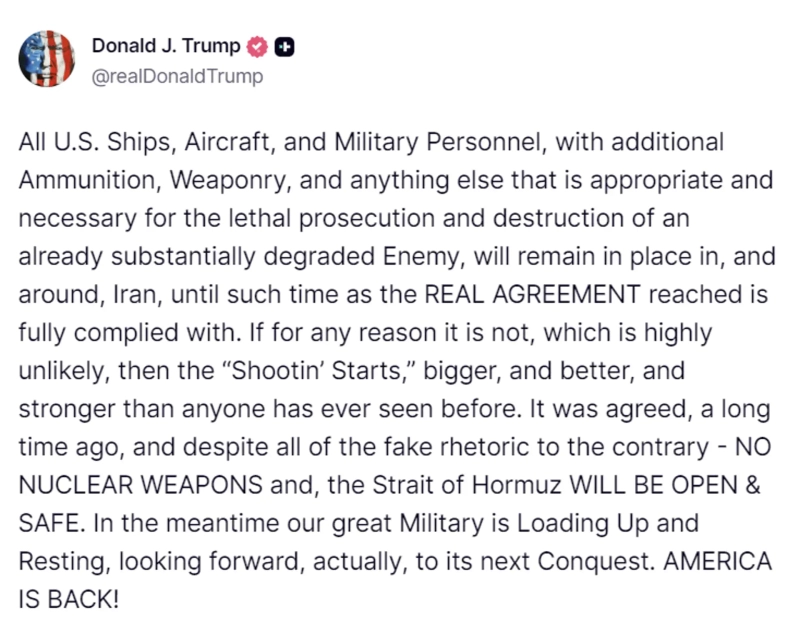
Remarks from President Donald Trump added to the pressure. In a Truth Social post on March 9, Trump wrote that all US military forces would remain near Iran until the agreement was fully implemented. He added that the US would take immediate and far stronger military action if the deal fell apart. Markets focused less on the cease-fire itself than on the risk that it could unravel at any moment.
Comments from Israel later revived hopes for talks. Prime Minister Benjamin Netanyahu said on March 10 that he had instructed his cabinet to begin negotiations as soon as possible, citing repeated requests from Lebanon for direct talks. That sparked a brief relief rally, with Bitcoin at one point regaining the $73,000 level. Still, Netanyahu also said the same day that there was no cease-fire in Lebanon and that Israel was continuing to strike Hezbollah with force. Those mixed messages left hopes for diplomacy and military tension in place at the same time, blunting any broader de-escalation trade.

The macro backdrop also weighed on Bitcoin. The US Commerce Department said on March 9 that the February personal consumption expenditures price index rose 0.4% from a month earlier, in line with expectations. The issue for markets is that the same monthly pace has now persisted for three straight months. For the Federal Reserve, a reading closer to 0.2% would point to a clearer inflation slowdown. The latest pace is about double that. On a year-over-year basis, the index rose 2.8%, still an elevated level. The report also captured conditions before the US-Iran conflict escalated in earnest, leaving open the possibility that Middle East risks could add further inflation pressure.
That undercuts expectations for Fed rate cuts. If the PCE gauge, the inflation measure the Fed watches most closely, fails to cool more quickly, any move toward looser monetary policy will be pushed back. For Bitcoin, that means weaker liquidity support.
The key near-term test is whether Bitcoin can hold the low-$70,000 range. Matt Mena, a strategist at 21Shares, said the token may retest the $69,000 to $70,000 zone before any broader uptrend takes hold. A prolonged stalemate and a collapse in the cease-fire could open the way to $66,000, he said. Ayush Jindal, an analyst at NewsBTC, said Bitcoin briefly broke above $71,500 before forming a short-term peak near $72,728 and pulling back. Even so, the short-term bullish structure remains intact as long as the token stays above $70,200, he wrote. Whether Bitcoin can defend the low-$70,000 area will be critical to the durability of the rebound.
2. Ethereum (ETH)
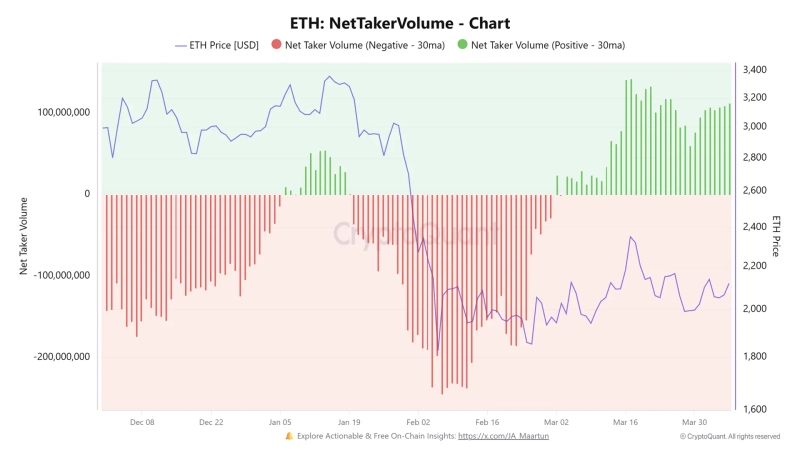
Ethereum has rebounded more than 5% over the past week, climbing to around $2,200. As of March 10, it was trading near $2,180 on CoinMarketCap.
What stands out in this rebound is that on-chain and derivatives indicators improved at the same time. The clearest shift came in Ethereum’s net taker volume in the derivatives market, which shows whether aggressive buyers or sellers have the upper hand. CryptoQuant data show the measure has remained positive since March 6. It climbed to $140 million on March 16 and still indicated roughly $104 million of buying pressure.
CryptoQuant contributor Darkfost said the figures point to buyer dominance in the Ethereum market. He described the move as the first regime shift since the previous bear market. That suggests the latest move may be more than a short-lived technical bounce and could reflect a gradual change in derivatives-market sentiment.
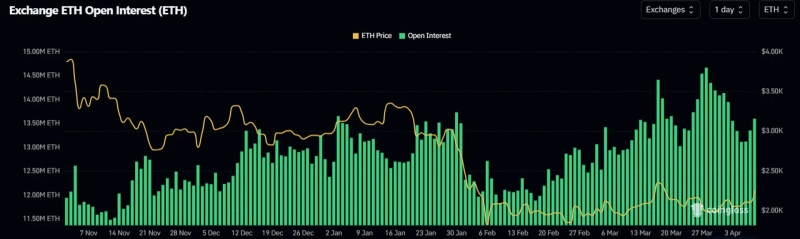
Open interest has also risen. Ethereum futures open interest now stands at about 6.4 million ETH, a substantial recovery from roughly 5 million ETH in October last year. It is also moving closer to the record 7.8 million ETH reached in July 2025. That suggests futures-market participation is recovering and traders are becoming more active in Ethereum again.
Still, it is too early to say the market structure has fully turned. Traders are watching the $1,800 to $2,000 range as a key support zone. The area also overlaps with the 20-day exponential moving average and the lower bound of a symmetrical triangle pattern. Crypto analyst Ted Pillows said Ethereum could extend gains if support at $2,000 holds. For now, buying interest appears to be in the early stages of recovery, and the next leg higher will depend on how much support comes from the spot market and ETF flows.
3. XRP
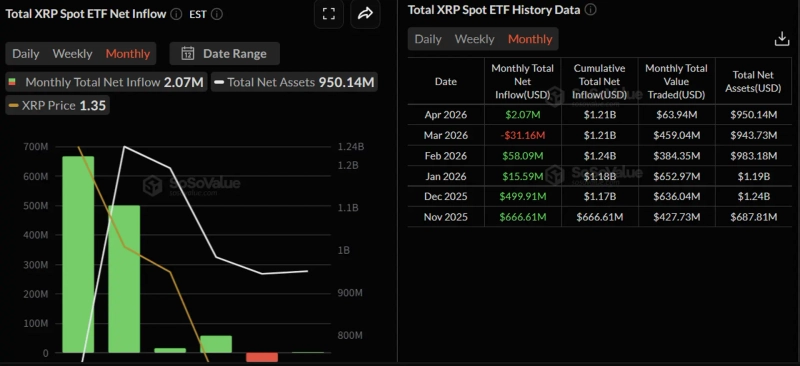
XRP has rebounded on stronger ETF inflows, though traders are stopping short of calling it a full breakout. As of March 10, it was trading around $1.34 on CoinMarketCap.
The most notable shift has been the turnaround in ETF flows. CoinShares data show XRP ranked first in inflows to investment products over the 24 hours through March 8, ahead of both Bitcoin and Ethereum. James Butterfill, CoinShares’ head of research, said that highlights how institutional demand is concentrating in specific assets.
ETF flows also improved in the US market. According to SoSoValue, spot XRP ETFs posted about $3.32 million of net inflows on March 8. That compares with net outflows of about $3.56 million in the previous week, marking a return to positive territory. The reversal suggests institutional money may be starting to return.
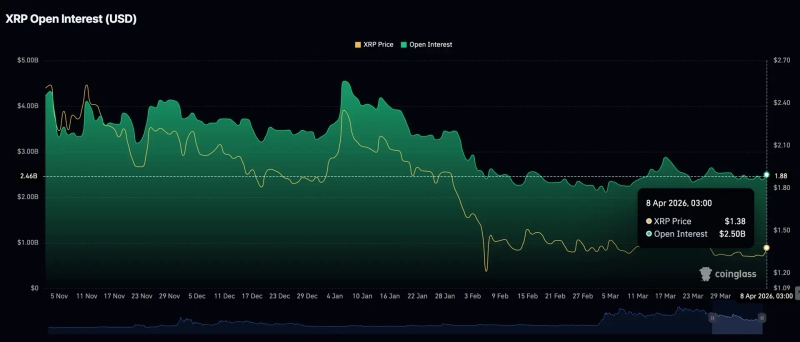
Retail sentiment is also showing signs of recovery. CoinGlass data show XRP futures open interest rose to about $2.5 billion from $2.38 billion a day earlier. That points to greater leveraged exposure among retail traders and a gradual pickup in risk appetite. Whale activity has shifted as well. According to CryptoQuant contributor Arab Chain, daily whale inflows to Binance fell to the lowest level this year as of March 7. The daily average was about 12.6 million XRP, far below periods when inflows reached hundreds of millions of tokens. Lower exchange inflows are typically interpreted as easing sell pressure, helping limit short-term downside risk.
Still, XRP is not insulated from geopolitical risks. CoinDesk said oil prices could rise again and pressure the broader crypto market if parties in the Middle East conflict fail to reach another agreement within days. That means XRP is unlikely to fully decouple from the wider market mood.
Coin in Focus
1. Solana (SOL)
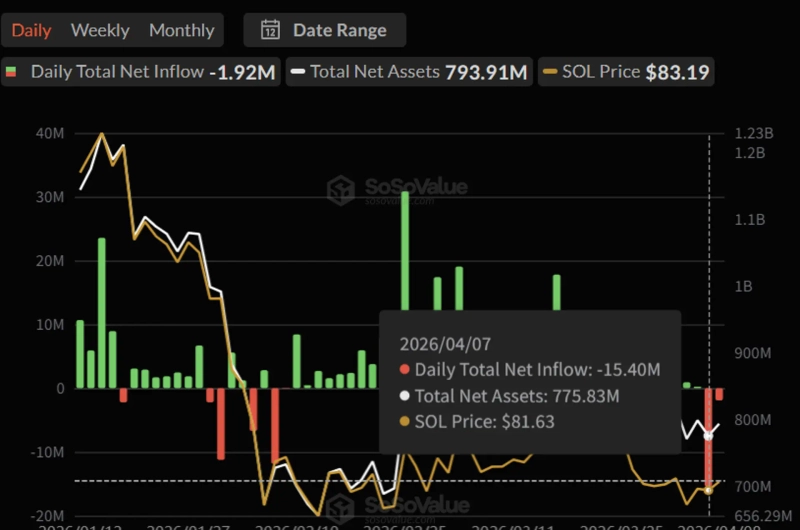
Solana is trading around $83 after failing to break through a key resistance level. As of March 10, it was changing hands at about $82.9 on CoinMarketCap.
Near-term pressure is coming from softer institutional demand and delays to a major upgrade. ETF outflows have drawn particular attention. SoSoValue data show spot Solana ETFs recorded $15.4 million of net outflows on March 7, the largest one-day withdrawal since launch. Another roughly $1.92 million exited on March 8. Continued outflows immediately after the biggest daily redemption suggest investor sentiment has weakened.
A delay to a closely watched upgrade has also weighed on the token. The Solana Foundation’s Alpenglow upgrade had been expected to be a key event in the first quarter of this year, but the schedule has now been pushed back to the second quarter of 2026. The upgrade had been viewed as a catalyst for faster network processing speeds. With that timeline delayed, investors have seen a major positive catalyst pushed further out. The market has reacted cautiously, especially with little additional detail on the roadmap.

There has, however, been a longer-term development of note. The Solana Foundation is working with Asymmetric Research on a security assessment framework called STRIDE. The system is designed as an ongoing review framework for Solana-based decentralized finance protocols. A March 1 hack of Drift Protocol, a Solana-based decentralized derivatives exchange, shook confidence across the broader Solana DeFi ecosystem and was seen as a drag on price. The foundation appears to have moved relatively quickly in response.
Traditional smart-contract audits are often valid only at a single point in time. STRIDE is designed to keep updating security ratings as protocols change and threat conditions evolve. It evaluates eight categories, including operational security, access controls, multisig settings and governance vulnerabilities, and publishes the results in a public repository. That gives users and investors a clearer view of how risky a protocol is at any given time.
For Solana, the key question is whether the foundation’s push to strengthen security can restore trust in the ecosystem even as ETF outflows and the upgrade delay continue to weigh in the short term.

Suehyeon Lee
shlee@bloomingbit.ioI'm reporter Suehyeon Lee, your Web3 Moderator.