US-Iran Ceasefire Talks Break Down After One Day; No Next Round Announced
Summary
- The report said US-Iran ceasefire talks collapsed after one day over differences on Iran’s willingness to abandon nuclear weapons and sanctions relief.
- The US said it presented Iran with conditions including abandoning nuclear weapons development and terms tied to frozen assets, then left behind a draft agreement containing its final and best offer before departing.
- Iran demanded the release of frozen assets, sanctions relief, control over the Strait of Hormuz and the right to levy transit fees, while leaving open the possibility of another round of talks.
Forecast Trend Report by Period


Room for More Negotiations Appears to Remain
US Says It Could Not Confirm Iran’s Pledge to Abandon Nuclear Arms
Washington Leaves Behind Its “Final and Best Offer”
Tasnim Blames Failure on “Excessive” US Demands
Wide Gaps in Positions Point to Difficult Negotiations Ahead
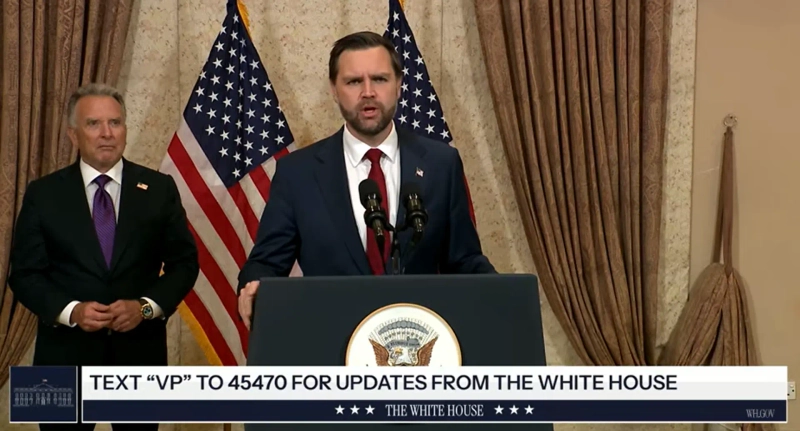
The US, Iran and Pakistan opened ceasefire talks in Islamabad on June 11 aimed at reaching a peace agreement in the Iran war, but the negotiations broke down after a day. The meeting lasted more than 15 hours, from morning until evening, but failed to narrow the gap between the two sides.
Vice President JD Vance, who led the US delegation, told reporters that “we never got to a point where the Iranians showed a willingness to accept our conditions.” He then said, “We are leaving now.”
Vance said Washington had been very clear about its red lines, how far it could accommodate Iranian demands and what it would not accept under any circumstances. The message was delivered in the clearest possible terms, he said, but Iran chose not to accept the US conditions.
“Could Not Confirm an Intention Not to Develop Nuclear Weapons”
Vance said Washington wanted Iran to show a firm commitment not to pursue nuclear weapons or the means to build them quickly. The key issue, he said, was whether Iran was demonstrating a fundamental, long-term intention not to develop nuclear arms. “We have not yet been able to confirm that,” he said. “We hope we will be able to do so going forward.”
He said the talks also covered a broad range of issues, including sanctions relief tied to Iran’s frozen assets. Vance added that the US had remained in constant contact with President Donald Trump and had negotiated in good faith.
As the US delegation departed, it left behind what Vance described as a simple proposal containing Washington’s “final and best offer.” He said the door to negotiations remained open. Vance did not threaten military action if Iran rejected the proposal.
Trump, however, struck a harsher tone a day earlier. He said Iran appeared not to understand that it had no negotiating leverage left beyond making short-term threats against the world through international waterways. “The only reason they are alive today is for negotiation,” Trump said. The remark was interpreted as suggesting leaders who did not cooperate with the talks could be removed.
Both Sides Appear Open to Further Talks
The US delegation included Middle East envoy Steve Witkoff and Jared Kushner, Trump’s son-in-law. Iran sent more than 70 officials led by Parliament Speaker Mohammad Bagher Ghalibaf. Key Iranian participants included Foreign Minister Abbas Araghchi, Ali Akbar Ahmadian, secretary of the Supreme National Security Council, and central bank governor Abdolnaser Hemmati. Iranian media provided frequent updates from inside and outside the venue.
Tasnim News Agency, Iran’s semi-official outlet, reported that Iranian negotiators began meeting Pakistani Prime Minister Shehbaz Sharif at 1 p.m. on June 10, a day before the formal talks. Discussions with the US began several hours later, followed by talks among senior delegates and then expert teams. Tasnim said Iran had put forward several new proposals and urged the US to take a realistic approach, but “excessive” US demands repeatedly blocked agreement on a framework.
Tasnim added that despite Pakistan’s mediation and efforts on June 11 to hold further talks and exchange documents, the US maintained its earlier position and the negotiations ended without results. It said the date and venue for the next round had not been announced.
Iran’s mention of another round, along with the US decision to leave behind a draft agreement, suggests both sides remain willing to continue negotiations. During the talks, media outlets including the New York Times said the fact that discussions continued for many hours rather than collapsing immediately was itself a positive sign.
Still, the two sides entered the negotiations with wide differences. Ghalibaf wrote on X on June 10 that two mutually agreed steps — a ceasefire in Lebanon and the release of Iran’s frozen assets before talks began — had not yet been carried out. He said both issues had to be resolved before negotiations could start. Iran has also demanded control over the Strait of Hormuz, including the right to levy transit fees, the preservation of its uranium-enrichment rights, the lifting of primary and secondary sanctions, and war reparations. Of those demands, sanctions relief in exchange for giving up nuclear weapons appears to be the only concession the US could accept.
Iran’s demand for reparations could potentially be addressed by recognizing transit fees. Trump has also mentioned a joint venture under which the US and Iran would collect those fees together. But such an arrangement would be difficult for the international community to accept, because rejecting freedom of navigation could encourage countries around the world to impose their own passage charges.
Media filmed Vice President JD Vance after US-Iran talks broke down in Islamabad on June 11. Reporters were not allowed into the negotiating room and waited in a separate area outside.
Trump Says He Has Started “Cleaning Up” the Strait of Hormuz
Before the talks began, Trump said on social media that work had started to “clean up” the Strait of Hormuz for countries around the world, including South Korea, Japan and China. “We are now starting to clean up the Strait of Hormuz for countries all over the world, including China, Japan, South Korea, France, Germany and many others,” he said.
The comment appeared to refer to a move by US Central Command after it deployed two guided-missile destroyers to the strait on June 11 for preliminary mine-clearing preparations.
Trump added that those countries lacked either the courage or the will to do the job themselves. He also said many countries were sending empty oil tankers to the US to be filled with crude. Saying Iran was losing badly, Trump added that its only remaining threat was that ships might hit mines, but all 28 of its minelayers were now at the bottom of the sea.
Lee Sang-eun
Washington correspondent
selee@hankyung.com

Korea Economic Daily
hankyung@bloomingbit.ioThe Korea Economic Daily Global is a digital media where latest news on Korean companies, industries, and financial markets.