[Exclusive] Samsung’s Texas Taylor Fab Nears Startup, to Begin Making Tesla Chips in Second Half
Summary
- Samsung Electronics plans to begin full-scale operations at its Taylor foundry plant in Texas in the second half of this year, accelerating its push to catch up with TSMC.
- The Taylor plant’s first products will be Tesla’s next-generation autonomous-driving chips, AI5 and AI6, and the roughly $16.5 billion order could open the door to additional business.
- Samsung is aiming to create a turning point in foundry profitability improvement and a rebound in market share through its 2-nanometer GAA advanced process and yields of about 60%.
Forecast Trend Report by Period


Samsung to Hold Equipment Move-In Ceremony at Texas Taylor Fab Next Week
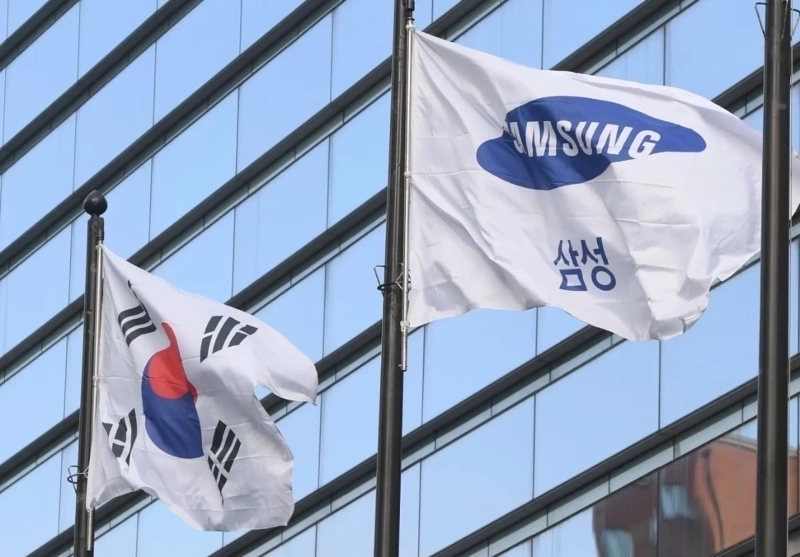
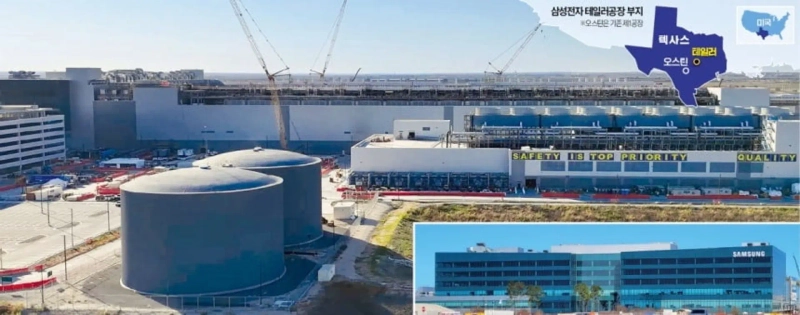
Samsung Electronics has completed preparations to start operations at its foundry plant in Taylor, Texas, a key base for its North American expansion. The milestone comes three years and six months after construction began in November 2022. Samsung plans to use the Taylor plant, set for full-scale operations in the second half of this year, as a beachhead in its push to narrow the gap with Taiwan Semiconductor Manufacturing Co.
Samsung will hold a ceremony on June 24 to mark the arrival of major equipment at the Taylor plant, according to industry officials on June 16. Han Jin-man, president of the foundry business, other senior Samsung executives, and officials from domestic and overseas materials, parts and equipment suppliers are set to attend.
Taylor Fab 1 had originally been scheduled to begin operations in October 2024, but construction was delayed by issues including order intake. Samsung resumed work last year and aggressively expanded its local workforce to accelerate the schedule. Core equipment began arriving last week, a local industry official said, adding that preparations for mass production are effectively in the final stretch.
The first products from the Taylor fab will be Tesla’s next-generation autonomous-driving chips, AI5 and AI6. Samsung secured about $16.5 billion of business from Tesla in July last year. Elon Musk, Tesla’s chief executive officer, wrote on X a day earlier that the AI5 design had been completed and thanked Samsung, signaling that the partnership is moving quickly into the production stage. AI5 will be produced by Samsung and TSMC, while AI6 will be made entirely by Samsung.
The key question for the industry is whether Samsung can meet Tesla’s stringent quality standards, which will help determine its chances of winning additional orders. Big Tech companies including Meta Platforms Inc. and Microsoft Corp. have struggled to secure enough chips as TSMC prioritizes supply for Apple Inc. and Nvidia Corp. There is also growing dissatisfaction with price increases tied to TSMC’s dominant market position. If Samsung can prove its manufacturing capabilities through Tesla’s chips, it could unlock a much larger opportunity.
Samsung’s main bet is a 2-nanometer process using gate-all-around, or GAA, technology. The company sharply revised its original plan for a 4-nanometer process to 2 nanometers to capture demand for cutting-edge chips driven by advances in artificial intelligence. The strategy is aimed at setting Samsung apart technologically from TSMC’s US plants, which use a 4-nanometer process.
The Taylor fab’s startup could also improve profitability. Once the plant enters full-scale operations, Samsung’s foundry division may reach profitability sooner after weak earnings despite heavy investment.
Yield remains the critical variable. Samsung Foundry has recently raised yields on its 2-nanometer process to about 60% and is focusing on stabilizing mass production. Proving yields at the Taylor plant will be the biggest turning point for a rebound in Samsung Foundry’s market share, an industry official said.
Kim Chae-yeon and Lee Kwang-sik, Korea Economic Daily reporters why29@hankyung.com

Korea Economic Daily
hankyung@bloomingbit.ioThe Korea Economic Daily Global is a digital media where latest news on Korean companies, industries, and financial markets.