Warsh Signals Fed Shift to Trimmed-Mean Inflation Gauge, Fueling Rate-Cut Speculation
Summary
- Kevin Warsh, the U.S. central bank chair nominee, said he would use the trimmed-mean inflation index as a key gauge instead of core PCE.
- He said trimmed-mean PCE reached 2.0%, matching the U.S. Fed’s target and fueling analysis that interest-rate cuts may be possible.
- Warsh also signaled he may scrap forward guidance, a move that could increase uncertainty over the future monetary-policy stance and markets.
Forecast Trend Report by Period


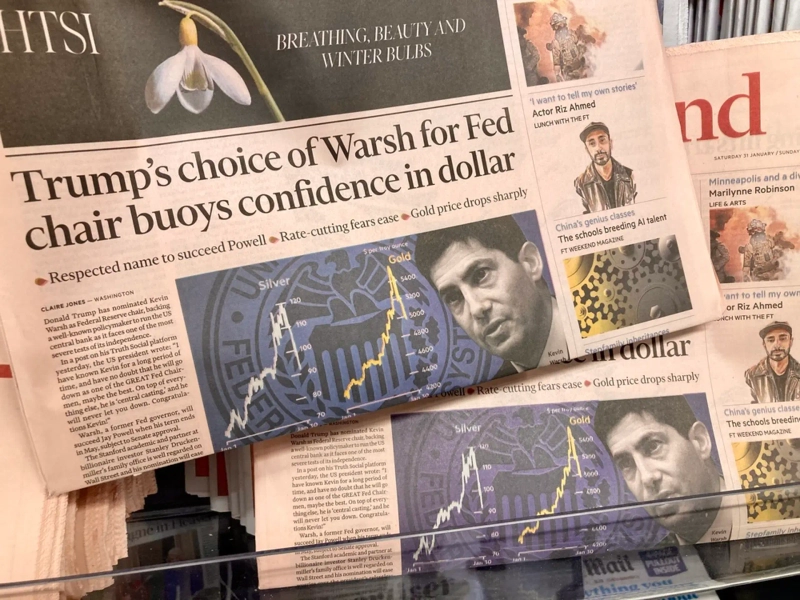
Kevin Warsh, President Donald Trump’s nominee to lead the Federal Reserve, told senators at his April 21 confirmation hearing that he would overhaul both the inflation metrics the central bank relies on and the way it communicates with markets. He drew particular attention by saying a trimmed-mean inflation gauge matters more than the core personal consumption expenditures price index, long the Fed’s main reference point for monetary policy. Some investors see the shift as an attempt to create scope for future interest-rate cuts.
Warsh Says Fed Should Watch Trimmed-Mean Inflation, Not Core PCE
Warsh delivered a sweeping critique of the Fed at the hearing. He said the central bank has a fundamental problem in the way it analyzes inflation, one of the key inputs in monetary-policy decisions. “The Fed failed to achieve its objective,” he said. “The grave policy mistakes of 2021 and 2022 are part of the legacy we now have to live with.”
He argued that what is needed now is a “regime change” in the way policy is conducted. That would mean changing everything from the tools used to measure inflation to the Fed’s communications framework.
“We used the core PCE inflation gauge, excluding food and energy. That was meant to provide a rough estimate of underlying price conditions,” Warsh said. What he wants to track instead is not price moves driven by one-off factors, but the economy’s underlying inflation rate.
Warsh said he prefers a trimmed-mean inflation gauge. The measure statistically removes the most volatile components at both the top and bottom ends of the distribution and is intended to capture what he called “true inflation.” He added that many Fed officials already use the gauge as a supplementary indicator.
Why the Trimmed-Mean Gauge Matters — and Why It Could Support Rate Cuts
The trimmed-mean inflation gauge is a version of the PCE index built around components that tend to be more persistent. Each month, PCE components are ranked by their rate of increase. The bottom 24% and the top 31% are removed, and the remainder is weighted to produce the index. The gauge is useful for tracking inflation trends after excluding items with unusually large swings during a given period, regardless of sector.
By contrast, core PCE — the measure the Fed has long watched most closely — excludes food and energy. Those categories are stripped out because their prices are heavily influenced by supply shocks and other factors beyond a central bank’s control.
Some market participants view Warsh’s emphasis on the trimmed-mean gauge as laying the groundwork for future rate cuts. According to the Federal Reserve Bank of Dallas, trimmed-mean PCE stood at 2.0% at the end of February on a six-month annualized basis, matching the Fed’s 2.0% target. Trimmed-mean PCE has been falling steadily since 2022. On that measure alone, the backdrop would leave room for lower rates.
Core PCE and headline PCE calculated on the same basis have continued to rise. Both stood at 3.4% at the end of February on a six-month annualized basis. Core PCE was 2.7% in November 2025, 2.8% in December 2025 and 3.1% in January 2026.
Judged by core PCE alone, the case for a rate cut is far harder to make. That has prompted some in the market to question whether Warsh highlighted the trimmed-mean measure to create conditions more favorable for lowering rates, or at least for keeping them unchanged for an extended period. “The monetary-policy stance can shift depending on which inflation gauge is emphasized,” Park Jun-woo, an analyst at Hana Securities, said.
Warsh Also Signals an End to Forward Guidance
Warsh also suggested the Fed should scrap forward guidance. He said the central bank is creating too much noise for markets about the future path of interest rates. “Unlike many of my colleagues, I do not believe in forward guidance,” he said. “I do not think we need to pre-announce future decisions.”
Forward guidance is a tool designed to reduce uncertainty by signaling the likely path of monetary policy in advance. Warsh said too many Fed officials are publicly offering views on where rates should be at the next meeting, the next quarter and the next year. It is not especially helpful, he said, when Fed governors or regional Federal Reserve Bank presidents lay out their policy views in media interviews or speeches.
It remains unclear whether he could eliminate forward guidance over the objections of existing policymakers. A sudden end to the framework could draw criticism that it would inject significant uncertainty into markets, where many participants use Fed guidance to forecast future rates and build portfolios.
Shim Sung-mi, Hankyung.com reporter smshim@hankyung.com

Korea Economic Daily
hankyung@bloomingbit.ioThe Korea Economic Daily Global is a digital media where latest news on Korean companies, industries, and financial markets.