Report of Iran Negotiator’s Exit Sends US Stocks on Roller-Coaster
Summary
- Reports that Iranian negotiator Ghalibaf had resigned sent the Nasdaq Composite and the S&P 500 sharply lower before both indexes rebounded.
- Internal conflict within Iran’s ruling elite, along with uncertainty over the opening of the Strait of Hormuz and international oil prices, has emerged as a key driver for financial markets.
- The article said Iran’s huge economic losses from the war and potential sanctions relief will be central issues in negotiations to end the conflict.
Forecast Trend Report by Period


Iran’s internal politics move to the forefront
Report that parliament speaker quit talks jolts markets
Nasdaq and S&P 500 each drop more than 1% intraday
No clear figure to bridge moderates and hard-liners
Confusion in negotiations may persist
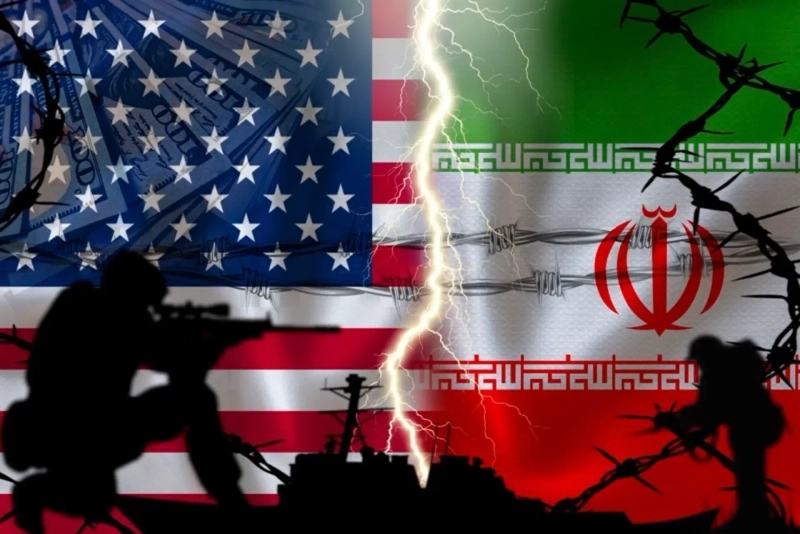
US stocks swung sharply on April 23 as markets reacted to speculation over divisions within Iran’s ruling elite. A report that Mohammad Bagher Ghalibaf, Iran’s parliament speaker and a leading advocate of negotiations, would step down from the country’s negotiating team sent the Nasdaq Composite down as much as 1.82% and pushed the S&P 500 as much as 1.28% lower. Investors appeared to take the report as a sign of rising ceasefire uncertainty and dimmer prospects for peace talks. The indexes later rebounded after Iranian media denied that Ghalibaf had resigned. The episode highlighted the growing importance of Iran’s internal dynamics as US-Iran talks to end the war remain deadlocked.
Ghalibaf’s fate matters more than Trump’s words
Signs are emerging of a clash inside Iran between a negotiation camp led by Ghalibaf and hard-liners centered on Ahmad Vahidi, commander-in-chief of the Islamic Revolutionary Guard Corps. On April 17, a statement by Iranian Foreign Minister Abbas Araghchi on keeping the Strait of Hormuz open was reversed within hours. President Donald Trump even said he did not know who represented Iran, underscoring how internal divisions could shape both future negotiations and the fate of the strategic waterway.
That variable loomed larger after unconfirmed reports about Iran’s leadership shook markets on April 23. Yoo Dal-seung, head of the Middle East Institute at Hankuk University of Foreign Studies, said Trump’s remarks had paradoxically begun to lose their effect on financial markets, like the boy who cried wolf. Investors are paying closer attention to Iran’s stance and the outcome of negotiations, he said. Until now, Trump had often softened his hard-line posture after steep stock-market declines, a pattern captured by the term TACO, short for “Trump Always Chickens Out.”
That adds to Washington’s burden in any negotiation. Before the ceasefire, markets were already responding less to Trump’s comments than to Iranian actions, such as drone attacks on Gulf states that rattled oil prices. Iran’s leadership dynamics now have the power to move markets as well. That gives Tehran another card to play, because it could pressure global equity and commodity markets by deliberately exposing internal tensions during future talks.
What Iran’s leadership really wants
Even during the ceasefire, Iran has publicly raised military pressure. Axios reported on April 23, citing sources, that the naval arm of the Islamic Revolutionary Guard Corps had laid additional mines in the Strait of Hormuz this week. It was the second such operation since the war began. Trump ordered the US Navy to attack vessels laying the mines, but the deployment was not fully stopped. That points to hard-liners gaining the upper hand.
Another problem is the absence of a visible figure capable of bridging the divide between the negotiation camp and the hard-liners. Questions have been raised over whether Mojtaba Khamenei, the son of Iran’s supreme leader, has enough influence to play a mediating role.
Still, many expect talks with the US to eventually move ahead in line with the negotiation camp’s preference. Iran’s decision-making structure requires the supreme leader’s approval on national security policy. Yoo said the same pattern played out in 2015, when hard-line resistance delayed the Iran nuclear deal before the supreme leader ultimately stepped in and settled the issue.
Iran’s economy, strained to the limit by the war, is another constraint. The New York Times reported that Iran estimates war damage at $300 billion to $1 trillion. More than 1 million people have lost their jobs. Reconstruction is expected to take years. The newspaper said the scale of the economic damage means sanctions relief will be a central issue in talks to end the conflict.
Hard-liners, however, could still try to prolong the war while pressuring the US and the global economy. In Nam-sik, a professor at the Korea National Diplomatic Academy, said the economy may be struggling to withstand the conflict, but hard-liners appear intent on imbuing the war itself with a sense of martyrdom. For them, capitulation is impossible, even if defeat is not.
As outside speculation over internal discord spread, Iran’s leadership moved to stress unity. In a statement on April 23, Mojtaba Khamenei said enemy media operations were aimed at striking public sentiment directly, weakening internal cohesion and undermining national security.
Myunghyun Han, Hankyung.com reporter wise@hankyung.com

Korea Economic Daily
hankyung@bloomingbit.ioThe Korea Economic Daily Global is a digital media where latest news on Korean companies, industries, and financial markets.