Israel-Lebanon Ceasefire Extended by 3 Weeks as Truce Remains Fragile
Summary
- President Donald Trump said the Israel-Lebanon ceasefire will be extended by three weeks.
- Israel said it is continuing airstrikes in southern Lebanon and building a Forward Defense Line, or FDL, during the ceasefire.
- The US said it is pressuring Iran through a "complete blockade" of the Strait of Hormuz and the seizure of ships carrying Iranian oil.
Forecast Trend Report by Period


President Donald Trump said the ceasefire between Israel and Lebanon will be extended by three weeks.
Trump announced the decision in a social media post after meeting senior Israeli and Lebanese officials at the White House on April 23. He said he personally led talks with top representatives from both governments. The meeting went "very well," he wrote, adding that the US would work to help Lebanon protect itself from Hezbollah.
Israel and Lebanon held their first high-level talks in 33 years on April 14 under US State Department auspices. Those talks led to a 10-day ceasefire announced on April 16. With the truce set to expire on April 25, the extension will keep the formal ceasefire in place until mid-May.
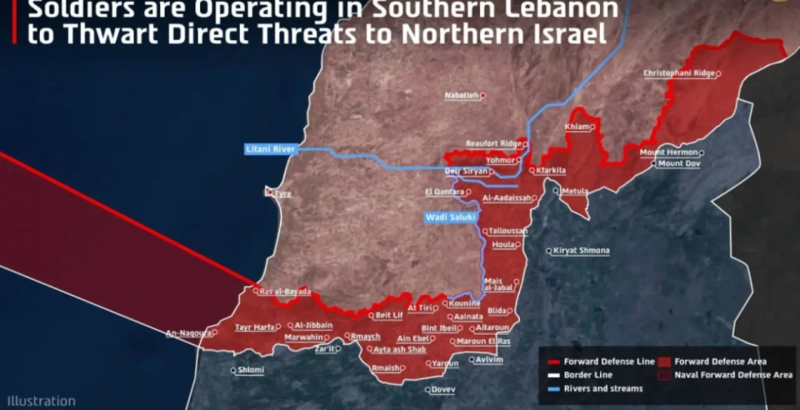
Israel has continued airstrikes in southern Lebanon during the ceasefire period. Iran has protested that the strikes violate the truce, but Israel has defended them by citing immediate threats and its right to self-defense. It has also said it is establishing a Forward Defense Line, or FDL, in southern Lebanon and justified firing in the area on that basis.
Hezbollah in Lebanon also fired missiles at northern Israel shortly before the April 23 talks. Israel retaliated by striking Lebanese rocket launchers. Iran also said its air defenses were activated after what it described as hostile aerial activity, believed to involve an Israeli drone, was detected over the Tehran area for the first time since the ceasefire began.
The Israel Defense Forces said its troops have continued operations in southern Lebanon since the ceasefire took effect, calling themselves a shield for residents of northern Israel. The military said its mission is to eliminate militants and dismantle all infrastructure belonging to what it called the Hezbollah terrorist organization. The IDF said Hezbollah had carried out several attack plans targeting its units operating in southern Lebanon. Working with the air force, it said, Israeli forces killed more than 25 militants who threatened its troops and conducted about 50 strikes on militants and militant infrastructure.
The US and Iran are continuing to pressure each other without setting a date for a second round of talks. Trump said on April 23 that Iran would not use nuclear weapons, while also asserting that Washington had full control over the Strait of Hormuz and that the waterway would be under a "complete blockade." He also said he had ordered the Navy to sink any vessel laying mines. On the night of April 22, the US seized the Majestic X, which was carrying Iranian oil in the Indian Ocean, extending interdictions beyond the Strait of Hormuz. The US has also deployed the Nimitz-class aircraft carrier George H.W. Bush to the Middle East, creating a three-carrier posture to pressure Iran.
Iran, for its part, released footage showing the Islamic Revolutionary Guard Corps seizing two merchant vessels. On April 23, it also publicized Iranian ships passing through the strait carrying food, portraying the US blockade as ineffective.
Separately, the UK and France held an international military meeting in Northwood, north of London, on April 23 with participants from 44 countries to discuss ways to reopen the Strait of Hormuz.
Lee Sang-eun, Washington correspondent, Hankyung.com, selee@hankyung.com

Korea Economic Daily
hankyung@bloomingbit.ioThe Korea Economic Daily Global is a digital media where latest news on Korean companies, industries, and financial markets.