European Banks Integrate Crypto Services Into Core Platforms as MiCA Accelerates Market Shift
Summary
- Major European banks are integrating crypto-asset services into existing financial infrastructure, accelerating a broader shift in market structure.
- Since the introduction of MiCA, KBC, BBVA, DZ Bank and Societe Generale have been adding crypto functions such as Bitcoin and Ether trading to their existing brokerage and payments systems.
- Broader access to crypto assets through bank platforms is lifting Europe’s crypto ownership rate, while growth in the stablecoin-based payments market is raising the possibility of a shift toward bank-led platforms.
Forecast Trend Report by Period


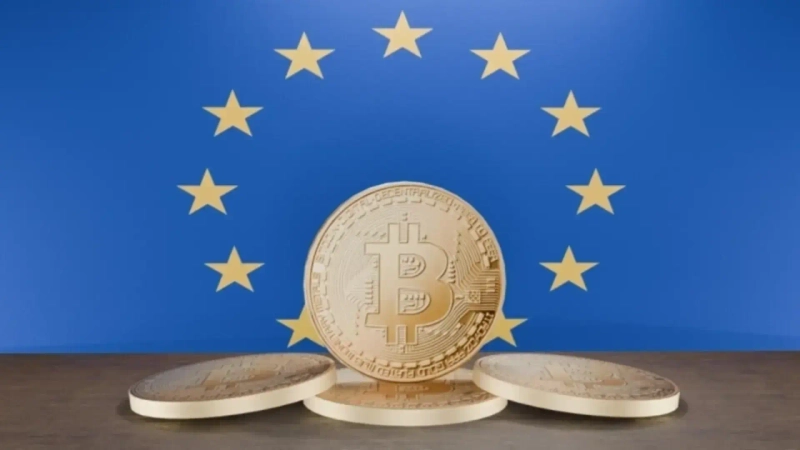
Major European banks are integrating crypto-asset services into their existing financial infrastructure, accelerating a broader shift in the market’s structure as regulatory clarity improves.
CoinDesk reported on April 25 that KBC, Belgium’s largest bank, recently began offering Bitcoin and Ether trading to retail investors through its online brokerage platform. The approach brings crypto trading into an existing banking service environment.
The change is being read as more than a product expansion. Banks had previously treated crypto as a separate segment and approached it on a limited basis. More recently, they have been moving to incorporate digital assets into the same framework used for traditional financial products.
A key driver is MiCA, the European Union’s regulatory framework for crypto assets. Before MiCA, banks faced higher barriers to entering the business because regulations differed across countries. They can now provide services under a single regulatory framework.
Banks are responding by adding crypto functions to existing brokerage and payments systems instead of building separate businesses. Major financial institutions including Spain’s BBVA, Germany’s DZ Bank and France’s Societe Generale have entered the market in similar ways.
That shift is also changing the customer experience. Investors can buy Bitcoin in the same environment where they trade stocks, while banks can continue using their existing compliance and risk-management systems.
The market impact may be substantial. Wider access to crypto through bank platforms could quickly lift demand from existing customers because no separate sign-up process is required. Crypto ownership in Europe rose to 9% in 2024 from 4% in 2020, and is projected to reach about 25% by 2030.
The range of services could also extend beyond trading into payments. The stablecoin-based payments market is estimated to grow to $50 trillion annually by 2030. If banks integrate tokenized deposits and stablecoin functions into payments infrastructure, the competitive landscape could also shift.
CoinDesk said the crypto market’s competitive structure could be reshaped from an exchange-centered model to one led by bank platforms. The key variable, it said, will be which financial institution first builds an integrated service spanning trading, payments and custody.

Minseung Kang
minriver@bloomingbit.ioBlockchain journalist | Writer of Trade Now & Altcoin Now, must-read content for investors.