Why Powell Drew Applause at His Final FOMC Press Conference
Summary
- Markets said the dollar and US Treasuries could swing sharply if central bank independence is undermined.
- Ahead of the midterm elections, with pressure building for lower rates, chair nominee Warsh has repeatedly pledged to protect central bank independence.
- If Warsh does not strike a sufficiently hawkish tone at the June FOMC meeting, markets may view him as a second Stephen Miran.
Forecast Trend Report by Period


Lee Sang-eun, Washington correspondent
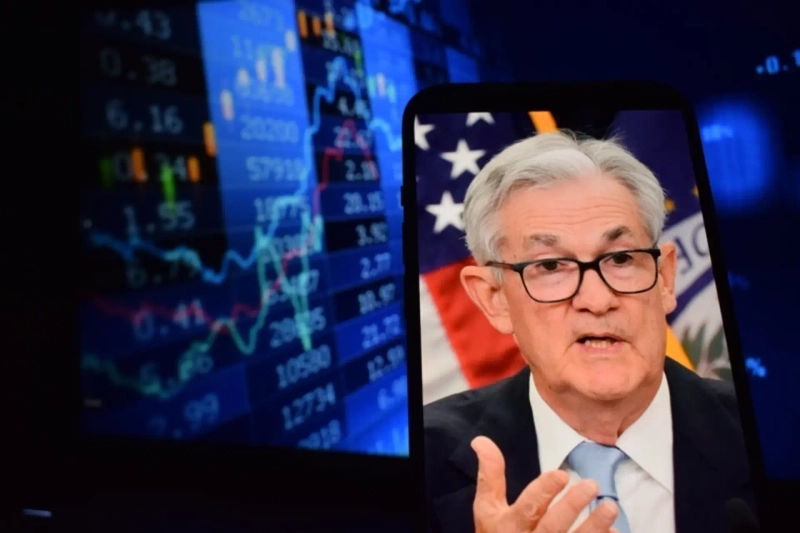
“You won’t see me here with you next time.”
After his final press conference following last week’s Federal Open Market Committee meeting, Federal Reserve Chair Jerome Powell did what he always does. He took off his glasses, slipped them into his pocket and walked out of the briefing room. A few reporters clapped intermittently as he headed for the door. The applause was restrained rather than enthusiastic, with a trace of hesitation.
Reporters are not in the habit of applauding. It is rarer still for a central bank chief to leave to applause. Former Fed Chairs Ben Bernanke and Janet Yellen simply walked out in silence.
Support for central bank independence
Was Powell’s monetary policy better than Bernanke’s or Yellen’s? Few would argue that it was. Jon Hilsenrath, a longtime Wall Street Journal Fed reporter, wrote in Fortune that Powell deserved praise for his stewardship and for trying to remain faithful to his role. He did not, however, give high marks to the policy itself. Hilsenrath argued that Powell, who served as a Fed governor during the global financial crisis, erred by applying a response suited to a demand shock to the Covid-19 pandemic, which was a supply shock. Easy-money policies had benefits, but they also brought side effects. Powell’s mistaken assertion that inflation was transitory, in his Jackson Hole speech in August 2021, likely reflected an early misreading of supply-chain disruptions and the path of prices.
Powell is not really leaving, either. Unlike his predecessors, he chose not to give up his seat on the Board of Governors when his term as chair ends, opting instead to remain alongside his successor, Kevin Warsh, in what amounts to an uneasy coexistence. The applause from reporters was not a judgment that Powell’s policies had been exceptionally good, or merely a gesture of thanks for his service. It was an expression of support for the central bank independence he has tried to protect.
For Warsh, distance will be key
The task facing the next chair is far more complicated than it was in Powell’s era. In 1972, as President Richard Nixon sought re-election, he pressed then-Fed Chair Arthur Burns to lower interest rates. Burns’s personal convictions, the oil shock and expansionary monetary policy shaped by political pressure produced disastrous results. Inflation, which had been running in the 6% range, climbed above 12%. His successor, Paul Volcker, ultimately had to raise the policy rate to 20%.
Markets fear a replay of the Burns era. Economic data are not bad and inflation is rising, but low rates are politically useful when politicians are trying to win votes ahead of midterm elections. President Donald Trump needs only one proxy at the Fed: Governor Stephen Miran. The moment markets conclude that the chair can also play that role, the dollar and US Treasuries would come under sharp pressure. That is why Warsh, the chair nominee, repeatedly pledged at his Senate confirmation hearing to protect central bank independence. If he fails to strike a sufficiently hawkish tone at the June FOMC meeting, when the effects of the Iran war should be clearer, markets may see him as a second Stephen Miran.
Economic policy and monetary policy can miss the mark. But there can be no delay in defending central bank independence. Failure there could breed distrust in the American system as a whole. Will a Chair Warsh receive applause at his final press conference?

Korea Economic Daily
hankyung@bloomingbit.ioThe Korea Economic Daily Global is a digital media where latest news on Korean companies, industries, and financial markets.