Summary
- The US said it has launched Project Freedom to support the passage of ships trapped in the Strait of Hormuz, stepping up efforts to stabilize global oil prices as tensions escalate.
- Iran said it would use military means to counter the US shipping support plan, and the tanker attack underscored its control over the waterway, leaving the security risk level at “severe.”
- While Project Freedom is seen as a card aimed at gaining leverage in deadlocked war-ending talks, it has also raised concerns about a ceasefire collapse, possible US casualties, and limited effectiveness of the operation.
Forecast Trend Report by Period


"Operation to Free Ships in Hormuz Begins"
Trump Says Vessels Trapped in Strait Will Be Helped Out
Iran Calls It a Ceasefire Violation as Tensions Rise
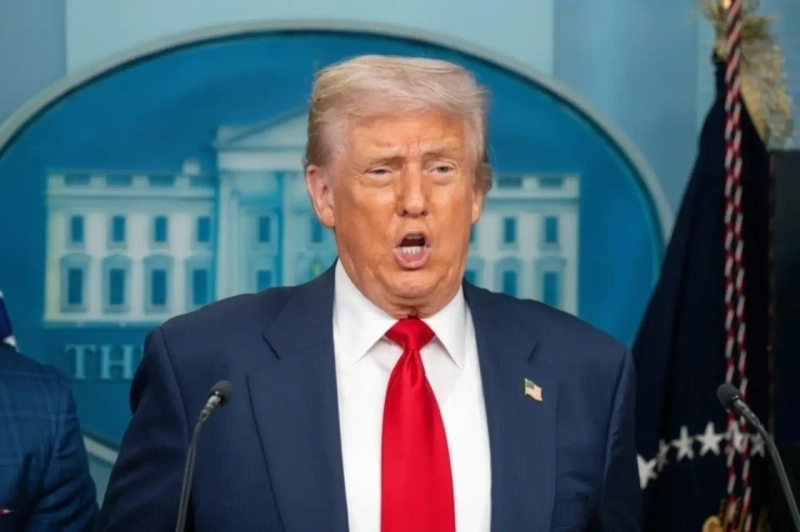
President Donald Trump said the US will begin an operation on the morning of May 4, Middle East time, to help third-country vessels trapped in the Strait of Hormuz leave safely. The move is intended to blunt Iran’s blockade of the waterway, which has disrupted crude shipments and pushed up global oil prices. Iran rejected the plan, calling it a violation of the ceasefire agreement.
In a social media post on May 3, Trump wrote that many ships were running short of food and other supplies. He said the operation was meant to free people, companies and countries that had “done nothing wrong.” The mission was named “Project Freedom.”
The US is not set to have warships directly escort tankers, unlike an attempt in March. The Wall Street Journal, citing senior US officials, reported that multiple countries, insurers and shipping companies would take part in the operation to facilitate vessel traffic through the strait. The plan does not include US Navy vessels escorting commercial ships through the waterway.
Iran has made clear it will not accept the move. Soon after the operation was announced, a tanker near the strait was hit by an unidentified projectile.
Tanker Hit Near Hormuz After US Announces Rescue Plan
With Nuclear Talks Deadlocked, US Makes High-Stakes Bet to Stabilize Oil
The Strait of Hormuz is effectively Iran’s only remaining leverage in the war. Even after its air defenses were crippled and it endured more than 10,000 bombardments, Tehran has pressured the US and its allies by choking traffic through the strait and driving oil prices higher. Trump’s declaration alone was unlikely to reopen the route. A tanker was attacked near Hormuz almost immediately after Project Freedom was announced.
That has fueled the view that Trump’s move is designed with Iran’s response in mind. Others see a risk that it could overturn the current truce.
Iran Pushes Back Hard
Iran’s military said on May 4 it would use military means to counter US support for shipping through the Strait of Hormuz. In a statement, it said it was maintaining the strait’s security “fully and firmly” and warned civilian ships and tankers not to jeopardize safety by moving without coordination with Iranian forces.
The tanker attack that day is being interpreted as a show of force meant to underscore Iran’s control over the strait. It is not known whether the vessel was attempting to pass through the waterway. Despite Trump’s announcement and the attack, the UK Maritime Trade Operations agency kept its security risk level for the Strait of Hormuz at “severe.”
It remains unclear what tools Washington will use to resume shipping. The US military is understood to be considering steps such as providing ships with information on detected naval mines to help them identify safer routes.
Retaliation plans are also said to be in place if Iran attacks vessels. Trump wrote on social media that “if there is interference, we will unfortunately have to respond strongly.” US Central Command said Project Freedom would involve guided-missile destroyers, more than 100 land- and sea-based aircraft, unmanned platforms and 15,000 troops.
Is Washington Trying to Weaken Iran and Force an End to the War?
Several explanations have been offered for the operation. The most persuasive is that it is a shock tactic meant to break the deadlock in negotiations to formally end the war.
The US and Iran agreed to a ceasefire on April 7 and began talks on a permanent settlement, but no outcome has emerged. The two sides remain divided over nuclear issues. Over the weekend, Iran proposed a new framework under which it would enter nuclear talks in exchange for sanctions relief, but Trump rejected it.
Because Washington announced Project Freedom right after rejecting Iran’s proposal, many see it as a negotiating card aimed at gaining the upper hand. If tankers can leave the strait, the move could help stabilize global oil prices while reducing at least part of Iran’s leverage.
If Iran mounts serious resistance, however, the current ceasefire could come under strain. Despite the overwhelming gap in military power, Iran could still attack with drones and conventional missiles. The New York Times and others said that could carry a meaningful risk of US casualties.
Criticism is also mounting that the operation itself was premature. One reason is that the US may not currently have enough military assets in the region to protect commercial shipping, with the aircraft carrier Gerald Ford having left Middle Eastern waters. This is also a moment when Washington needs cooperation from Europe and other countries, but that may be harder after Trump recently announced plans to withdraw some US troops from Germany.
Some also question how effective the operation will be. Shipowners may be reluctant to risk sending vessels through a waterway where they could still be targeted by Iran. In an interview with CNN on May 4, Anglo-Eastern Chairman Bjorn Hojgaard said securing a safe corridor would require cooperation from both sides, not just one. Unless Iran accepts the arrangement, conditions at sea are unlikely to change in a meaningful way.
Hwang Jung-soo and Han Myung-hyun, Korea Economic Daily reporters hjs@hankyung.com

Korea Economic Daily
hankyung@bloomingbit.ioThe Korea Economic Daily Global is a digital media where latest news on Korean companies, industries, and financial markets.