PiCK
South Korea Says Crypto Tax to Take Effect as Planned, Separate From Investment Income Tax
Summary
- The Ministry of Economy and Finance said virtual-asset taxation will take effect as scheduled on Jan. 1 and is separate from the financial investment income tax.
- It said virtual assets will be classified as miscellaneous income and taxed at a flat 20% rate (22% including local income tax), allowing the government to comprehensively tax income from staking, airdrops and other activities.
- It said it will expand its tax-detection capabilities through the National Tax Service’s electronic system and the Crypto-Asset Reporting Framework (CARF), and will announce detailed tax standards later.
Forecast Trend Report by Period


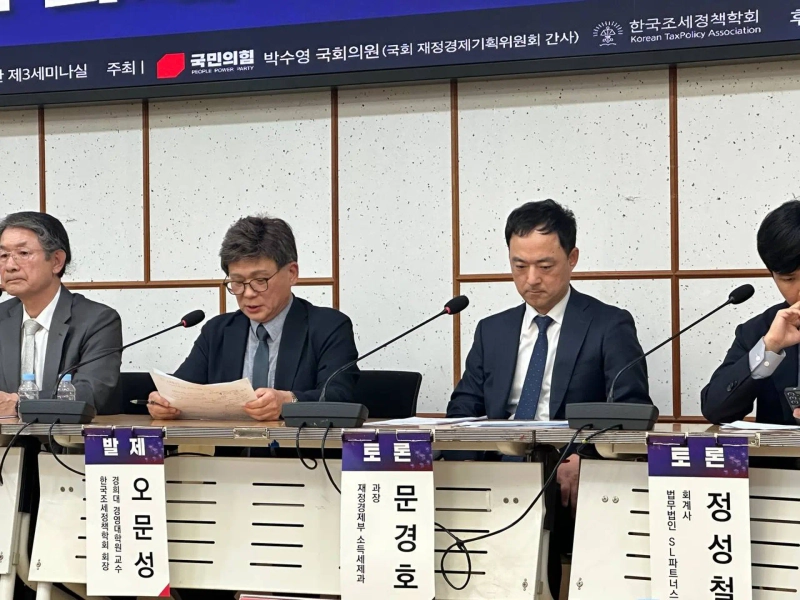
South Korea’s finance ministry pushed back against criticism over the planned introduction of virtual-asset taxation next year, saying the levy should take effect on schedule despite debate over fairness after the repeal of the financial investment income tax and claims of double taxation.
Moon Kyung-ho, director general for income tax policy at the Ministry of Economy and Finance, made the remarks on May 7 at an emergency forum on virtual-asset taxation held at the National Assembly Members’ Office Building. He said the tax system for virtual assets should begin operating as planned on Jan. 1.
Moon drew a clear line between crypto taxation and the financial investment income tax, the issue at the center of the dispute. Legislation to tax virtual assets passed the National Assembly in December 2020, before the financial investment income tax framework was introduced, he said. On that basis, he argued it is inappropriate to treat the investment income tax as a precondition for taxing crypto assets.
He also rejected the argument that taxing crypto while small retail investors in listed stocks are not taxed creates an imbalance. Not all financial investments are tax-exempt simply because small shareholders are not subject to tax, he said. Major shareholders, overseas stocks and unlisted shares are already taxed, he added, making it unreasonable to exempt only virtual assets.
Addressing criticism from academics and the industry that classifying crypto as miscellaneous income rather than capital gains is disadvantageous, Moon said International Financial Reporting Standards classify virtual assets as intangible assets. He added that there is no suitable alternative classification beyond intangible assets.
He said the miscellaneous-income category carries a flat 20% tax rate, or 22% including local income tax. That can be more favorable for high-income earners than capital gains or other income categories that may face a top comprehensive income tax rate of 45%. He also said the broader miscellaneous-income category, unlike the itemized capital-gains framework, allows the government to cover income from staking, airdrops and other forms of crypto activity without legal disputes.
Moon dismissed criticism over the lack of loss carryforwards. Other financial products, including stocks, are not broadly allowed such deductions under the current system either, he said.
He also rejected claims that value-added tax results in double taxation. No VAT is imposed on the supply or transfer of virtual assets themselves. VAT paid by exchanges such as Upbit applies to brokerage services, not gains from virtual-asset trading, so it does not amount to double taxation, he said. He compared it to real-estate transactions, where land itself is not subject to VAT but brokerage commissions charged by licensed agents are.
On concerns about the readiness of the tax infrastructure, Moon said the National Tax Service has already built the necessary electronic system. He said the government will continue to strengthen its ability to identify taxable activity through overseas asset reporting rules and the Crypto-Asset Reporting Framework, or CARF, for the automatic exchange of information on virtual assets. Detailed tax standards for various transaction types, including staking, will be disclosed transparently in future National Tax Service notices, he said.

Doohyun Hwang
cow5361@bloomingbit.ioKEEP CALM AND HODL🍀