US Court Rules Trump’s 10% Global Tariff Illegal; White House Set to Appeal
Summary
- The US Court of International Trade ruled that the Trump administration’s 10% global tariff was unlawful and invalid.
- The court ordered the administration to refund tariffs already paid by the importers that filed the lawsuit, along with interest.
- The Office of the United States Trade Representative has already opened Section 301 investigations into 16 economies, including South Korea, to replace the 10% global tariff.
Forecast Trend Report by Period


US Court Rules 10% Global Tariff Illegal
Trump Administration Imposed It to Replace Reciprocal Tariffs
White House Set to Appeal
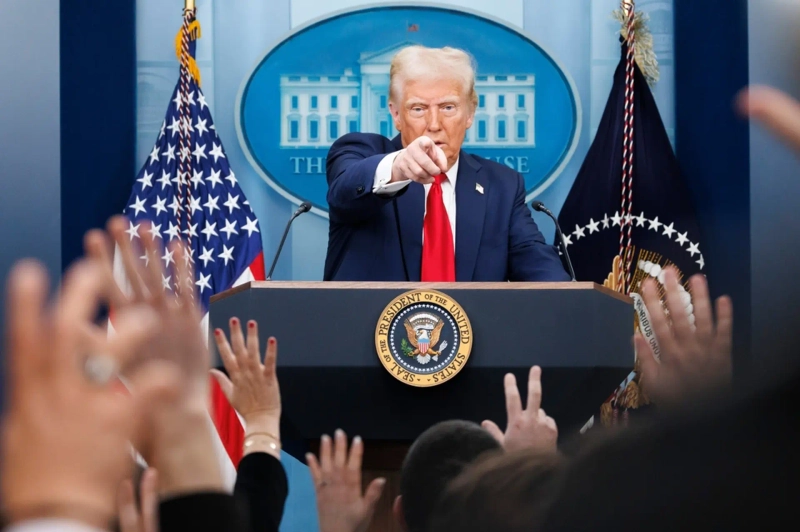
A US trial court ruled that the Trump administration’s 10% global tariff, adopted to replace reciprocal tariffs that had also been found unlawful, is invalid.
A three-judge panel at the US Court of International Trade voted 2-1 on May 7 that the 10% tariff imposed on all US trading partners under Section 122 of the Trade Act was unlawful and void.
The court ordered the Trump administration to refund, with interest, tariffs already paid by the importers that filed the lawsuit.
Section 122 of the Trade Act, which the administration cited as the legal basis for the measure, gives the US president authority to impose tariffs for up to 150 days. The provision is intended to address severe balance-of-payments deficits.
The majority found that the administration had conflated the balance of payments with the trade deficit when it imposed the 10% global tariff, and therefore failed to satisfy the requirements of Section 122.
The balance of payments measures all forms of economic transactions between domestic residents and foreign counterparts, including trade in goods, services, income, transfers and financial flows. A trade deficit, by contrast, generally refers to goods trade.
The Trump administration is expected to appeal. The ruling’s immediate effect on tariff talks and the broader direction of US tariff policy may be limited.
Tariffs imposed under Section 122 are set to expire automatically on July 24. Specialists view the measure as a temporary stopgap until a new tariff framework is introduced.
Trump has repeatedly said a new tariff system will be ready soon.
The Office of the United States Trade Representative has already opened Section 301 investigations into 16 economies, including South Korea, as a preliminary step toward imposing additional tariffs tied to structural overcapacity issues to replace the 10% global tariff.
Park Shin-young, New York correspondent, Hankyung.com, nyusos@hankyung.com

Korea Economic Daily
hankyung@bloomingbit.ioThe Korea Economic Daily Global is a digital media where latest news on Korean companies, industries, and financial markets.