Iran Caught in Oil-Money Cash Trap as War Drags On, Facing Do-or-Die Choice
Summary
- The prolonged US-Iran war is raising the risk of a Middle East-driven financial crisis as OPEC members' oil exports plunge and the oil-money cash trap deepens.
- The risk is growing that OPEC could fall from a surplus-capital bloc into a capital-demanding group, with the UAE's exit from OPEC and Saudi Arabia's foreign-currency shortage adding to the strain.
- Iran and the global economy could both face a severe shock if Iran's oil-export revenue keeps shrinking, the rial keeps plunging, and dollarization accelerates.
Forecast Trend Report by Period


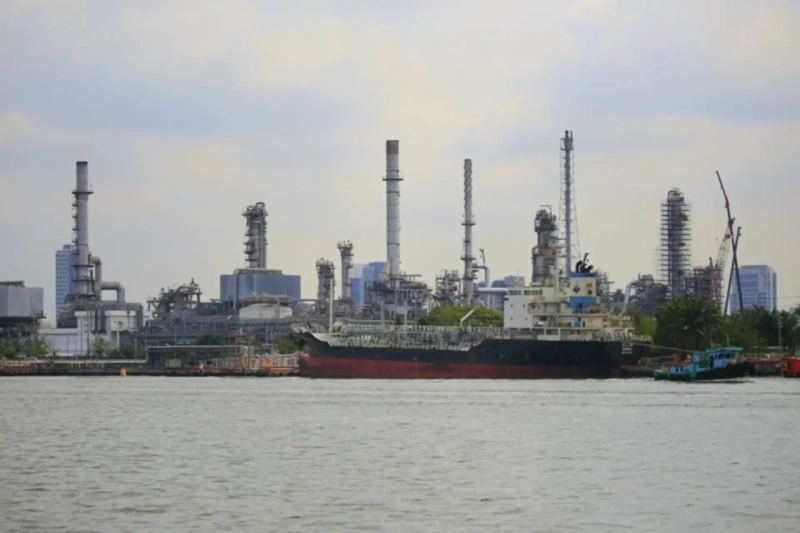
Fresh strains are emerging in the global credit cycle as the US-Iran war drags on and more members of the Organization of the Petroleum Exporting Countries fall into an "oil-money cash trap." The term refers to a technical-default-like situation in which a country still runs a surplus but lacks enough cash to make payments on time.
OPEC Oil Exports Fall More Than Expected
OPEC members' crude exports fell more sharply than expected in March, when Iran began blocking the Strait of Hormuz after the war broke out. Iraq and Kuwait, whose main oil export terminals are effectively trapped by the strait, saw shipments slump to about one-third of prewar levels. Saudi Arabia and the United Arab Emirates, which had secured alternative routes, also posted declines of more than 30%.
The drop in oil export revenue has drawn comparisons with the "sudden stop" that hit Asian economies during the late-1990s financial crisis. OPEC members with heavy development-related payment needs are increasingly short of foreign currency. The UAE was the first to seek help. As the war worsened its foreign-currency position, the country sold US Treasuries it had held in reserve and asked the US for a currency-swap arrangement.
As South Korea's case last year showed, the Federal Reserve generally limits standing currency-swap lines to the five major reserve-currency jurisdictions — Canada, Japan, the euro area, the UK and Switzerland — to preserve the dollar's role as the world's central currency. It extends swap lines to non-reserve-currency countries only on a temporary basis when an external shock such as war threatens the US economy.
With the Fed hesitating and the foreign-currency squeeze worsening, the UAE withdrew from OPEC effective May 1 in a bid to address the problem by increasing output. Qatar left in 2019, Ecuador in 2020 and Angola in 2023, but the UAE's departure is being treated as a much bigger shock. If Iraq and Kuwait follow, OPEC would be pushed to the brink of collapse.
Even Saudi Arabia, OPEC's last line of defense, is struggling to support the group because of a shortage of foreign currency. Plans to turn Riyadh into a second New York through investments in sports, art and culture have already run into trouble. That has raised concern that Crown Prince Mohammed bin Salman's Vision 2030 project could also be disrupted.
Iran, one of the parties to the war, is in even worse shape. The rial, which had already been weakening under US-led Western sanctions, has fallen to 1.8 million per dollar. Iranians are shunning the national currency so aggressively that some have tossed banknotes into the air. The government has tried to stabilize the rial, including by introducing a fixed exchange-rate regime, but with little effect.
As the war drags on and the rial collapses, Iran's economy is sliding rapidly into severe stagflation. First-quarter growth has fallen to about minus 10%, the lowest on record, while consumer inflation surged to a record 67% in March. The economic misery index facing Iranians now exceeds that of Libyans during the Arab Spring in 2010.
The question is whether Iran's Islamic Revolutionary Guard Corps will pursue a "do-or-die" strategy by triggering a fifth Middle East war. The article argues that the odds are low because the so-called Crescent Belt — Iran, Iraq, Syria, Lebanon, Jordan, Yemen and Russia — is much looser today than it was during the 1973 Arab-Israeli war.
Two Paths for Iran's Government and the IRGC
The Iranian government and the IRGC, which hold the key to any fifth Middle East war, face two broad choices. One is restraint. Unlike its predecessor, the current Iranian government has embraced pragmatic diplomacy, making the chances of a broader regional war slim. Allegations that Tehran backed Hezbollah in clashes with Israel that have circulated continuously since June 2025 were also found to be untrue.
The other path runs through the IRGC's support for proxy organizations. Separate from the Iranian government, the IRGC backs Hamas in Gaza, Hezbollah in Lebanon, pro-Iran militias in Syria, the Popular Mobilization Forces in Iraq and rebels in Yemen as it seeks regional hegemony in the Middle East. The government is not in a position to ignore the IRGC completely.
To gauge how Iran may respond to the US push for a counter-blockade of the Strait of Hormuz and a "freedom project," it is necessary to look back to 2015, when nuclear talks between Iran and the P5+1 — the five permanent members of the UN Security Council plus Germany — were concluded dramatically. The two sides agreed on the Joint Comprehensive Plan of Action, under which Iran would halt nuclear-development activities in exchange for sanctions relief from the international community.
Iranians welcomed that agreement more than anyone else. For the first time in 36 years since 1979, Iranian state television carried live remarks by then-US President Barack Obama on the nuclear deal. People poured into the streets chanting "Thank Rouhani" and flashing V-for-victory signs.
Western countries, including the US, also broadly welcomed the agreement even as they voiced unease about the work still left to do. Germany and France said it created a stepping stone to block Iran's nuclear-weapons development and signaled plans for a broader strategic pivot to the Middle East. South Korea took a similar view.
The countries that opposed the deal were Israel and Saudi Arabia, and that opposition had long been seen as another potential flashpoint in the region. Israeli Prime Minister Benjamin Netanyahu strongly criticized the accord, saying it was a historic mistake that threatened Israel's survival and increased the risk of nuclear proliferation and nuclear war.
That also helps explain why US Middle East policy shifted toward balancing both the Crescent Belt and a Saudi Belt made up of Israel, Saudi Arabia and the US, as well as the Sunni-Shiite divide. One view is that Iran is now fighting to the end because it fears being isolated as the Trump administration brokers a normalization process between Israel and Saudi Arabia.
If the Trump administration's counter-blockade of the Strait of Hormuz and freedom project sharply reduce Iran's oil-export income and the situation worsens after the collapse of the nuclear pact, Iran could fall into what the article calls a "Galapagos trap." Since the 1979 Islamic Revolution toppled the Pahlavi dynasty, Iran has been cut off from what had been the Middle East's largest market. If that market closes again, the risk to the global economy would also be substantial because Iran has the region's biggest population and largest economy.
In an effort to cope, Iran has added the dollar to the currencies it plans to accept for Strait of Hormuz transit-fee payments, alongside the rial, the yuan and coin. Iranians have long preferred dollars to their own rial. If those transit fees are collected in dollars, dollarization would accelerate sharply.
If OPEC members, which had served as surplus capital providers in the global credit cycle since the group was founded in September 1960, become capital-demanding countries instead, the odds of a Middle East-driven financial crisis would rise sharply. A further concern is that even the International Monetary Fund lacks ample financial firepower, increasing the chances that OPEC members struggling with foreign-currency shortages may turn to China in haste.
The Trump administration is also facing a do-or-die moment. Gasoline prices — described as the leash line of a US president — have been above $4 a gallon for some time. With consumer inflation above 3% and the 30-year Treasury yield above 5%, stock investors are again talking about a "5.3 monster" nightmare. For both Iran and the US, the war needs to end now to avoid the worst outcome.
Han Sang-chun, senior international finance columnist and Korea Economic Daily editorial writer

Korea Economic Daily
hankyung@bloomingbit.ioThe Korea Economic Daily Global is a digital media where latest news on Korean companies, industries, and financial markets.