Hormuz Blockade Elevates Caspian Sea as Iran-Russia Back Channel
Summary
- The report said a US military blockade of the Strait of Hormuz has turned the Caspian Sea into a key trade corridor for Russia to supply Iran with military goods and essential foodstuffs.
- It said ships using the Caspian route switch off their Automatic Identification System (AIS), leaving the actual trade volume unclear, while the sea’s closed geography makes US surveillance and military operations extremely difficult.
- Experts said the Caspian is the ideal route for moving military supplies while evading sanctions and is viewed by US policymakers as a geopolitical black hole.
Forecast Trend Report by Period


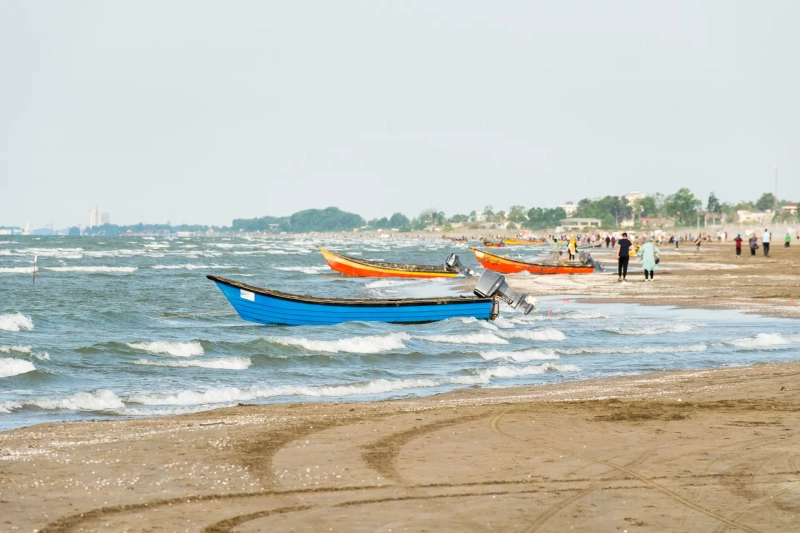
The Caspian Sea is rapidly emerging as Iran’s new strategic supply route after the Strait of Hormuz was closed in the fallout from its war with the US, according to an analysis.
The New York Times reported on May 8 that the Caspian has become a key trade corridor between Iran and Russia, two countries linked by Western sanctions and war. Russia had mainly shipped supplies to Iran through the Strait of Hormuz. After that route was cut off by a US military blockade, Moscow moved aggressively to use the landlocked Caspian Sea as an alternative.
The Caspian, north of Iran, is the world’s largest inland body of water. It is bordered by Russia, Azerbaijan, Turkmenistan, Kazakhstan and Iran. Despite its name, it is not directly connected to the ocean and is geographically closer to a giant lake.
US officials believe Russia has continued supplying Iran with drone components and other materiel through the route. That support helps explain how Iran has been able to rebuild its arsenal and endure more than two months of fighting with the US.
Israel struck Iranian naval facilities around the Caspian in March, and the Times said the attack was also intended to disrupt weapons shipments. Iran is now operating four ports along the Caspian coast around the clock to bring in large volumes of essential food supplies, including wheat, corn and sunflower oil.
The same route is also believed to be used when Iran supplies ammunition to Russia for the Russia-Ukraine war.
Still, the true scale of trade through the Caspian remains opaque. Ships on the route often switch off their Automatic Identification System, or AIS, and operate as ghost vessels. Unlike the Persian Gulf, the Caspian’s closed geography bars outside naval forces from entering, making US surveillance and operations extremely difficult.
Nicole Grajewski, a professor at Sciences Po in Paris, said the Caspian is "the ideal place" to move military goods while evading sanctions.
Luke Coffey, a senior fellow at the Hudson Institute, said US military commands covering the countries along the Caspian are fragmented. To US policymakers, the Caspian is a geopolitical black hole, treated almost as if it does not exist.
Kim So-yeon, Hankyung.com reporter sue123@hankyung.com

Korea Economic Daily
hankyung@bloomingbit.ioThe Korea Economic Daily Global is a digital media where latest news on Korean companies, industries, and financial markets.