PiCK
Trump Still Waiting on Iran Reply to Hormuz, Ceasefire Proposal as Silence Enters Fourth Day
Summary
- The US has proposed a memorandum of understanding (MOU) to Iran that includes reopening the Strait of Hormuz and a 30-day ceasefire, but has yet to receive a response after four days.
- Fighting between the US and Iran is keeping tensions high in the Strait of Hormuz, with tankers, merchant ships and other vessels neutralized or damaged and restrictions on maritime passage continuing.
- As Qatar, Russia, the UK and France move to support maritime security and mediation, there are signs a Qatari natural gas vessel tried to break through the blockade and transit the strait.
Forecast Trend Report by Period


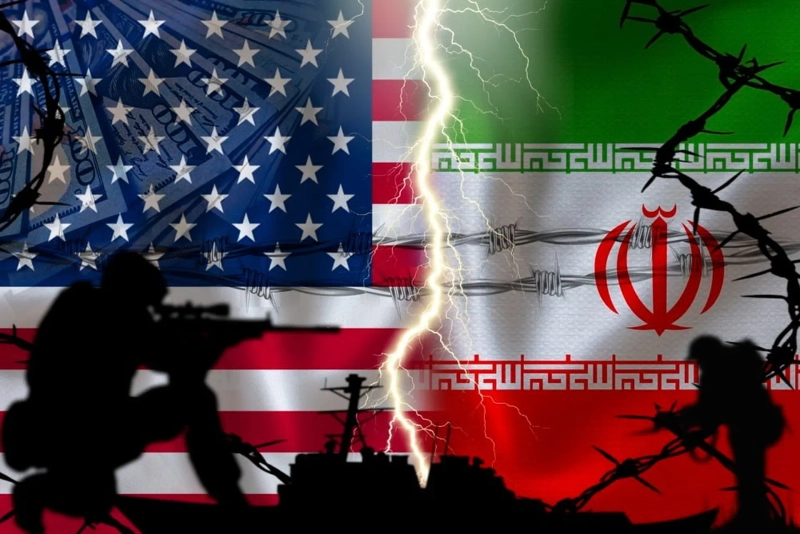
The US is still waiting for Iran’s response after sending a peace proposal that includes reopening the Strait of Hormuz. President Donald Trump’s administration has said every day since May 7 that an answer could come “today,” but no reply has arrived for a fourth straight day.
Trump and Secretary of State Marco Rubio told reporters on May 9 that Iran could respond later that day on a wartime settlement. As of the morning of May 10, there was still no sign that a reply had been delivered. The administration had earlier proposed a one-page, nine-point memorandum of understanding, and Iran answered with a 14-point counterproposal. The current draft is understood to include reopening the Strait of Hormuz and a 30-day ceasefire to allow further talks.
Iranian Foreign Ministry spokesman Esmaeil Baghaei told Al Jazeera and other outlets that Tehran was focused on ending the war and was reviewing the US position. He added that both sides were looking for a way to narrow their differences, but said only that any response would come at a time that was “appropriate for the Iranian people.”
Sporadic clashes and ship seizures continue around the Strait of Hormuz. Neither the US nor Iran wants them to become the trigger for a broader resumption of attacks. The US said on May 8 that it had “neutralized” two Iranian tankers trying to break through the maritime blockade in the strait. Iran’s Islamic Revolutionary Guard Corps responded that any attack on Iranian tankers or merchant ships would lead to strong retaliation against US positions in the region and enemy vessels.
US Central Command said it had attacked four vessels after April 13 and blocked 58 merchant ships from entering or leaving Iranian ports. Iran’s Mehr News Agency reported late on May 8 that six vessels docked at Qasab port were damaged in a US attack and that six people were missing. The New York Times reported that the US had not confirmed those claims.
The ceasefire between Israel and Hezbollah in Lebanon has largely become nominal. Qatar-based broadcaster Al Jazeera reported that heavy Israeli bombardment of Lebanon was continuing and that at least 24 people were killed in attacks on May 9. Hezbollah also continued attacks on Israeli forces stationed in southern Lebanon.
Mediator countries including Qatar and Russia are stepping up diplomatic efforts. Axios reported that Sheikh Mohammed bin Abdulrahman Al Thani, Qatar’s prime minister and foreign minister, met Vice President JD Vance, Rubio and US Middle East envoy Steve Witkoff in Washington and Miami between May 8 and May 9.
Russian President Vladimir Putin told reporters after the Victory Day parade on May 9 that Moscow was prepared, if necessary, to remove Iran’s enriched uranium and store it in Russia. He said Russia could manage the material.
Countries are also beginning to position forces to secure the waterway in the event it reopens. The UK said on May 9 that it would send a naval destroyer to the Middle East. The British government described the move as a pre-deployment step for a mission aimed at protecting security in the strait. France’s Defense Ministry said last week that it would also send a carrier strike group to the Red Sea.
Some ships are also trying to pass through the strait. The New York Times reported on May 9 that there were signs a vessel carrying Qatari gas to Pakistan had attempted to break the blockade and transit the waterway. If it succeeded, it would be the first tanker carrying Qatari natural gas to pass through the strait since the war began.
Lee Sang-eun, Washington correspondent, Hankyung.com, selee@hankyung.com

Korea Economic Daily
hankyung@bloomingbit.ioThe Korea Economic Daily Global is a digital media where latest news on Korean companies, industries, and financial markets.