South Korea to Closely Monitor Maturity Mismatches in Issued Notes; No Decision on SpaceX Retail Allocation
Summary
- South Korea’s Financial Supervisory Service said it will focus on managing maturity mismatches and liquidity ratios for issued notes by comprehensive financial investment businesses.
- The regulator said “nothing has been decided” regarding Mirae Asset Securities’ plan to allocate SpaceX public offering shares to South Korean retail investors.
- It also said it will provide investor education on single-stock leveraged ETFs tied to Samsung Electronics and SK Hynix set to launch later this month, while monitoring trading patterns and market trends and preparing response measures.
Forecast Trend Report by Period


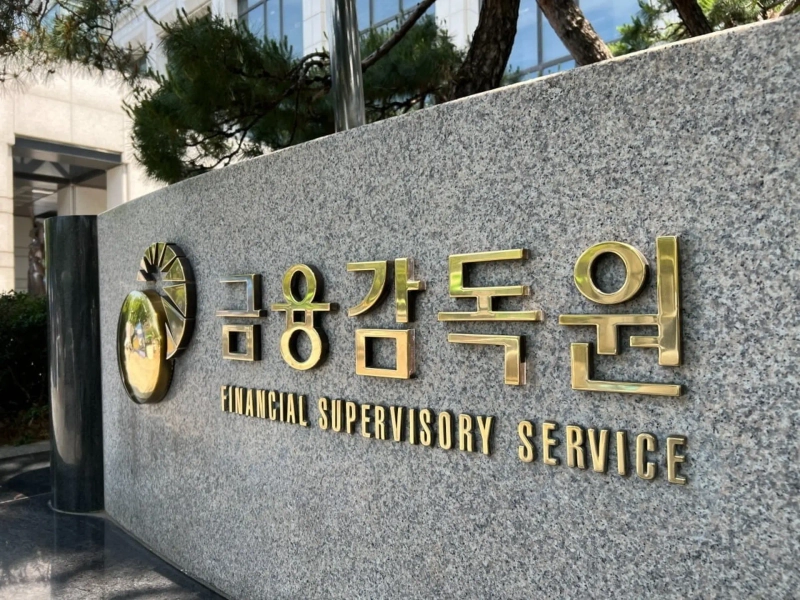
South Korea’s Financial Supervisory Service said it will closely monitor maturity mismatches between funding and investments at securities firms as outstanding issued notes by comprehensive financial investment businesses climb rapidly, stoking investor concerns. The regulator also said nothing has been decided on Mirae Asset Securities Co.’s proposed allocation of SpaceX public offering shares to domestic retail investors.
Hwang Sun-oh, senior deputy governor at the Financial Supervisory Service, said at a capital-markets briefing on May 11 that securities firms need to strengthen screening from the initial investment stage to keep supplying high-quality risk capital through the market. They also need to bolster risk-management capabilities for venture-capital investment assets.
Issued notes have maturities of less than one year, but more than 50% of the proceeds must be invested in corporate-finance-related assets, raising concerns over maturity mismatches between funding and operations. The Financial Supervisory Service said outstanding issued notes at comprehensive financial investment businesses rose to 54.4 trillion won ($39.4 billion) at the end of March from 15.6 trillion won ($11.3 billion) at the end of 2020.
The regulator currently requires a liquidity ratio of at least 100% for both issued notes and individual management accounts, or IMAs, Hwang said. It also adds a certain amount to liquid liabilities when calculating each firm's own liquidity ratio.
Because a substantial portion of funds raised through issued notes or IMAs must be invested in corporate finance, firms cannot ignore liquidity management, he said. Liquidity rules apply both to the firm as a whole and to each issued-note program.
As of the end of March, the overall liquidity ratio stood at about 115%, while the liquidity ratio for issued notes was 163%, which Hwang described as very sound. The regulator will also help firms conduct stress analysis and establish contingency funding plans, while preparing best-practice guidelines on corporate credit exposure.
The watchdog also said it will take preemptive risk-management steps at brokerages to safeguard market stability as margin lending rises during the stock rally.
Margin loans accounted for 0.58% of market capitalization at the end of April, a ratio that has been gradually declining and remains within a manageable range, Hwang said. Still, outstanding margin loans increased by 8.4 trillion won ($6.1 billion) to 35.7 trillion won ($25.9 billion) last month from 27.3 trillion won ($19.8 billion) a year earlier.
He added that forced liquidations totaled 108.4 billion won ($78.6 million) in a single day during the stock-market drop in early March caused by the Middle East war, or 22 times last year’s daily average. Such selling can magnify losses during market corrections. Authorities will discuss institutional changes aimed at fostering a longer-term investment culture rather than short-term trading for capital gains.
On Mirae Asset Securities’ plan to allocate shares in a SpaceX public offering to South Korean retail investors, Hwang said nothing has been decided.
Mirae Asset has not yet determined how it will proceed, leaving authorities unable to make a decision as well, he said. Because the matter became public before the structure and legal consultations were finalized, the regulator asked the firm to refrain from further publicity.
On concerns that single-stock leveraged exchange-traded funds tied to Samsung Electronics Co. and SK Hynix Inc., due to launch later in May, could increase share-price volatility, Hwang said their introduction was unavoidable in terms of improving consistency with global regulations. He added that authorities will provide investor education before the launch and continue monitoring trading patterns and market trends afterward while preparing response measures.
No Jeong-dong, Hankyung.com reporter dong2@hankyung.com

Korea Economic Daily
hankyung@bloomingbit.ioThe Korea Economic Daily Global is a digital media where latest news on Korean companies, industries, and financial markets.