Meta, Tesla, BlackRock Join Trump’s China Delegation to Press Beijing on Business Hurdles
Summary
- Chief executives from US companies including Meta, Tesla and BlackRock are attending the summit to secure regulatory approvals, market access and investment opportunities tied to their China businesses.
- China’s order for Meta to unwind its acquisition of AI startup Manus, restrictions affecting Tesla’s solar manufacturing equipment purchases, and Beijing’s probe into BlackRock’s port acquisition plan have emerged as key issues.
- Financial firms including Mastercard, Visa and Citigroup are seeking to expand their presence in China’s payments market and capital markets, while pursuing joint ventures and approvals for wholly owned licenses.
Forecast Trend Report by Period


Companies seek relief from restrictions tied to critical raw materials supplies
Meta’s forced unwind of Manus deal, Tesla’s solar equipment purchase among key issues
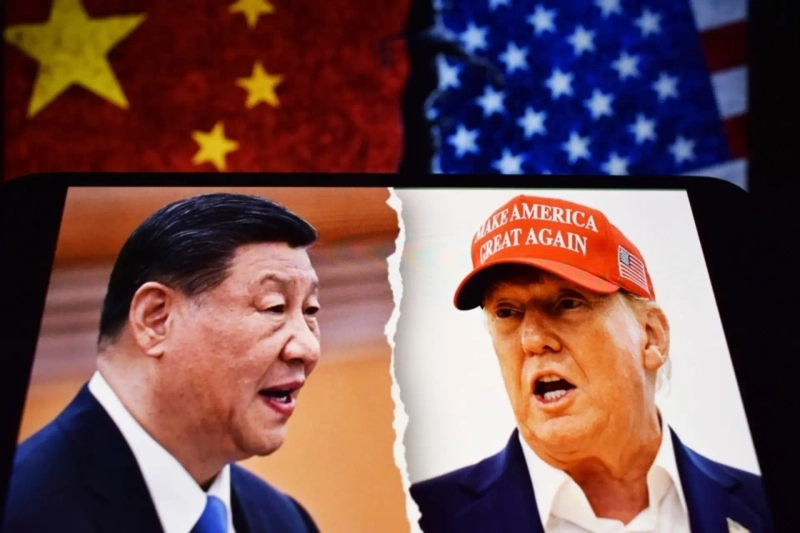
Meta Platforms Inc., Tesla Inc. and BlackRock Inc. are among US companies set to take part in this week’s summit between President Donald Trump and Chinese President Xi Jinping as they seek to advance their businesses in China.
Foreign media reports on May 12 said 12 chief executive officers and senior executives from Meta, Tesla, BlackRock, Mastercard Inc., Visa Inc. and Illumina Inc. will accompany Trump on the trip to China. Most represent companies trying to resolve existing problems tied to their operations there. Nvidia Corp. is not part of the delegation.
The group is smaller than the business delegation that joined Trump’s first China trip in 2017, according to a source cited by Reuters.
Lea Goujon, a geopolitical strategist at Rhodium Group, said that aside from Boeing Co. and Cargill Inc., whose interests are tied to purchase agreements, the other companies are mainly participating to secure supplies of critical raw materials. Their presence could also help send a message that the US government should not weaponize supply chains against China, she added.
The companies hope the summit will help them secure the political goodwill needed for regulatory approvals, market access and investment opportunities, according to sources. Their push goes beyond commercial deals, as many are also contending with broader regulatory and political tensions in China.
One source said a key condition for joining the trip was presenting “substantive asks” that could yield concrete outcomes or verbal agreements during or after the summit.
Another source said US companies view the meeting less as a venue for formal announcements than as a political opening that could help advance discussions over regulatory issues affecting their operations in China.
Meta is one example. Last month, China’s state planning agency ordered the company to unwind its $2 billion acquisition of artificial intelligence startup Manus. The move came as Beijing stepped up scrutiny of US investment in domestic startups developing advanced technologies.
China’s proposed restrictions on exports of solar manufacturing equipment to the US are also creating obstacles for Tesla and others.
Tesla has been seeking to buy solar manufacturing equipment to build a new factory or expand an existing one, but China’s export curbs have disrupted those plans. In March, Tesla moved to purchase $2.9 billion of solar panel manufacturing equipment from Suzhou Maxwell Technologies.
Tesla is also seeking approval from Chinese regulators to expand the rollout of its Full Self-Driving driver-assistance system in China, the world’s largest auto market.
BlackRock Chief Executive Officer Larry Fink also faces a major China-related issue. Chinese authorities are investigating a planned $23 billion port acquisition that includes two ports near the Panama Canal. The deal, led by a BlackRock-backed consortium, would buy the two ports from Hong Kong conglomerate CK Hutchison, a plan that has drawn strong opposition from Beijing.
Optical components maker Coherent Corp. joined the trip as it grapples with Chinese export controls on indium and related materials essential for high-performance optical chips.
US gene-sequencing company Illumina Inc. is rebuilding its China business after Beijing lifted an export ban last year. Even so, the company remains on China’s unreliable entities list as tensions rise between Washington and Beijing over biotech security and supply-chain dependence.
Mastercard and Visa are using the summit to seek a stronger foothold in China’s tightly controlled payments market. A person familiar with the matter said Mastercard hopes the US government will help it raise its ownership stake in its Chinese joint venture.
In 2023, Mastercard became the first foreign payments network approved to process yuan-denominated bank-card transactions in China through a joint venture with local partner NetsUnion.
Visa, by contrast, still has not secured a bank-card payments business in China, another source said. Unlike Mastercard and American Express Co., Visa plans to enter the market through a joint venture it would own outright.
Citigroup Inc. Chief Executive Officer Jane Fraser and Goldman Sachs Group Inc. Chief Executive Officer David Solomon are also joining the visit and are seeking ways to expand access to China’s capital markets, according to reports. Citi exited an earlier joint venture but is still awaiting approval for a wholly owned securities brokerage license in China.
Citi is also in a dispute with Zhejiang-based fuel company Haoyue Energy Group. The bank had frozen a $27 million payment to the company, which is subject to US sanctions.
Kim Jung-a, guest reporter, Hankyung.com, kja@hankyung.com

Korea Economic Daily
hankyung@bloomingbit.ioThe Korea Economic Daily Global is a digital media where latest news on Korean companies, industries, and financial markets.