Kospi Volatility Nears Wartime Peak, Raising Risk of Sharper Pullbacks After Rally
Forecast Trend Report by Period


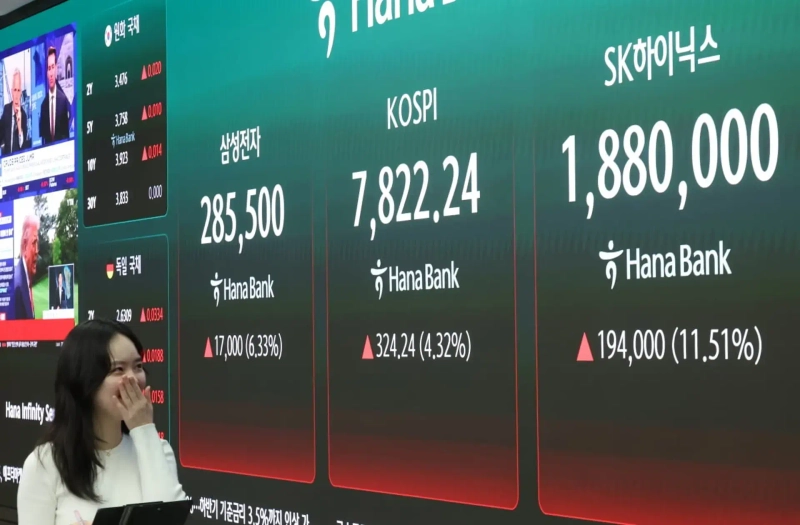
The VKOSPI, known as South Korea’s fear gauge, rose sharply after the Kospi touched the 8,000 mark and then plunged. The index climbed close to levels seen in March, when the war between the US and Iran was at its height, pointing to continued volatility in the near term.
The VKOSPI closed at 74.71 as of 3:30 p.m. on May 15, up 2.47% from the previous day and above 70 for a fourth straight session. The gauge is calculated from expectations for future volatility embedded in Kospi 200 option prices. It typically rises when investors buy more options as protection against a stock-market selloff, which is why it is known as South Korea’s fear gauge. A reading above 50 is considered an extreme fear zone. This is the first time the VKOSPI has remained above 70 for four consecutive trading days. It rose to 80 on March 3, just after the Iran war began, but dropped back into the 60s two trading days later and has mostly traded in the 50-60 range since then.
The Kospi’s intraday volatility was 8.8% on May 15. The measure is calculated by dividing the gap between the day’s high and low by the average of the two. That was the highest level since March 4, when it reached 11.4% in the early stages of the war. Han Ji-young, an analyst at Kiwoom Securities, said volatility in South Korea’s stock market had reached historic levels. At a VKOSPI reading above 70, daily swings of plus or minus 4% would not be unusual.
By contrast, the VIX, the US volatility index, surged above 30 during the war but has fallen below 20, its normal range, since early April.
Analysts said South Korea’s stock market is entering a stretch of heightened volatility after its steep rally. Kim Dong-won, head of research at KB Securities, said corrections during the old “Boxpi” era were often limited to less than 10%, but declines of 20% are now possible and pullbacks could become more frequent.
Kang Jin-gyu, Korea Economic Daily reporter, josep@hankyung.com

Korea Economic Daily
hankyung@bloomingbit.ioThe Korea Economic Daily Global is a digital media where latest news on Korean companies, industries, and financial markets.