PiCK
Circle Rallies 124% From February Low, Defying Crypto Market Malaise
Summary
- Circle (CRCL) shares have surged about 124% from their February low, sharply outperforming a directionless crypto market as expectations build for support from higher rates and regulatory tailwinds.
- Circle said USDC issuance and interest income from reserve management account for most of its revenue, giving it a business model that can strengthen in a high-rate environment.
- If the US CLARITY Act passes by July, USDC, a regulatory-friendly stablecoin, could benefit, while institutions may expand blockchain-based financial services and stablecoin-related businesses.
Forecast Trend Report by Period


Circle gains about 120% in three months
Outpaces a crypto market stuck in a narrow range
Higher-rate, regulatory tailwinds may support further upside

Circle, the issuer of the fiat-backed stablecoin USDC, has posted a sharp stock rally over the past few months. The gains came even as major cryptocurrencies such as Bitcoin showed little clear direction over the same period.
Circle closed up 0.53% at $111.62 on the New York Stock Exchange on May 20. That left the stock up about 124% from its Feb. 5 low of $49.90.
Investor appetite has remained firm even after the company reported revenue below market expectations. Circle said on May 11 that first-quarter revenue rose about 20% from a year earlier to $694 million, missing the $715 million consensus estimate. Earnings per share came in at 21 cents, above the 17-cent estimate.
The rally stands out even more against the broader digital-asset market. The CoinMarketCap 20 Index, which tracks 20 major cryptocurrencies, rose only about 2% from 151.00 on Feb. 5 to 154.00 on May 20.
Some analysts say Circle shares may have further room to run. Expectations for higher Federal Reserve rates and US efforts to formalize digital-asset rules are among the main tailwinds.
Higher rate outlook may offer an earnings boost
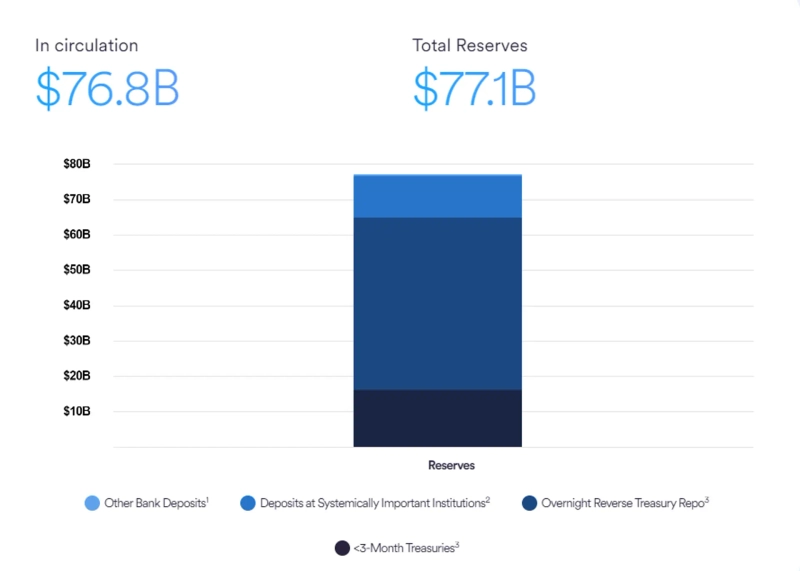
Circle is currently the only publicly traded pure-play stablecoin company in the US market. Most of its revenue comes from interest income generated by USDC issuance and reserve management.
To issue USDC, Circle must hold reserves matching the amount in circulation. The company invests about 80% of those reserves in short-term US Treasuries and the remaining 20% in cash-equivalent deposits.
USDC in circulation currently totals about $76.8 billion. Circle manages about $77.1 billion in reserves against that amount. Overnight Treasury repo makes up the largest share at about $48.8 billion, followed by US Treasury bills with maturities of three months or less, deposits at major banks and other bank deposits.
All of those assets generate more interest income when rates are higher. Cryptocurrencies, typically categorized as risk assets, are generally seen as less attractive in a high-rate environment. Circle, by contrast, has a business structure that can benefit from elevated rates.
A rising chance of another Fed rate hike could also bolster sentiment toward the company. In minutes from the Federal Open Market Committee released on May 20, the Fed said most participants stressed that some additional monetary tightening could become appropriate if inflation continues to run persistently above the 2% target.
Hong Sung-wook, an analyst at NH Investment & Securities, said Circle's business model is exposed to shifts in benchmark rate expectations. Unlike most crypto companies, changes in the rate environment can work in its favor. The recent pullback in rate-cut expectations could also support investor sentiment, he added.
July passage of CLARITY Act seen as another catalyst
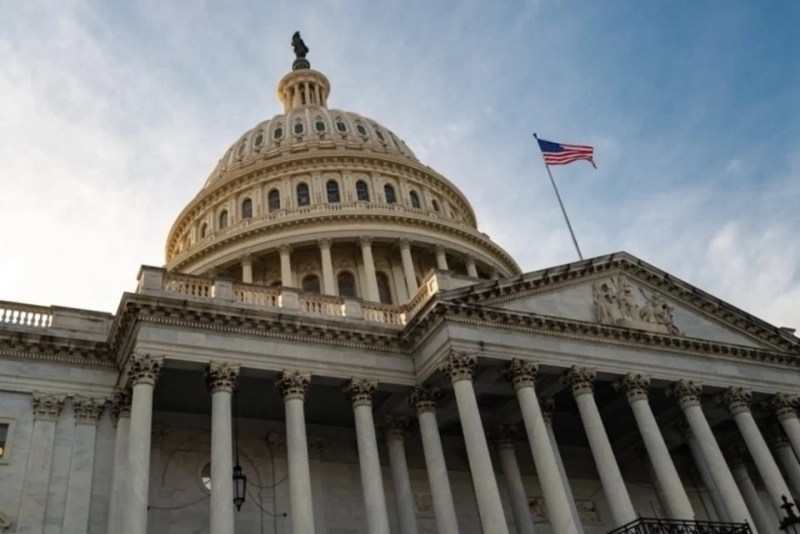
Moves to formalize digital-asset regulation could also lift sentiment toward Circle.
In the US, debate over the CLARITY Act, which would establish a regulatory framework for the digital-asset market, is gaining momentum. The bill would clarify the jurisdictions of the Securities and Exchange Commission and the Commodity Futures Trading Commission, while bringing standards for stablecoins and token issuance into the regulatory system.
On May 14, the Senate Banking Committee approved an amended version of the CLARITY Act by a 15-9 vote. Industry participants expect the bill could win final passage by July. Tiger Research said in a recent report that provisions on stablecoin interest payments, previously the biggest hurdle to the bill, have effectively reached the final stage of agreement. Given the congressional calendar and pressure from the Trump administration, the firm said passage is likely by July at the latest.
If the bill is enacted, regulatory-friendly stablecoins such as USDC could stand to benefit.
Hong said the CLARITY Act is intended to reduce regulatory uncertainty around digital assets in the US. If it passes, institutions could move beyond gaining crypto exposure through ETFs and more actively pursue blockchain-based financial services and stablecoin-related businesses. Restrictions on stablecoin interest payments may also prove less negative than the market fears because the broader structure for generating returns through stablecoin use would remain in place.

Uk Jin
wook9629@bloomingbit.ioH3LLO, World! I am Uk Jin.