SK Divorce Appeal Spurs Debate Over $680 Million Asset Split
Summary
- Chey Tae-won's side appealed the ruling ordering a $680 million property division payment, saying the challenge reflects disagreements not only over the amount but also over how the assets were formed and how contributions were assessed.
- Some in the business community say Roh Soh-yeong's contribution to the formation of the assets should be reassessed based on the Hynix acquisition and the timing of Chey's purchase of a 29.4% stake in SK Siltron.
- The Supreme Court said former President Roh Tae-woo's $21.6 million in support could not be treated as Roh Soh-yeong's contribution to the formation of the assets, though the remanded court still ordered a $680 million property division payment.
Forecast Trend Report by Period


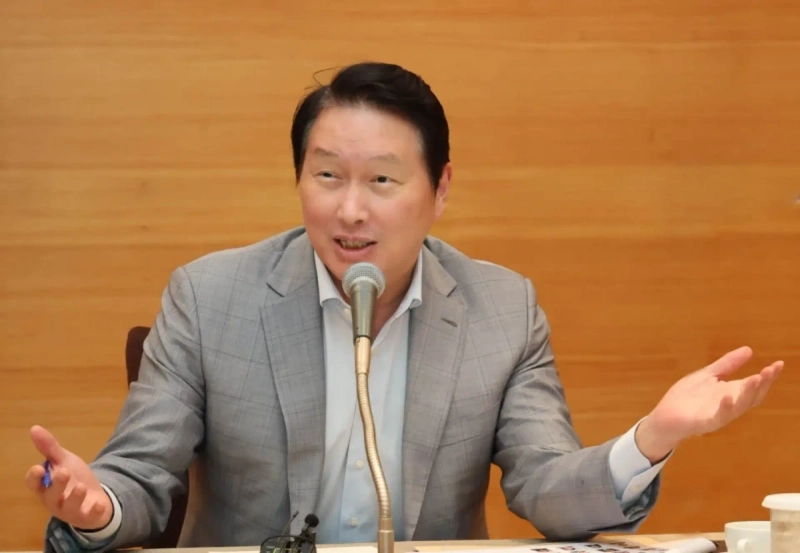
A decision by SK Group Chairman Chey Tae-won to appeal a divorce ruling ordering a 944 billion won ($680 million) property division payment has fueled debate in parts of South Korea's business community over whether the amount was properly calculated.
According to industry officials on August 15, the appeal reflects not only objections to the size of the payment but also disagreements over how the assets were built and how each side's contribution was assessed.
Some in the business community argue that the formation of SK Group's semiconductor business, which later grew into one of the conglomerate's core operations, deserves closer scrutiny. Because property division is intended to split assets jointly built during a marriage, they say the key question is what contribution Roh Soh-yeong actually made as the company's value increased.
One frequently cited example is SK Group's 2011 acquisition of Hynix Semiconductor for 3.4267 trillion won ($2.47 billion). At the time, Hynix's earnings had deteriorated amid a downturn in the chip industry, and efforts to sell the company had stalled for a prolonged period. Some within SK opposed the deal, but Chey pushed it through. Hynix later became one of SK Group's key affiliates.
Business community officials also claim Roh opposed the Hynix acquisition at the time. They say she sent text messages to senior SK executives around 2011 and 2012 saying, "Do not acquire Hynix" and "If you buy it, we all die." Roh held no formal position within SK Group at the time.
Another issue is the timing of Chey's acquisition of his 29.4% stake in SK Siltron. He secured the stake in 2017, about six years after the two were said to have effectively begun living separately in 2011. Chey had already filed for divorce mediation with the court at that time.
That has prompted some in industry to argue that Roh's contribution to the formation of the assets should be reassessed, taking into account both the Hynix acquisition process and the timing of the SK Siltron stake purchase.
"It does not accord with common sense to include in divisible marital assets investment gains achieved by one individual while bearing full financial risk during a period of separation when no marital bond or cooperation could have existed," one industry official said. The person added that some in the business community view it as unreasonable to disregard Roh's earlier opposition to the acquisition and then seek a share of the gains after the company grew into a global business.
The Supreme Court sent the case back to the Seoul High Court after finding that 30 billion won ($21.6 million) provided by former President Roh Tae-woo could not be counted as Roh Soh-yeong's contribution to the formation of the assets. In the remanded case, the high court ruled on July 24 that Chey must pay Roh 944 billion won ($680 million) in property division. Chey's side appealed. The notice of appeal, however, was submitted on the afternoon of the final day for filing, not "one minute before the deadline" as some had reported.
Lee Jeong-woo, Hankyung.com reporter krse9059@hankyung.com

Uk Jin
wook9629@bloomingbit.ioH3LLO, World! I am Uk Jin.