PiCK
Crypto Card Users Near 40,000 in South Korea as Tax Blind-Spot Concerns Grow
Summary
- Concerns are growing that virtual-asset taxation, set for full implementation next year, could leave crypto cards as a blind spot because they allow users to spend virtual assets earned overseas directly in South Korea.
- Income generated through overseas exchanges, DEXs, and personal wallets remains difficult to track at the user level despite CARF and broader data collection by tax authorities, making it hard for authorities to capture every transaction.
- Experts and investors say this structure could drive wider crypto card use, increase incentives for tax avoidance, and potentially fuel a major boom in South Korea next year.
Forecast Trend Report by Period


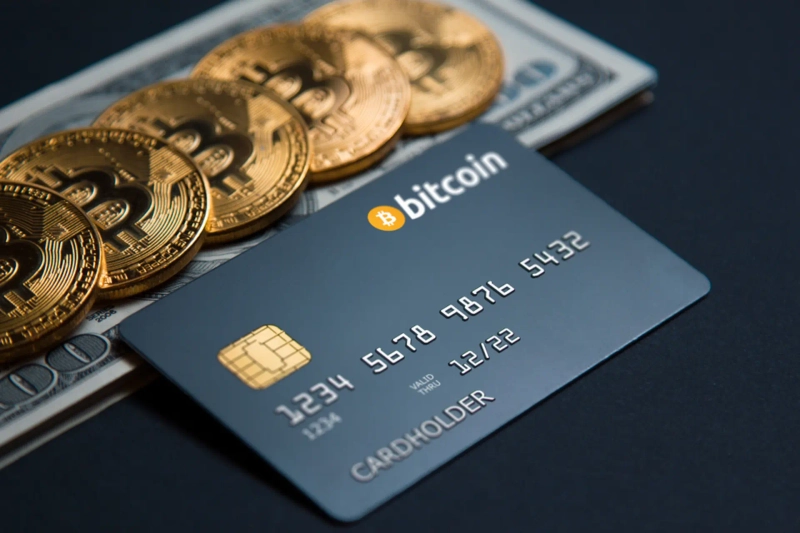
Crypto card users in South Korea are approaching 40,000, according to industry data. With the country set to fully implement virtual-asset taxation next year, industry officials say crypto card payments could remain a blind spot for tax enforcement. Some also expect demand for the cards to increase for the same reason.
As of the first half of this year, cumulative domestic downloads of major crypto card applications totaled about 38,000, industry data compiled on Aug. 19 showed. Crypto cards allow users to load virtual assets such as Bitcoin and Tether through dedicated apps and spend them at online and offline merchants linked to global payment networks including Visa and Mastercard. Payments are made either by converting crypto holdings into fiat currency at the time of purchase or by using balances converted in advance.
South Korea plans to fully enforce virtual-asset taxation from next year. Under current law, income generated from the transfer or lending of virtual assets will be classified as miscellaneous income and taxed starting in January 2027. Profits above the annual basic deduction of 2.5 million won ($1,800), including local income tax, will be subject to a 22% rate.
Why Overseas Crypto Flows Are Harder to Track

Concerns over a tax blind spot center on the ability to spend investment income earned in overseas crypto markets directly in South Korea. Because crypto cards can be funded directly from personal wallets, gains made on decentralized exchanges, or DEXs, can be used for payments without going through domestic financial institutions for conversion into fiat currency.
The scale of crypto assets moving out of South Korea is also accelerating. In the first half alone, domestic investors transferred about 47 trillion won ($34 billion) in virtual assets to overseas exchanges and personal wallets, according to industry data.
Tax authorities are also strengthening data collection to build a framework for taxing overseas crypto transactions. Under the Organization for Economic Cooperation and Development's Crypto-Asset Reporting Framework, or CARF, South Korea plans to exchange crypto transaction data with 55 countries starting next year.
The key question is how much tax authorities will be able to identify income generated from transfers and exchanges in overseas crypto markets. CARF requires virtual-asset service providers that broker customer transactions to collect and report transaction data. But DEXs, which operate on smart contracts without separate operators or intermediaries, make it difficult to identify user-level transaction data. The National Tax Service has also said there are practical limits to identifying all virtual-asset transaction data conducted through personal wallets.
"Just as the National Tax Service cannot realistically identify 100% of cash transactions, crypto trades conducted on overseas DEXs could face a similar problem," one industry official said. Capturing every transaction will not be easy even if tax authorities work to reduce blind spots, the person added.
Another factor complicating oversight is that crypto cards are issued by overseas businesses. Normally, if spending on credit or debit cards is significantly larger than a person's reported income or declared assets, that can signal unreported income or gifts. A large gap between income and consumption can prompt tax authorities to demand an explanation for the source of funds.
By contrast, even when crypto cards issued by overseas providers are used at domestic merchants, tax authorities may find it difficult to immediately identify South Korean users based on payment data alone. If those transactions go undetected, authorities may have to rely on voluntary reporting by taxpayers.
"Payment records will show that a card issued overseas was used at a merchant in South Korea, but resident registration data or customer identification information that could confirm whether the cardholder is Korean is not automatically transmitted to domestic institutions," a card industry official said. Verifying information on a specific user would require separate cooperation requests to global payment network operators or overseas financial institutions, the person said.
Cho Jae-woo, head of the Blockchain Research Institute at Hansung University, said user-level data needed by tax authorities may not exist in the first place for DEX transactions conducted only through wallet addresses without identity verification. If assets accumulated that way are then used through crypto cards for living expenses and other spending, tracing the flow of funds becomes difficult and the transactions could go uncaptured by the tax net, he said.
Crypto Cards May Spread on Fairness Concerns
Among virtual-asset investors, crypto cards have recently been gaining traction through word of mouth.
Industry officials say that if the government pushes ahead with crypto taxation before broader consensus is formed, more investors may move to overseas exchanges, DEXs and personal wallets to avoid taxes. Use of crypto cards that connect overseas crypto holdings to domestic spending could rise alongside that shift.
One investor, identified only as A, said he supports taxing income from virtual assets in principle, but the same standards should apply to all investors. "Recently, some investors have even started to think they could be at a disadvantage if they do not use a crypto card," he said.
Another investor, identified only as B, said he eventually obtained a crypto card issued overseas after wrestling with the decision several times. "It was not so much about avoiding taxes as it was a decision made with fairness concerns over the current taxation approach in mind," the investor said. "I do not think it is right that only investors using domestic exchanges become subject to taxation."
Experts say implementing the tax while large areas of hard-to-track transactions remain could increase incentives for tax avoidance.
"If taxation is introduced when there are still areas that are easy to avoid or conceal, fair taxation may be difficult," Cho said. "If a structure remains in place where only some transactions can fall outside the tax net, investors' motivation to evade regulation will also grow." He added that crypto cards could trigger a major boom in South Korea next year for that reason.

Uk Jin
wook9629@bloomingbit.ioH3LLO, World! I am Uk Jin.