Summary
- Rep. Kim Sang-hoon of the ruling People Power Party introduced an amendment to the income tax law that would delay the start of digital-asset taxation from 2027 to 2029.
- Kim’s office said the bill was prompted by a lack of infrastructure for digital-asset taxation and the difficulty of tracking and verifying transactions on decentralized exchanges (DEXs), peer-to-peer (P2P) networks and decentralized finance (DeFi) platforms.
- The office also said different national rollout schedules for the Crypto-Asset Reporting Framework (CARF) could create information-sharing gaps, and that the US plans to implement it in 2029.
Forecast Trend Report by Period


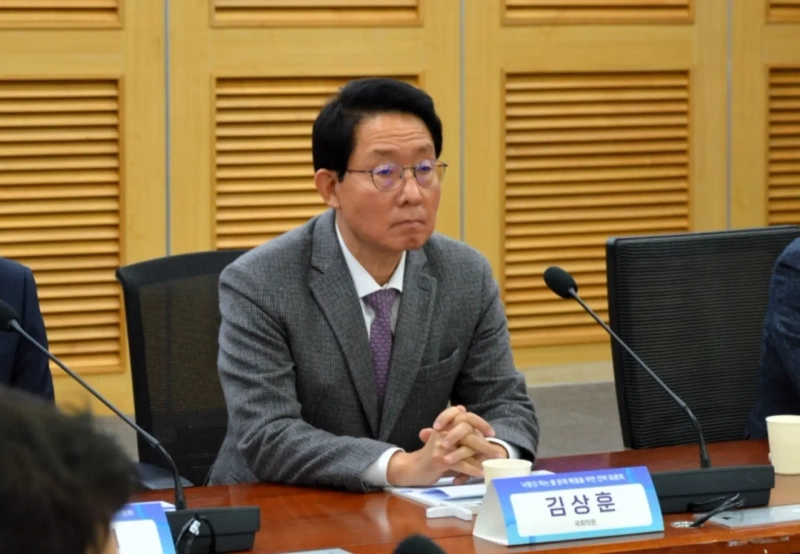
South Korea’s ruling People Power Party has proposed a bill to delay digital-asset taxation set to take effect next year by an additional two years, pushing the start date to 2029.
Digital Asset reported on Aug. 28 that Rep. Kim Sang-hoon of the People Power Party introduced an amendment to the income tax law that would postpone the implementation of digital-asset taxation from 2027 to 2029.
Kim’s office cited a lack of infrastructure for taxing digital assets. Unlike domestic centralized exchanges, transactions through decentralized exchanges, peer-to-peer trading and decentralized finance are difficult to track or verify, it said.
The office also said there could be gaps in securing tax information on overseas transactions. Because countries are introducing the Crypto-Asset Reporting Framework, or CARF, on different timetables, more time is needed before information-sharing systems in major economies are fully operational. The US plans to implement CARF in 2029.
This is the third bill from the People Power Party seeking to abolish or delay digital-asset taxation. Party lawmakers Song Eon-seok and Jeong Seok-guk previously proposed bills to scrap or postpone the tax.

Uk Jin
wook9629@bloomingbit.ioH3LLO, World! I am Uk Jin.