Russia Legalizes Crypto Trading, Sees First-Year Regulated Volume at $46.4 Billion
Summary
- Russia said allowing cryptocurrency trading within a regulatory framework could lift first-year formal-market trading volume to at least 4 trillion rubles.
- SberCIB Investment Research said about 20% of Russia’s annual cryptocurrency trading volume will move into the regulated market in the first year, with the total projected to rise to about 7.5 trillion rubles by 2029.
- The Central Bank of Russia imposed investment limits on both non-qualified and qualified investors, while also restricting the range of tradable cryptocurrencies to Bitcoin (BTC), Ether (ETH) and Tether (USDT).
Forecast Trend Report by Period


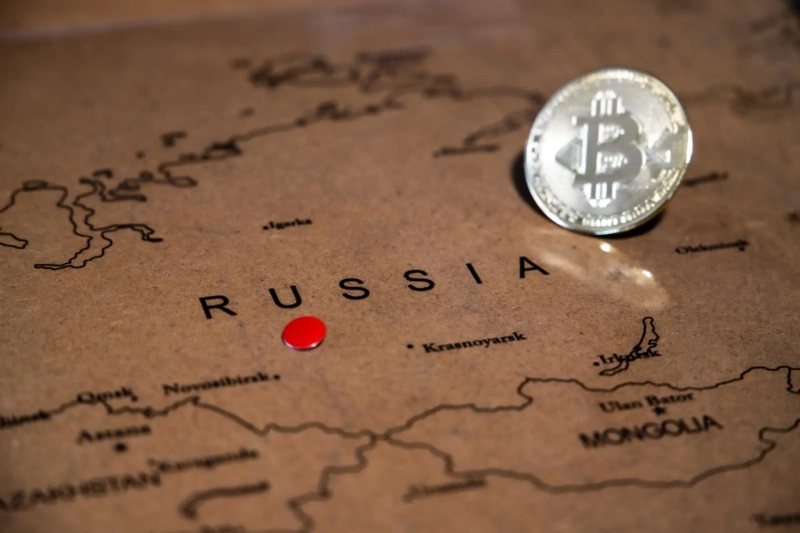
Russia will allow cryptocurrency trading within a regulated framework, with first-year volume on the formal market forecast to reach at least 4 trillion rubles, or about $46.4 billion.
Bitcoin.com reported on Aug. 31 that Sberbank, Russia’s largest bank, expects annual trading through licensed exchanges and brokers to total 3.5 trillion to 4 trillion rubles after new cryptocurrency trading rules take effect on Sept. 1.
The Central Bank of Russia has introduced rules allowing investors to legally buy and sell cryptocurrencies through authorized intermediaries. Sberbank expects trading now conducted through over-the-counter and unofficial channels to gradually shift into the regulated market, expanding the formal sector.
Anatoly Popov, deputy chairman of Sberbank’s executive board, cited Russian Finance Ministry data showing that Russia’s daily cryptocurrency trading volume was about 50 billion rubles as of February. On an annualized basis, that amounts to about 18 trillion rubles.
SberCIB Investment Research estimated that about 20% of that volume will move to regulated exchanges in the first year after legalization. It projects annual regulated-market trading of 4.75 trillion to 5.25 trillion rubles by 2028 and about 7.5 trillion rubles, or roughly $87.1 billion, in 2029.
Limits on investment amounts and the range of tradable tokens could constrain market growth. Non-qualified investors, after completing a risk assessment, will be allowed to buy no more than 300,000 rubles, or about $3,800, of cryptocurrencies a year through a single authorized broker.
Qualified investors will also face restrictions. Although the Central Bank of Russia recently eased the criteria for qualified investors, their investment cap remains 3 million rubles, or about $38,000.
The range of cryptocurrencies available on official exchanges is also limited. The Central Bank of Russia currently allows trading in only three assets: Bitcoin (BTC), Ether (ETH) and Tether (USDT). Other altcoins are excluded.
Russia will also operate a transition period for the new regime. Cryptocurrency exchanges have until July 1, 2027, to complete the required registration procedures.

Suehyeon Lee
shlee@bloomingbit.ioI'm reporter Suehyeon Lee, your Web3 Moderator.