PiCK
Warsh’s Hawkish Jackson Hole Speech Pushes Odds of September Fed Rate Hike Above 60%
Summary
- After Warsh’s Jackson Hole speech, the probability of a September benchmark rate hike rose to 60.4%.
- Deutsche Bank and UOB maintained forecasts for additional tightening this year and a total rate increase of 0.5 percentage point, while emphasizing inflation risks.
- Warsh’s hawkish remarks supported the dollar and weighed on gold prices and Asian stock markets.
Forecast Trend Report by Period


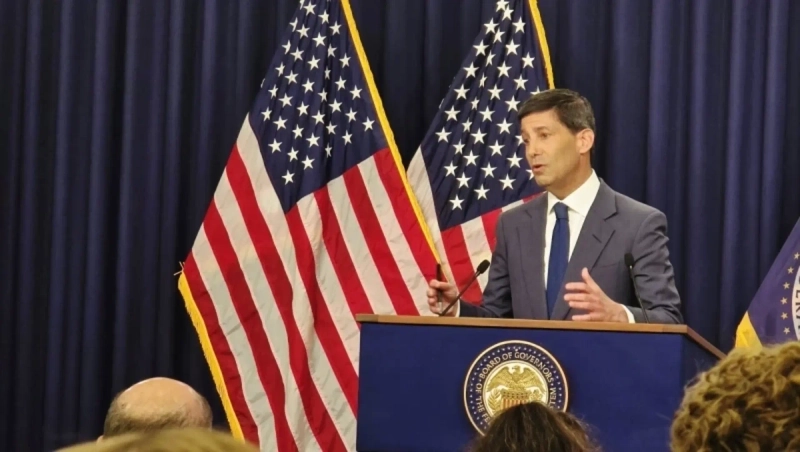
Federal Reserve Chair Kevin Warsh delivered a more hawkish-than-expected message on inflation in his Jackson Hole speech, pushing market-implied odds of a September interest-rate increase above 60%.
CME FedWatch showed on Aug. 31 that traders were pricing in a 60.4% chance the Fed will raise its benchmark rate by 0.25 percentage point in September, CNBC reported. That was up from about 56% on Aug. 28. Gold and Asian stocks both fell after Warsh’s remarks.
Markets broadly viewed the speech as more hawkish than expected. Deutsche Bank wrote that Warsh discussed the economy and outlook in greater detail than anticipated and that his policy stance had tilted clearly in a hawkish direction. The bank maintained its forecast for rate increases at the Federal Open Market Committee’s September and December meetings, for a total of 0.5 percentage point this year.
UOB reached a similar conclusion. The bank said Warsh highlighted inflation risks and showed a strong commitment to restoring price stability, raising the chances of additional tightening this year. Still, it added that he did not pre-commit to a policy path, leaving open the question of whether the rhetoric will translate into an actual rate increase.
The speech also raised the stakes for upcoming inflation data. Nomura said in a report that Warsh underscored the importance of the Fed’s 2% inflation target and signaled that monetary policy may need to respond if disinflation does not progress quickly enough. In Nomura’s view, that means the Fed has become more sensitive to near-term inflation readings.
Some market participants interpreted the remarks as a defense of the Fed’s independence and credibility. James Ooi, a market strategist at Tiger Brokers, said Warsh’s assessment of the U.S. economy as resilient reduced the case for cutting rates in the near term. Warsh’s repeated emphasis on the 2% inflation target also suggested monetary policy would be conducted independently of pressure from fiscal policy, he added.
Others questioned whether another rate increase is warranted. Matthew Maley, chief market strategist at Miller Tabak, said there is currently insufficient empirical evidence to justify further tightening. He cited softer labor-market data since the last FOMC meeting, while inflation readings have come in better than expected.
Some analysts also pointed to the possibility of diverging policy directions between the Fed and the U.S. Treasury. Gavekal Research said Warsh’s reaffirmation that short-term rates should remain the core instrument of monetary policy suggests the Fed could move to shorten the average maturity of its holdings.
That would stand in contrast to the Treasury’s decision this month to expand long-term Treasury buybacks to help contain rises in long-dated yields. If the Treasury adds liquidity to the long end of the market while the Fed reinforces a tighter policy stance, the bond market could feel the effects of both policies at the same time.
Warsh’s hawkish message also weighed on gold, which had surged recently. Susquehanna said his emphasis on returning inflation to 2% and willingness to keep the door open to further rate increases supported the dollar. It also said the recent “debasement trade” that had helped lift gold was partly reversed.

Suehyeon Lee
shlee@bloomingbit.ioI'm reporter Suehyeon Lee, your Web3 Moderator.