Former BOK Governor Rhee Says No Need for Excessive Concern Over Won Volatility
Summary
- Former Governor Rhee said there is no need for excessive concern over short-term won volatility, as South Korea’s external financial health has improved.
- He said South Korea is no longer a net debtor nation in international markets but a net creditor nation, and there is no need to panic over a specific exchange rate level.
- He said the war in Iran, expansionary fiscal policy, and the U.S. election could be key variables in future monetary policy decisions.
Forecast Trend Report by Period


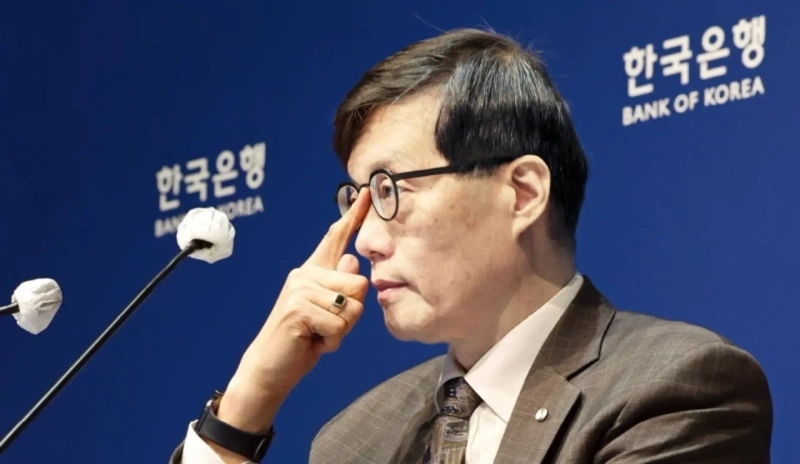
Former Bank of Korea Governor Rhee Chang-yong said there is no need to be overly sensitive to short-term moves in the won, saying South Korea’s external financial health has improved from the past.
Bloomberg reported on September 9 that Rhee, in a Bloomberg TV interview in Seoul, said South Korea is no longer a net debtor to the rest of the world but a net creditor. That means there is no reason to panic simply because the exchange rate reaches a certain level. The interview was his first with an overseas media outlet since he stepped down as BOK governor in April.
The won weakened throughout the first half of this year and at one point fell to its lowest level since 2009. At the time, foreign-exchange authorities repeatedly warned against excessive currency volatility and responded to capital outflows driven by rising overseas investment by South Korean retail investors. The won has since rebounded, posting a relatively strong gain among major Asian currencies.
Rhee said it would have been difficult to express that view publicly while he was in office. Had he done so at the time, markets would have interpreted it as the BOK governor tolerating won weakness. He added that conditions are much better now and joked that he is a little envious of his successor.
Commenting on the recent joint market intervention by the U.S. and Japan to defend the yen, Rhee stressed the need for policy coordination among major economies. He said he was particularly surprised that European countries were absent from the discussions. Even large countries would struggle to respond alone because international capital markets have become too big, he said.
He also said small open economies such as South Korea need a different approach to the foreign-exchange market. Policymakers should be humble. They can smooth volatility, but they cannot change the direction of the exchange rate itself. What ultimately moves that direction is a fundamental shift in policy.
Rhee did not offer a specific outlook for the Bank of Korea’s policy-rate path. He said the war in Iran, the government’s expansionary fiscal policy and the U.S. election would be key variables in future monetary-policy decisions.
He added that even if the semiconductor boom continues, escalating trade tensions between South Korea and the U.S. could weigh on growth and affect inflation in a different direction.

Suehyeon Lee
shlee@bloomingbit.ioI'm reporter Suehyeon Lee, your Web3 Moderator.