DP’s Ahn Do-geol Says South Korea Can’t Delay Digital-Asset Rules as Regulatory Gap Spurs Capital Outflows
Summary
- Ahn Do-geol said South Korea can no longer delay institutionalizing financial products tied to digital assets and enacting a Digital Asset Basic Act.
- He said major economies including the US, UK, Hong Kong and Japan have allowed digital-asset ETPs and ETFs as well as spot and futures products, while South Korea’s regulatory vacuum is driving capital outflows.
- Ahn said stablecoins will serve as financial and payments infrastructure in the AI era and that South Korea needs a balanced regulatory framework that accounts for on-chain risks.
Forecast Trend Report by Period


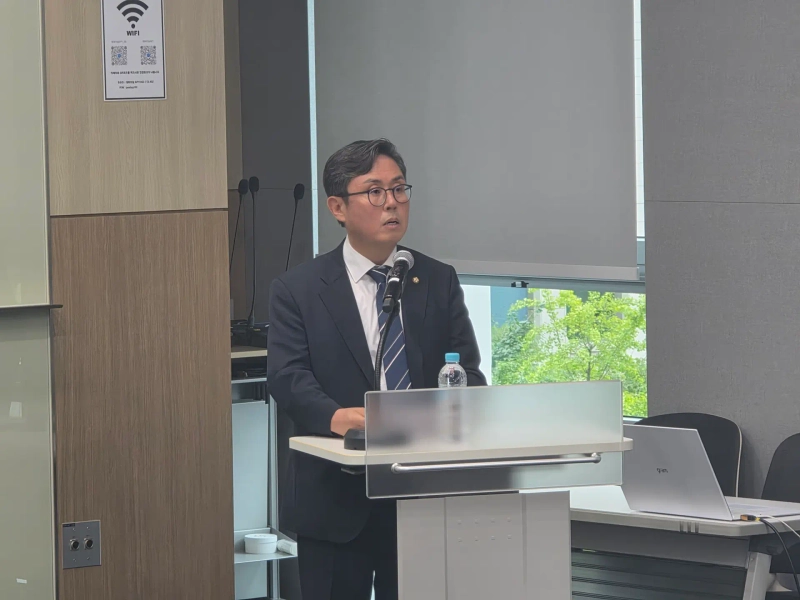
Ahn Do-geol, floor deputy of the Democratic Party of Korea, said South Korea can no longer afford to delay bringing digital-asset financial products into a formal regulatory framework. His remarks reflect the view that any further holdup in related legislation would undermine the competitiveness of the country’s digital-asset industry.
In congratulatory remarks at a parliamentary seminar titled “Cases of Digital-Asset Financial Innovation and Response Strategies” held at Post Tower in Seoul’s Yeouido on Sept. 10, Ahn said South Korea must establish a Digital Asset Basic Act and build an ecosystem that allows stablecoins to circulate and trade in the market. The seminar was co-hosted by Ahn and lawmaker Min Byung-deok.
Ahn pointed to the rapid growth of new financial products linked to digital assets. Digital assets are moving beyond simple trading and are quickly being absorbed into the heart of global capital markets through existing financial products such as exchange-traded products, or ETPs, and exchange-traded funds.
The US, UK and Hong Kong have already allowed financial products based on spot and futures digital assets, while Japan moved closer to introducing spot digital-asset ETFs after revising its Financial Instruments and Exchange Act in July.
By contrast, South Korea remains stuck in a regulatory vacuum. In a market where borderless trading moves freely through global financial networks, leaving the sector unattended because of that policy gap is clearly producing side effects, Ahn said. Funds from South Korean investors are flowing into overseas markets or markets outside the regulated system, where they are not protected by domestic law.
Domestic innovative companies that could lead the future digital-asset ecosystem are also losing growth opportunities, he added. Institutionalizing digital assets and the financial products built on them is now a task that can no longer be postponed.
Ahn also stressed the importance of stablecoins in preparing for the artificial intelligence era. Rapid change in the AI age will require financial and payments infrastructure to support it, and stablecoins will play that role, he said.
Still, he said formalizing digital-asset financial products does not mean unconditional deregulation. South Korea needs a carefully designed system that accounts for high price volatility, wider tracking gaps stemming from time differences between the 24-hour digital-asset market and traditional securities markets, and on-chain risks such as hard forks. He said he would work to build a balanced framework.

Uk Jin
wook9629@bloomingbit.ioH3LLO, World! I am Uk Jin.