South Korea to Fast-Track Digital Asset Framework Act From November
Summary
- Political and industry leaders said the Digital Asset Framework Act should be passed by year-end to close the regulatory gap.
- They said South Korea must first establish a legal basis and build operating and investor protection infrastructure to introduce domestic digital-asset ETFs.
- Speakers stressed that South Korea can no longer delay institutionalizing new financial products related to digital assets, including regulatory sandboxes and on-chain finance.
Forecast Trend Report by Period


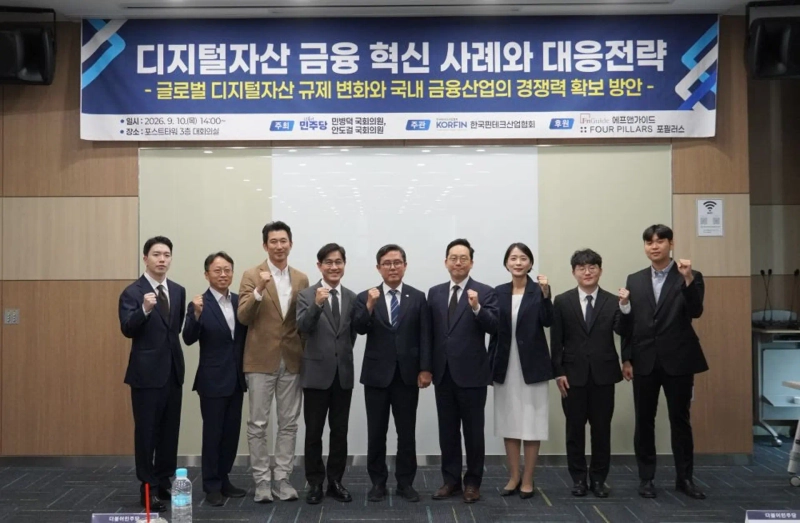
South Korea needs to move quickly to put digital-asset rules in place if it wants to remain competitive as products such as digital-asset exchange-traded products and on-chain offerings spread rapidly across global financial markets, speakers at a National Assembly seminar said. Lawmakers said they agreed and would aim to pass the Digital Asset Framework Act by year-end.
A National Assembly seminar titled "Digital Asset Financial Innovation Cases and Response Strategies" was held on Sept. 10 at Post Tower in Seoul's Yeouido district. The event was hosted by Ahn Do-geol, floor vice leader of the Democratic Party, and Democratic Party lawmaker Min Byoung-dug, and organized by the Korea Fintech Industry Association.
"Digital Asset Industry Left Stalled by Regulatory Vacuum"
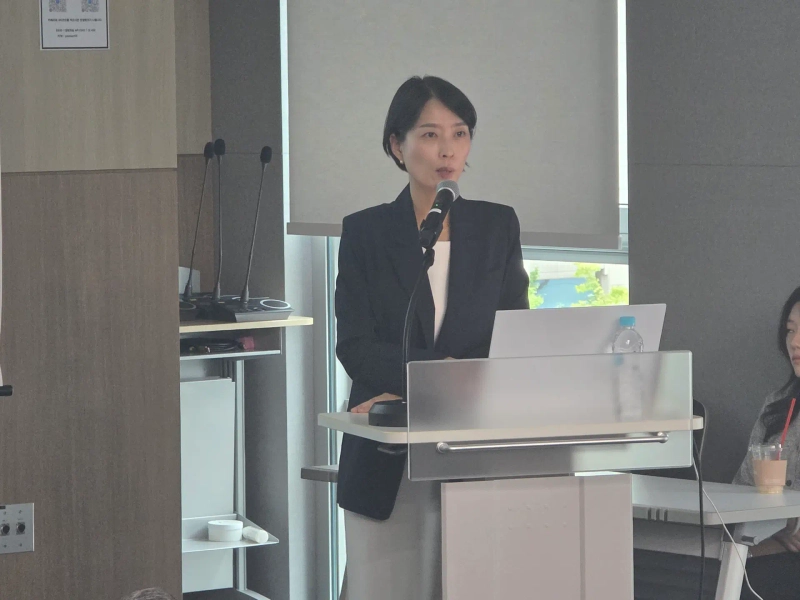
Kim Hyo-bong, a lawyer at Bae, Kim & Lee LLC, said the biggest problem in South Korea at present is regulatory uncertainty. Neither securities firms nor digital-asset companies have clear standards for which licenses would allow them to offer the services they want to launch, he said.
Kim said the U.S. is moving quickly not only on digital-asset exchange-traded funds but also in combining traditional financial products with blockchain. He added that the Securities and Exchange Commission has recently put forward digital-asset regulatory proposals and become more innovation-friendly. In the U.S., regulators are hearing industry concerns, providing feedback and making the rules clearer, he said.
Speakers also called for infrastructure to be built before products such as ETFs backed by digital assets are launched. Lim Seung-jin, a research fellow at FnGuide, said South Korea needs both a legal basis and infrastructure to support actual operations and investor protection if it wants to introduce digital-asset ETFs. He said the market should begin with simpler spot ETFs, verify that pricing and creation-redemption systems operate stably, and then expand in stages to areas such as multi-asset products and staking.
There was also criticism that South Korea has been unable even to attempt fast-growing on-chain finance because of regulatory gaps. Bok Jin-sol, research lead at Popillus, said a new asset-management market centered on on-chain vaults is growing rapidly overseas, but in South Korea there is still no clear definition of what kind of financial product or business such services would fall under. On-chain vaults are blockchain-based asset-management services that manage users' deposited digital assets through smart contracts.
Bok added that the existing regulatory framework alone is not enough to accommodate new services. He said South Korea needs an institutional foundation that would allow related businesses to be tested and developed.
Min Byoung-dug: Framework Act to Be Handled in Earnest From November
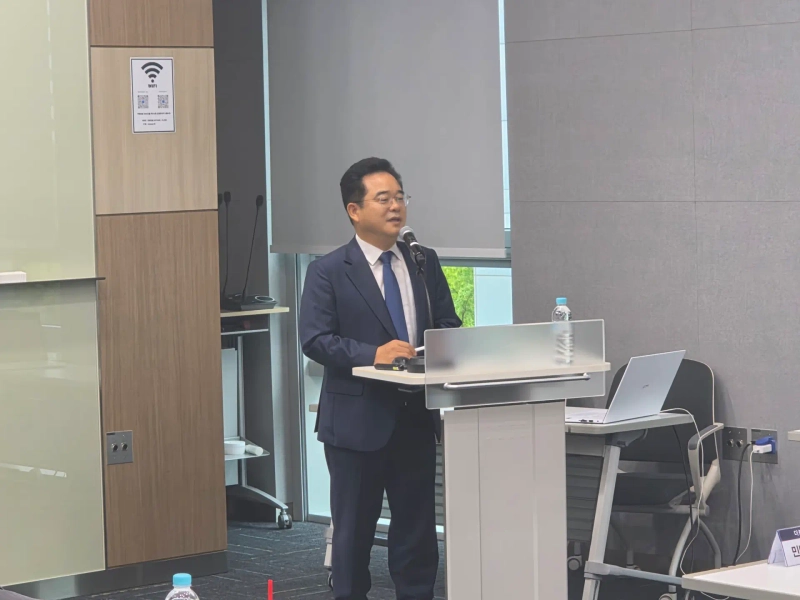
Lawmakers also said South Korea's efforts to institutionalize digital assets have failed to keep pace with changes in global markets and pledged to accelerate legislation. Min said he felt sorry that domestic lawmaking had lagged while new products were being planned in global markets. Rather than delaying for a perfect law, it would be better to move quickly with one that is 70 or 80 out of 100, he said.
Min in particular stressed passing the Digital Asset Framework Act within the year. He said a public hearing would likely be held in September and that, once the National Assembly's annual audit ends, lawmakers would begin handling the bill in earnest around November. As the market continues to evolve, the priority is to establish an institutional framework first and then improve any shortcomings later, he said. Min also urged the industry to present proposals the broader sector can accept rather than focusing on individual interests.
Ahn, the Democratic Party's floor vice leader, also said South Korea can no longer delay the institutionalization of digital assets and related financial products. While major countries are moving to take the lead in markets that combine digital assets with finance, South Korea remains in a regulatory vacuum, he said. As a result, domestic investors' money is flowing to overseas or out-of-system markets that are not protected by Korean law, while local innovative companies are losing growth opportunities.
"No More Time to Spare — Swift Action Needed"
The discussion that followed also identified swift passage of the Digital Asset Framework Act as the most urgent task.
Oh Jong-wook, chief executive of Wavebridge, said even a Digital Asset Framework Act that is only 70 to 80 points out of 100 would allow the next stage of debate to begin. Once the law is in place, the industry can argue over, revise and comment on enforcement decrees, he said. Even so, having the law enacted would be far more helpful to the market, he added.
Kim Nam-woong, chief executive of Popillus, said U.S. ETFs were not perfect from the outset either, and today's market was built through repeated regulatory revisions. South Korea should also start first and keep refining the rules rather than obsessing over a perfect score, he said.
Speakers also called for more active use of regulatory sandboxes related to the digital-asset market. Kim Hyo-bong said products should be tested on a limited basis, with detailed data continuously shared so supervisors can identify risks. He added that there is a need to include the Act on Reporting and Use of Certain Financial Transaction Information, the Digital Asset User Protection Act and the proposed Digital Asset Framework Act within the scope of regulatory sandbox programs.

Uk Jin
wook9629@bloomingbit.ioH3LLO, World! I am Uk Jin.