PiCK
Odds of September Fed Rate Hike Top 85% as Warsh Faces Test of Independence Against Trump
Summary
- The August core Consumer Price Index (CPI) came in above market expectations, pushing the odds of a September rate hike above 85%.
- Wall Street, the rate-futures market, TD Bank, and JPMorgan Chase are leaning toward a benchmark rate increase at this FOMC meeting.
- Bloomberg Economics said investors want and expect an FOMC rate increase, warning that a failure to hike could damage the confidence of market participants.
Forecast Trend Report by Period


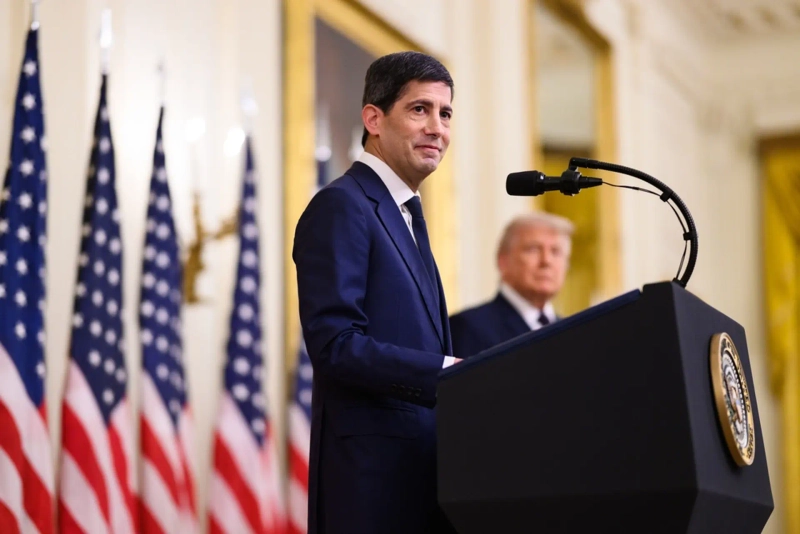
The odds of a September interest-rate increase have climbed above 85% after U.S. inflation pressures came in stronger than expected, setting up a potential clash between Federal Reserve Chair Kevin Warsh and President Donald Trump, who has pressed for lower rates.
Bloomberg reported on September 14 that after the U.S. August core consumer price index exceeded market expectations, rate-futures markets priced the probability of a Fed rate increase at the September 15-16 Federal Open Market Committee meeting at more than 85%.
The complication is that Trump has repeatedly urged the Fed to cut rates. He recently warned that he could escalate the trade war if monetary policy is not eased, and on September 13 he argued that U.S. borrowing costs should be the lowest in the world. Asked whether he expected the Fed to raise rates at this FOMC meeting, Trump replied, "I don't know."
The political backdrop ahead of the November midterm elections is adding to the pressure. Recent polls show growing voter frustration over rising living costs. From the White House's perspective, even if a rate cut takes time to feed through to mortgage or credit-card rates, it could still send voters a signal that economic pressures may ease.
Morris Obstfeld, a senior fellow at the Peterson Institute for International Economics, said the Fed is trapped in a dilemma: it can either risk the president's anger or lose credibility with markets and stoke more serious inflation later. He added that Warsh is unlikely to want to be remembered as the chair who yielded to administration pressure when the Fed's mandate was on the line.
The White House has also sent mixed signals on the prospect of a rate increase. Kevin Hassett, director of the National Economic Council, said on Bloomberg TV on September 11 that if the Fed raises rates, "the president will have something to say." But on Fox News on September 13, he said Trump would not be pleased by a rate increase, while stressing that Warsh's independence should be preserved above all.
On Wall Street, expectations are tilting toward a rate increase. Major financial firms including TD Bank and JPMorgan Chase revised their outlooks after the inflation report and now expect the Fed to raise rates at this week's FOMC meeting.
Bloomberg Economics said the market's message is clear. Investors want and expect a rate increase from the FOMC, it said, and Warsh would lose the confidence of market participants if the Fed fails to deliver one.
Concern about inflation is also rising inside the Fed. At the July FOMC meeting, three officials voted against the decision in favor of raising rates. With recent inflation data also coming in stronger than expected, questions are being raised about whether Warsh's leadership inside the central bank could come under pressure if he tries to block an increase.
Ultimately, this FOMC meeting is shaping up to be the first major test of the independence of Warsh, who took office in May. Trump said at the time of Warsh's appointment, "Act completely independently. Do what you want." But if the Fed goes ahead with a rate increase, the relationship between the two men is likely to face its first real test.

Suehyeon Lee
shlee@bloomingbit.ioI'm reporter Suehyeon Lee, your Web3 Moderator.