PiCK
Iran, Gulf States Postpone Temporary Hormuz Shipping-Lane Talks at Saudi Request; Brent Tops $108
Summary
- Oil supply concerns are persisting after talks on temporary shipping lanes in the Strait of Hormuz were postponed at Saudi Arabia’s request.
- Iran is pushing a temporary transit plan that includes authority to impose transit fees and screen vessels, while Gulf Cooperation Council members are considering a limited freedom of navigation agreement.
- Brent crude rose above $108 a barrel as the Middle East war drags on and military tensions around the Strait of Hormuz intensify.
Forecast Trend Report by Period


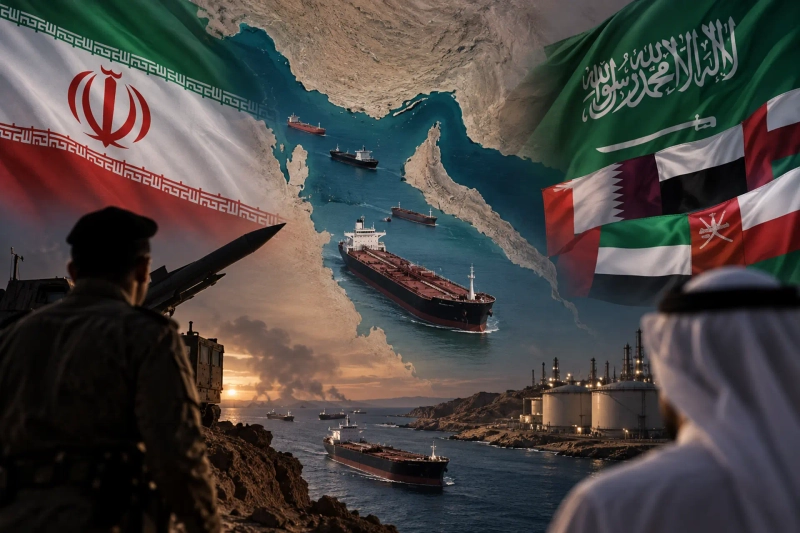
Talks between Iran and Gulf Arab states on temporary shipping lanes through the Strait of Hormuz have been postponed at Saudi Arabia’s request.
Bloomberg reported on September 14 that Iran’s Foreign Ministry said a meeting between Iran and Gulf states scheduled to be held that day in Oman had been delayed for the time being at Saudi Arabia’s request.
The Saudi request appears to have been driven by frustration over continued attacks on the kingdom by Iran-aligned forces, including Houthi rebels. Iran’s Foreign Ministry rejected that reasoning, saying Saudi Arabia’s request to postpone regional talks over the situation in Yemen was an attempt to divert attention from the root cause of the crisis.
Oman has spent recent weeks discussing shipping arrangements in the Strait of Hormuz with Iran. Omani Foreign Minister Badr Albusaidi said the delay was intended to help produce an agreement.
Had the meeting gone ahead, it would have been the first gathering of Iran, Gulf Cooperation Council members and Iraq since the U.S. and Israel began a war with Iran in February. But the negotiations ran into trouble as fighting intensified between Saudi-backed forces and Yemen’s Houthi rebels.
Saudi energy infrastructure in the country’s southwest has come under repeated Houthi attack this month. Last week, Saudi Arabia shut its key East-West pipeline after a series of drone attacks launched from Iraq. The Houthis also claimed on September 14 that they had attacked the air base in Khamis Mushait in southwestern Saudi Arabia.
The meeting had been set to cover a temporary transit plan for the Strait of Hormuz drawn up by Oman and Iran. The proposal included a framework that would allow Iran to decide which vessels could enter the Persian Gulf and impose a form of transit fee.
Gulf Cooperation Council members have demanded free passage for ships in principle. But they have also discussed accepting a temporary agreement that falls short of full freedom of navigation in order to expand maritime shipping. Iran has indicated that even if an agreement is reached, it will not fully reopen the Strait of Hormuz and will continue screening vessels that pass through it.
The setback in talks is also keeping concerns over crude supplies alive. Brent crude has recently climbed above $108 a barrel as fears grow that a prolonged war in the Middle East could further tighten supplies of petroleum products including diesel.
Military tensions around the Strait of Hormuz are also continuing. The U.K. Maritime Trade Operations said a vessel hit by a projectile the previous day caught fire. Iran’s state-run IRIB reported that a commercial ship was attacked near Qeshm Island and Hengam Island, killing one person.

Suehyeon Lee
shlee@bloomingbit.ioI'm reporter Suehyeon Lee, your Web3 Moderator.